


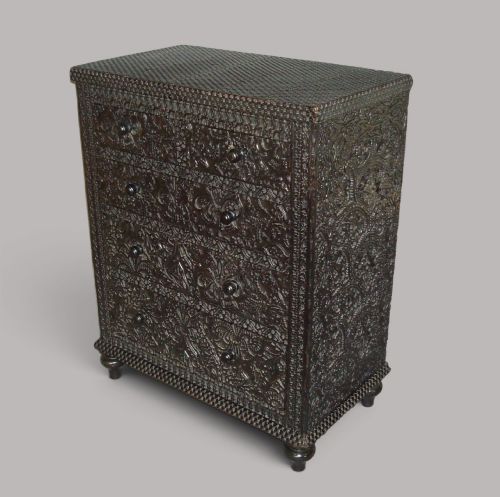
Black Ebonised Commode
A black ebonised commode offers deep, dark timber surfaces and classic storage, bringing dramatic presence to any interior.
Black Ebonised Commode
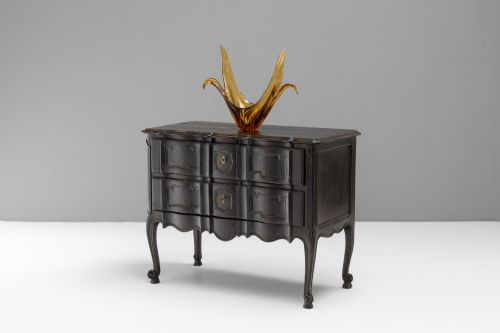
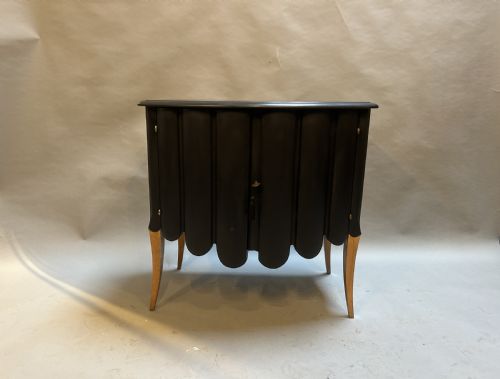
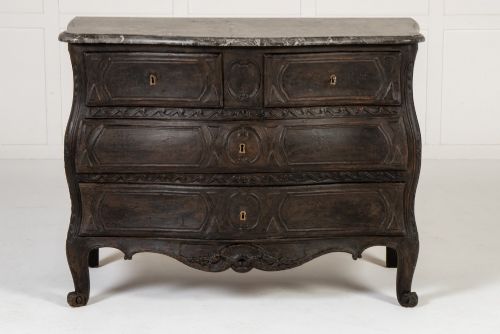
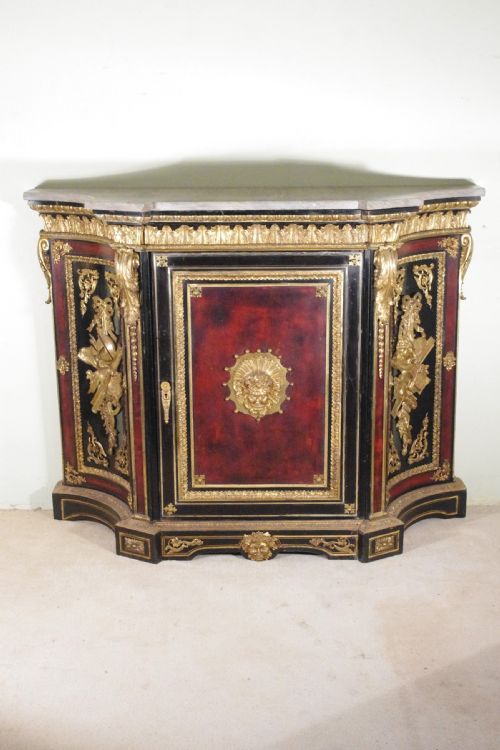
A black ebonised commode is a set of drawers or a side cabinet finished to mimic costly ebony, appearing across several distinct periods. These furnishings range from eighteenth-century French bombe shapes to nineteenth-century Napoleon III designs and twentieth-century Art Deco forms.
Most examples found on this page follow continental traditions, particularly French provincial and chateau styles, featuring substantial timber construction. Buyers frequently encounter marble tops paired with the dark ebonised finish, alongside bow-fronted chests and side cabinets.
The selection encompasses diverse eras, from the Georgian Regency period through the Victorian nineteenth century up to nineteen-thirty Art Deco pieces. Each variation demonstrates how different generations adapted the dark-stained surface to prevailing furniture forms.
How they were made
Cabinet makers utilised dense timbers like oak and general hardwoods as foundations before applying a dark ebonising stain or paint to replicate expensive exotic woods. This treatment created a deep, uniform black sheen across the carcass of the chest.
Many specimens incorporate heavy brass, ormolu, or gilt metal mounts affixed to the corners and drawer pulls, contrasting sharply against the dark wood. Heavy marble slabs often sit atop the cabinets, requiring robust structural support from the timber frame beneath.
Listings feature pieces spanning the eighteenth, nineteenth, and twentieth centuries, incorporating oak, marble, brass, and ebonised wood.
What varies in quality
The refinement of the ebonised finish and the depth of the timber preparation separate standard production from superior cabinet work. Smoother planes, tighter drawer joints, and preserved decorative mounts indicate higher workshop standards during manufacture.
The quality of the integrated marble top, particularly its thickness, veining, and edge profiling, marks the distinction between simpler pieces and grander salon items. Original metal mounts and cast brass details that remain crisp and secure add significantly to the integrity of the piece.
The Black Ebonised Commode Glossary
- Ebonised Wood
- Timber treated with stain, dye, or paint to achieve the dark, dense appearance of natural ebony. This technique allowed cabinet makers to produce dramatic dark furniture without relying solely on scarce tropical hardwoods.
- Ormolu
- Gilded bronze mounts applied as decorative ornaments to the corners, apron, and feet of fine cabinetry. The metallic lustre provides a sharp visual contrast against the dark ebonised surface.
- Bombe
- A bulging, swelling contour found on the front and sides of eighteenth-century case furniture. This curved profile requires exceptional woodworking skill to construct and finish.
- Bow Front
- A convex curved front profile typical of Regency chests of drawers. The sweeping curve softens the rectangular geometry of the storage unit.
Black Ebonised Commode: Frequently Asked Questions
What periods do these commodes come from?
The pieces span from the eighteenth century through the nineteenth century and into early twentieth-century Art Deco designs. Examples include Regency and Napoleon III eras alongside French provincial styles.
Each period imparts distinct architectural proportions and decorative detailing to the dark wood surface.
Are all these cabinets fitted with marble tops?
Many of the nineteenth-century and continental examples feature heavy marble slabs fitted directly to the upper surface. Others rely entirely on timber tops finished in matching ebonised tones.
Buyers find both configurations represented among the side cabinets and chests of drawers.
How should I clean an ebonised finish?
Dust the timber regularly with a soft, dry cloth to prevent particulate buildup on the dark surface. Avoid harsh chemical cleaners or excessive moisture that might degrade the ebonised stain.
Occasional applications of appropriate wax help maintain the lustre of the black wood.
What is the difference between a commode and a chest of drawers?
While both provide drawer storage, the term commode traditionally denotes a low continental cabinet or chest designed for a formal room. Chest of drawers often describes simpler or British domestic storage forms.
Both categories share comparable functions within traditional interiors.