




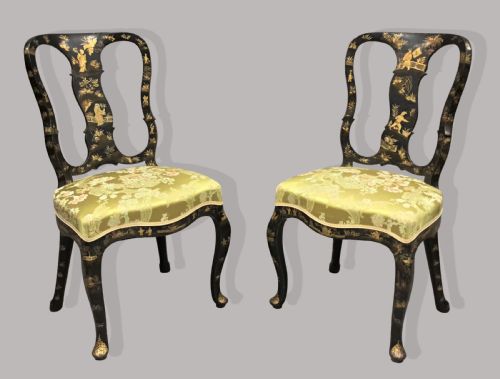
Black Chinoiserie Desk
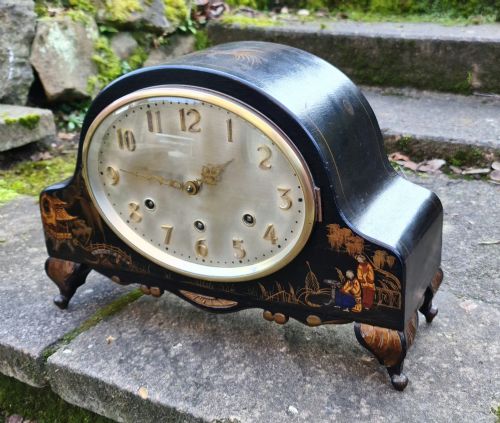
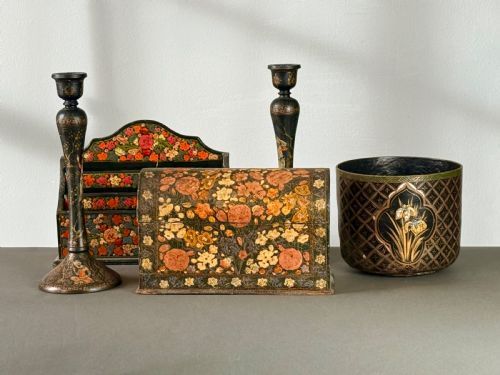
These black chinoiserie desks and related lacquered pieces bring painted Orientalist scenes to period rooms through rich black finishes.
Black Chinoiserie Desk
A black chinoiserie desk encompasses writing furniture decorated with raised or flat painted oriental motifs on dark lacquered grounds. The pieces seen span centuries, including bureau bookcases, writing bureaux, and smaller desk cabinets from the 18th century onwards.
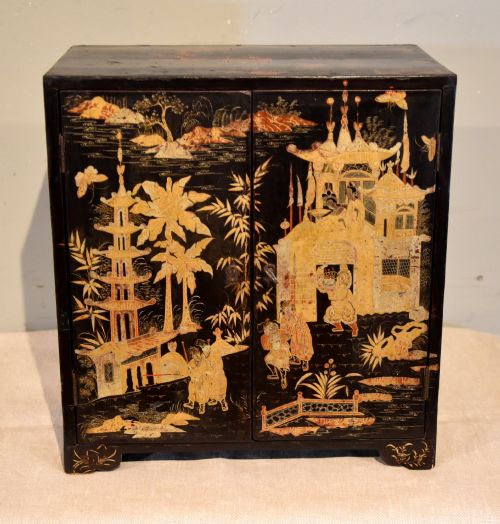
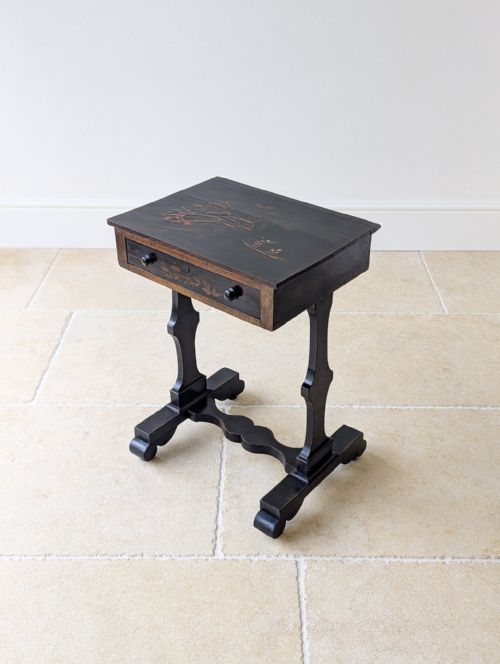
Buyers encounter surfaces finished in black lacquer, often heightened with gold leaf decoration showing figures, pagodas, and landscapes. The selection also includes related forms like table cabinets, escritoires, and work tables sharing this distinct decorative scheme.
Originating from long traditions of European imitation of Asian lacquerwork, these desks appear in styles ranging from Queen Anne and Regency to Edwardian interpretations. The core of what is available points to cabinetmaking traditions that adapted Asian export aesthetics for European interiors.
Materials and construction
The foundation of these pieces rests on wood and lacquered wood, built by joiners and cabinetmakers using traditional framing and carcase construction. Surfaces received layers of dark lacquer to build a deep ground before artists applied painted or gilt decoration.
Details such as brass handles, hinges, and escutcheons punctuate the dark lacquer, while gold leaf provides the characteristic metallic highlights on figures and foliage. Some variants incorporate glass panels, fabric linings, or specialised internal fittings appropriate for writing and storage.
Black Chinoiserie Desk Retail Price Guide 2026
Typical asking prices for black chinoiserie desk among the pieces listed under this phrase on Sellingantiques today, from the lower quarter to the upper quarter. They describe what is for sale here now, not the wider market.
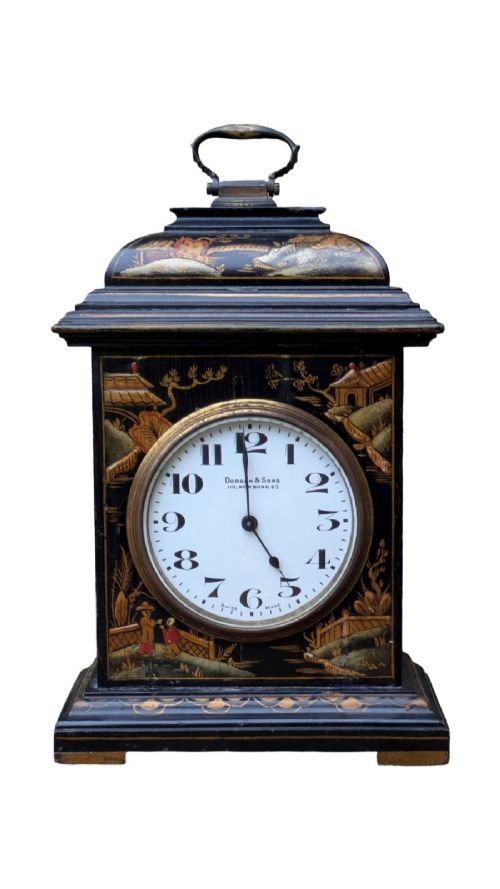
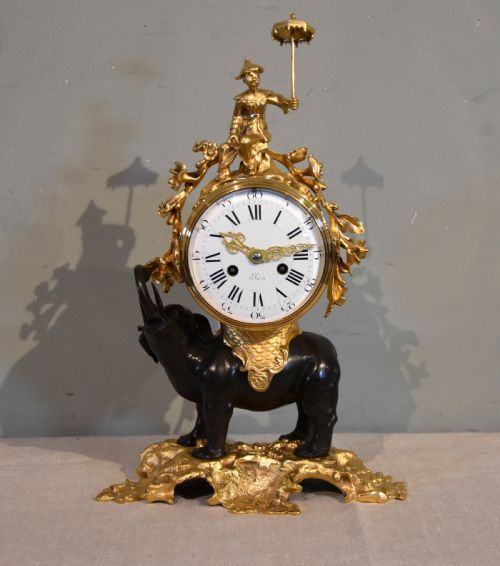
Among the writing desks and cabinets, a stray mechanical clock shaped like an elephant stands ready to keep time while you write.
Assessing quality
Quality rests principally in the depth and preservation of the lacquer and gilt decoration, alongside the crispness of the hand-painted motifs. Pieces with well-maintained original gilding and coherent surface craquelure stand apart from later repainted examples.
Construction integrity of the underlying timber carcase and the refinement of internal desk fittings define the standard of the cabinetwork. Superior examples display balanced proportions and sophisticated integration of the decorative scheme across all visible surfaces.
The Black Chinoiserie Desk Glossary
- Chinoiserie
- European decorative style inspired by Chinese and East Asian artistic traditions. It manifests in painted landscapes, figures in traditional costume, and architectural motifs.
- Lacquer
- A durable finish applied to wood surfaces in multiple layers and polished to a smooth sheen. In this context it forms the dark ground for gilt and painted ornamentation.
- Bureau bookcase
- A dual-purpose piece featuring a sloping writing flap above drawers, topped by a set of shelving or enclosed cabinet doors. It provides both workspace and storage.
- Escritoire
- A form of writing cabinet, often fitted with a fall-front or sloping lid. It emerged in various periods as a compact writing station.
- Gilt
- A thin application of gold leaf or powdered gold used to decorate surfaces. It highlights the details of the painted decoration against the dark lacquer.
Black Chinoiserie Desk: Frequently Asked Questions
What is a black chinoiserie desk?
It is a piece of writing furniture finished in dark lacquer and decorated with painted or gilt orientalist scenes. These pieces combine practical workspace with elaborate decorative schemes.
They reflect European tastes for Asian-inspired design across several historical periods, from the 18th century through to Edwardian revivals.
How do I date a lacquer desk?
Dating relies on examining the underlying cabinet construction, hardware styles, and the character of the lacquer work. Structural joins and timber choices often reveal the period of manufacture.
Comparing the painted motifs and the formulation of the lacquer surface against known historical periods helps narrow down the age.
How should I care for lacquer furniture?
Keep these pieces away from direct sunlight and sources of extreme heat to protect the delicate lacquer and gilt decoration. Dust gently with a dry, soft cloth.
Avoid using liquid polishes, chemical cleaners, or abrasive materials that can damage the historical surface finish.
Where were these pieces made?
Most pieces of this type were produced in European workshops influenced by Chinese export goods and Asian lacquer techniques. Craftsmen in Britain and continental Europe adapted these styles for domestic interiors.
Some items reflect specific regional interpretations, such as Dutch lacquered furniture or English bureau bookcases from the 18th century.