



Black Ceramic Vessel
These black ceramic vessel examples range from Victorian Jackfield wares to Japanese lacquer over-paint vases.
Black Ceramic Vessel
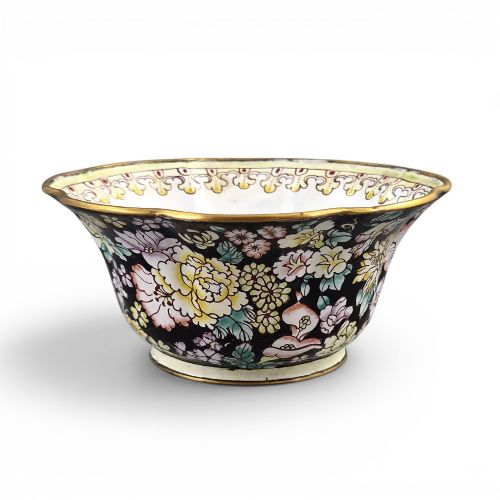
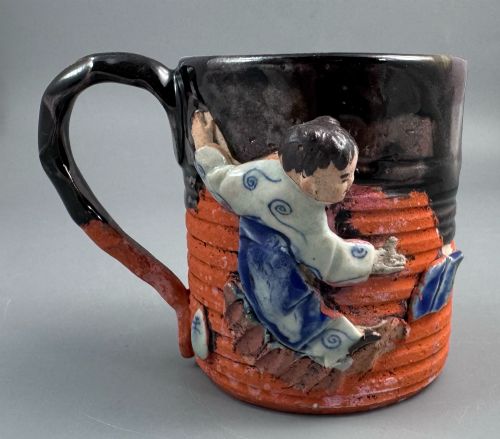
When you search for a black ceramic vessel, you encounter a surprisingly varied selection of global forms spanning the eighteenth century through to the mid-twentieth century. The assortment includes Japanese porcelain vases with lacquer over-paint, Chinese famille noire brush pots, and English Victorian Jackfield pottery pieces.
The objects on this page cover both decorative and utilitarian domestic items, such as large flared vases, decorative bowls, and mugs. You are just as likely to find an Art Nouveau pottery vase by Gallilleo Chini as you are to inspect a nineteenth-century earthenware bathroom set.
How they were made
Makers utilised ceramic, earthenware, and porcelain bodies as the structural base for these dark finishes and glazes. Applied elements, hand painting, and enamel work frequently adorn the surfaces.
Some Japanese works layer lacquer over black paint to achieve deep tonal contrast, while others employ copper bases with painted enamel, gilt, and gold leaf details.
Black Ceramic Vessel Retail Price Guide 2026
Typical asking prices for black ceramic vessel among the pieces listed under this phrase on Sellingantiques today, from the lower quarter to the upper quarter. They describe what is for sale here now, not the wider market.
Listings span the eighteenth, nineteenth, and early twentieth centuries, featuring earthenware, porcelain, copper, and enamel.
What varies in quality
The distinction between ordinary production and superior craftsmanship lies in the precision of the hand painting and the execution of the surface finish. Works bearing artist signatures or attributed to established potteries demonstrate higher levels of decorative ambition.
Material application also dictates standing, where subtle drip glazes or careful lacquer over-paint display greater technical control than standard mass-produced wares.
Gallilleo Chini·Mugello·Mougin
The Black Ceramic Vessel Glossary
- Jackfield pottery
- A type of British earthenware known for its deep black, lustrous glaze, frequently produced in Shropshire during the eighteenth and nineteenth centuries.
- Famille noire
- A Chinese porcelain classification distinguished by a predominant black enamel ground, often enriched with polychrome painted details.
- Brush pot
- A cylindrical vessel, also known as a bitong, traditionally used in East Asia to hold scholars writing brushes.
- Jardiniere
- A large ornamental pot or stand designed to hold growing plants or flowers indoors.
- Drip glaze
- A ceramic finishing technique where liquid glazes are allowed to run down the body during firing, creating organic patterns.
Black Ceramic Vessel: Frequently Asked Questions
What periods do these pieces date from?
The inventory spans the eighteenth, nineteenth, and early twentieth centuries. You will find items originating from the Georgian era through to the Art Deco period.
Individual pieces often carry specific cultural markers, such as Meiji period Japanese craftsmanship or Qing dynasty Chinese manufacturing.
How do Japanese and Chinese pieces differ?
Chinese examples on this page often feature painted enamels on copper or Famille Noire porcelain with detailed figural scenes. Japanese items frequently utilise lacquer over-paint or applied figures on earthenware and porcelain.
Both traditions emphasise distinct decorative motifs, from koi fish to mythological figures.
What is Jackfield pottery?
Jackfield pottery refers to British earthenware characterised by a shiny black surface finish. It was commonly used for functional novelty items like cow creamers and tea wares during the nineteenth century.
The deep dark glaze mimics the appearance of metalwork while retaining ceramic properties.
How do I display these vessels?
These pieces function well as standalone decorative objects on mantelpieces, sideboards, or open shelving. Larger jardiniere and vase forms provide strong focal points in a room.
Due to their varied heights and finishes, grouping them by silhouette or surface texture creates a striking visual contrast.