



Black Cane Armchair
A black cane armchair brings rich dark timber and woven texture into a room, offering both sturdy seating and striking visual weight.
Black Cane Armchair
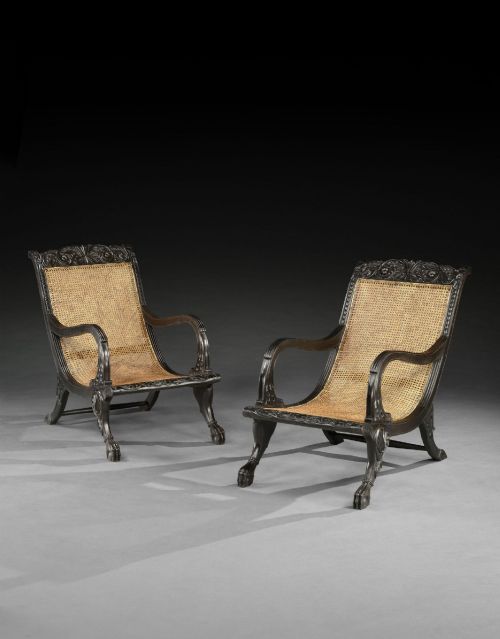
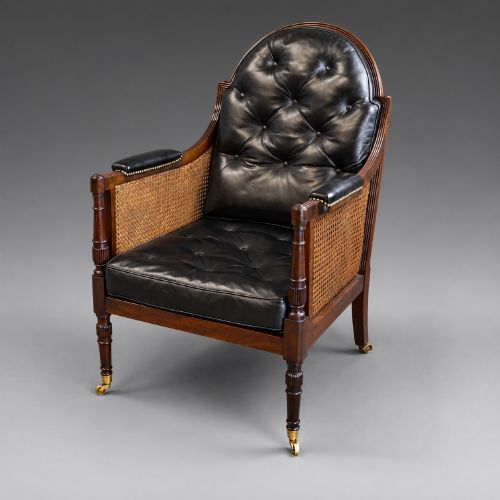
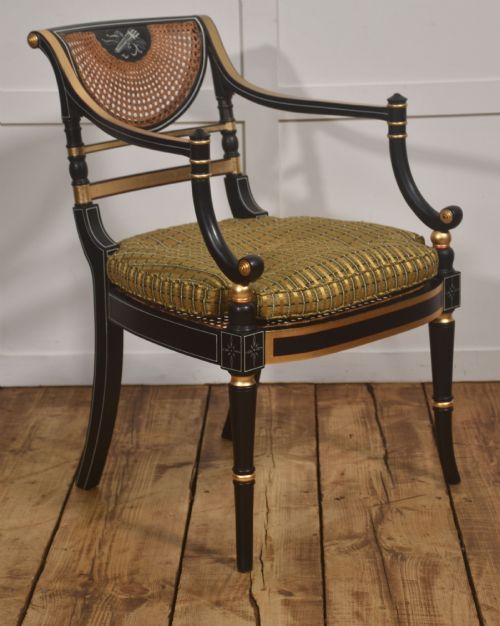
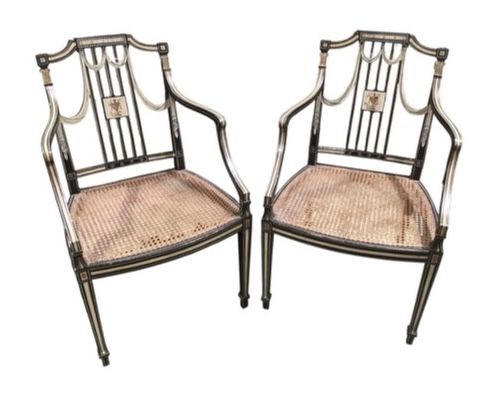
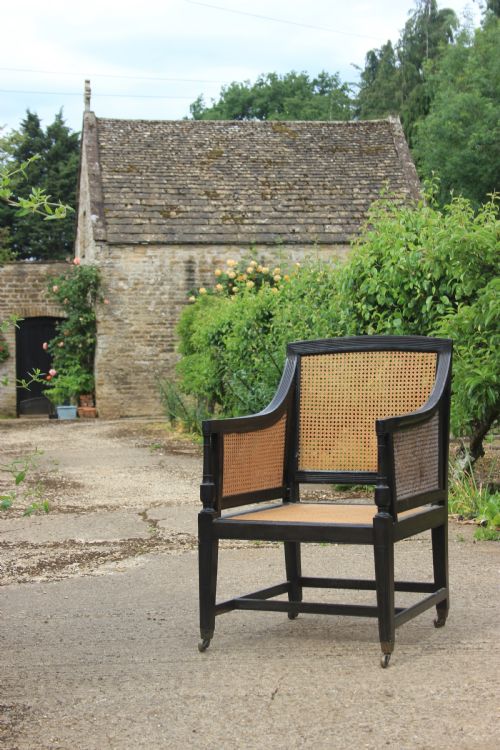
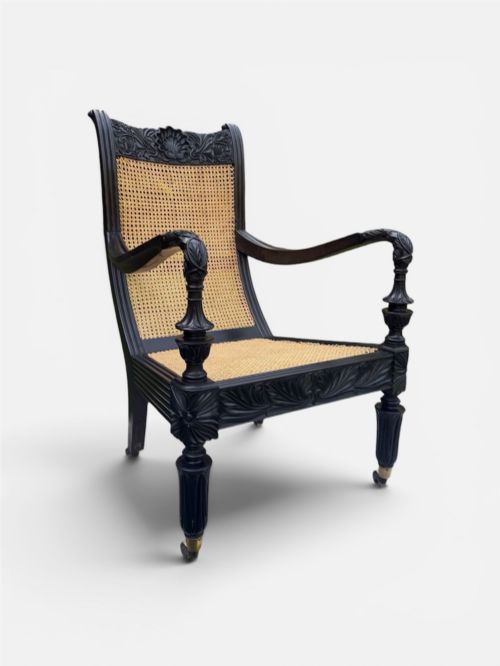
A black cane armchair is a seating piece defined by a dark finish and woven panels, spanning formal library seats and exotic colonial imports. When you search for a black cane armchair, you encounter diverse forms ranging from solid Ceylonese ebony frames to ebonised Regency library models and lighter Chinoiserie japanned designs.
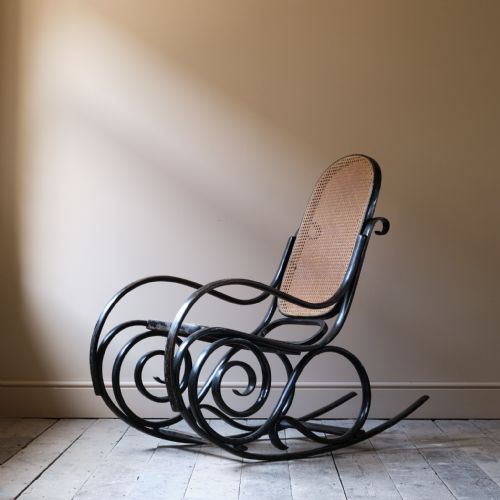
The selections on this page draw predominantly from the nineteenth century and Regency periods, alongside later twentieth century revivals and bentwood rocking chairs. These pieces appear as single library chairs, matched pairs, and larger dining sets, frequently incorporating bergère seating where woven cane forms the seat and back.
Origins vary significantly among the items, moving from English workshops influenced by Regency styles to Anglo-Indian productions utilising dense imported hardwoods. Alongside these traditional forms, variations include Victorian painted faux bamboo frames and Italian bentwood rockers finished in black.
Materials and construction
Makers utilised dense timbers such as ebony, beech, and mahogany, often applying ebonisation, paint, or lacquer to achieve the characteristic dark surface. Solid ebony construction appears in pieces originating from Ceylon, while domestic British workshops typically relied on native hardwoods finished with black pigment or polish.
Woven cane forms the primary seat and back panels across the majority of these chairs, providing a flexible and resilient surface. Brass mounts, leather elements, and turned wooden details such as bobbin legs complement the primary frames in selected Regency and Victorian examples.
Black Cane Armchair Retail Price Guide 2026
Typical asking prices for black cane armchair among the pieces listed under this phrase on Sellingantiques today, from the lower quarter to the upper quarter. They describe what is for sale here now, not the wider market.
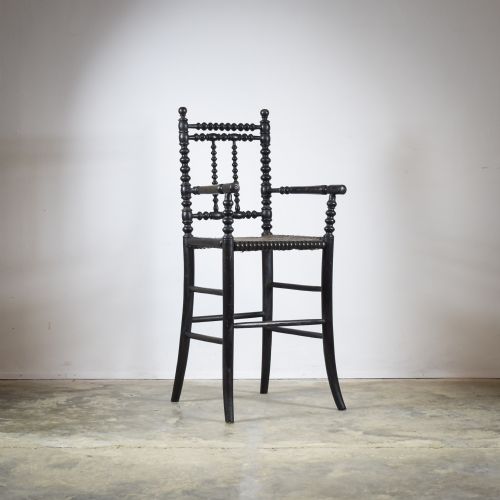
Object types span armchairs, rocking chairs, dining chairs, and high chairs, incorporating styles from Chinoiserie to Art Nouveau.
Assessing quality in dark cane seating
Quality rests heavily on the integrity of the timber and the precision of the dark finish, whether through natural ebony grain or applied ebonisation. Solid exotic hardwoods command attention for their weight and durability, whilst secondary timbers depend on the skill of the original surface treatment.
The fineness of the cane work dictates the refinement of the piece, with tightly woven panels showing superior craftsmanship compared to coarser replacements. Carved details, such as those found on Anglo-Indian imports or Gillows library chairs, exhibit depth and crispness that elevate the status of the furniture.
Gillows
The Black Cane Armchair Glossary
- Bergère
- An upholstered or cane-panelled armchair with closed sides, originating in France during the eighteenth century and remaining popular through the Regency period. The wooden frame is typically exposed and finished to match the interior scheme.
- Ebonised
- Wood that has been stained or painted black to imitate genuine ebony. This technique was widely utilised in nineteenth-century British furniture production to create formal, dramatic contrasts.
- Japanned
- European furniture finished with varnishes and lacquers in imitation of Japanese and Chinese decorative metal and woodwork. This method produces a glossy, dark surface often enriched with gilt motifs.
- Cane
- Strips of rattan plant peeled and woven into open patterns to form resilient seats and backs. It offers lightweight flexibility while maintaining structural strength.
- Anglo-Indian
- Furniture made in the Indian subcontinent during the British colonial period, combining traditional local timber and carving skills with European furniture forms.
Black Cane Armchair: Frequently Asked Questions
What is a black cane armchair?
A black cane armchair is a seating piece featuring a dark timber frame or ebonised finish combined with woven cane panels on the seat or back. These chairs range from Regency library models to Anglo-Indian ebony seating.
They combine structural wooden frames with flexible woven surfaces, offering both support and distinctive visual contrast within a room.
How do I care for cane seating?
Cane panels require humidity to remain pliable and prevent snapping, so keeping them away from direct heat sources is essential. Occasional gentle cleaning with a damp cloth maintains the material.
Avoid pressing heavily on the centre of a cane panel when the chair is unsupported underneath, as the woven strands function best when weight is distributed evenly.
Are these chairs comfortable for daily use?
Woven cane offers a supportive and slightly springy surface that adapts naturally to the body. Many bergère designs also include space for loose squab cushions.
Adding a fitted cushion allows these historic chairs to function comfortably as everyday seating in a modern living space or study.
How do I identify a Regency black cane armchair?
Regency examples typically display classical proportions, saber legs, or bamboo-turned members finished in black lacquer or ebonised paint. They often date from the early nineteenth century and reflect classical revival tastes.
Attribution to this period relies on the combination of specific joinery methods, Regency design motifs, and the integration of woven cane panels.