


Black Art Deco Glasses
Black art deco glasses are geometric vessels and drinking sets capturing the sharp lines and monochrome palettes of the interwar years.
Black Art Deco Glasses
When searching for black art deco glasses, buyers encounter matching sets of drinking vessels, decanter sets, and atomisers shaped by the geometric trends of the 1920s and 1930s. These pieces often incorporate black enamel, dark crystal, or contrasting metal frames to create the striking visual rhythm characteristic of the period.
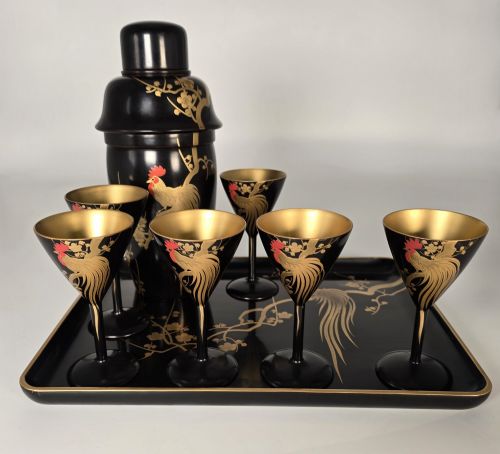
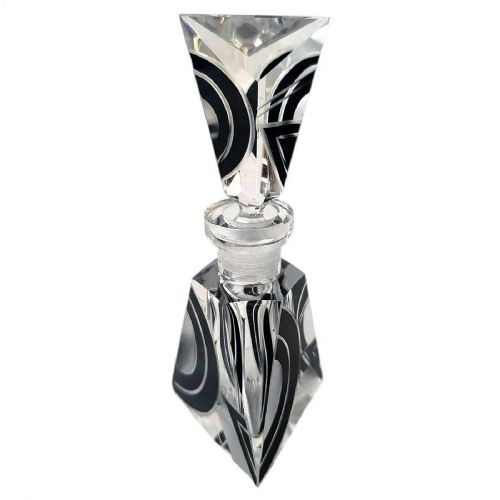
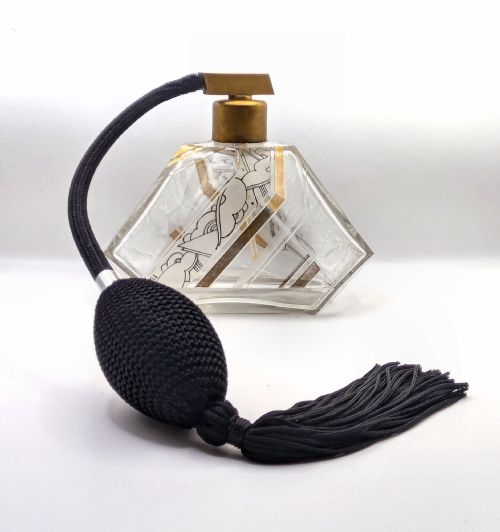
The most common examples on this page are matched cocktail and liquor services produced in Europe during the interwar decades, frequently featuring contrasting clear and dark glass elements. Alongside drinking vessels, the selection encompasses scent bottles and vanity items finished with dark glass components.
How they were made
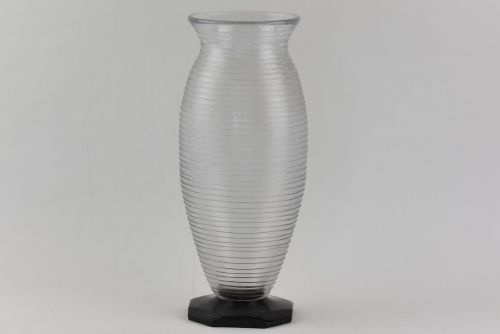
Makers utilised free-blowing, mould-pressing, and deep-etching techniques to shape the crystal and glass bodies, applying geometric motifs directly into the surface. Enamel decoration and contrasting black pigments were then fused to the glass through heat application, creating durable linear patterns.
Metal mountings in chrome, brass, and wrought iron were integrated to support the glass components, anchored by secure bezels and fitted hardware typical of modernist manufacturing.
The listings show glass and enamel pieces originating primarily from the 1920s and 1930s, alongside complementary display cabinets and metal trolleys.
What varies in quality
Quality rests upon the precision of the geometric cutting and the depth of the chemical etching, where crisp lines distinguish master workshops from standard production. The clarity of the base crystal and the permanence of the applied black enamel or surface treatments also set finer vessels apart.
Coherence within matched sets indicates higher manufacturing standards, particularly when individual glasses retain identical proportions and uniform colouring across the entire service.
Karl Palda·Eileen Grey·Jean Luce·Rene Lalique·Val Saint Lambert
The Black Art Deco Glasses Glossary
- Atomiser
- A perfume bottle fitted with a spray mechanism and bulb, frequently produced with cut glass and enamel bodies during the interwar period.
- Decanter set
- A matched grouping consisting of a central serving vessel accompanied by several drinking glasses, often arranged on a matching tray.
- Geometric cut
- A decorative surface treatment involving precise angular incisions that catch light and emphasise the stark forms typical of the interwar decades.
- Enamel decoration
- The application of coloured glass pastes fired onto the surface of a vessel to create permanent contrasting patterns and opaque black bands.
Black Art Deco Glasses: Frequently Asked Questions
How do I clean black art deco glasses?
Wash these vessels by hand in warm water using mild soap, avoiding abrasive sponges that can scratch the delicate enamel or surface etching.
Dry them immediately with a soft lint-free cloth to protect any metallic mounts and preserve the dark glass finish.
Can I use these vintage decanter sets?
Many collectors use these vintage vessels for serving beverages, provided the interior is clean and free from persistent residue.
Inspect the inner surfaces carefully before introducing liquids to ensure the historical glass remains sound and untainted.
How do I identify 1930s glassware?
Look for characteristic modernist motifs, such as strong verticals, stepped zigzags, and sharp geometric cutting patterns executed in heavy crystal.
Authentic pieces from this era often display specific regional manufacturing traits, such as Czech enamel work or French acid-etched signatures.
Where should I display my glassware?
Place these items in well-lit cabinets or on mirrored trays where direct light can pass through the clear sections and highlight the dark enamel contrasts.
Keep them away from direct sunlight and areas prone to heavy vibrations to protect fragile stems and applied metal components.