


Black Art Deco Cabinet
A black art deco cabinet brings striking dark surfaces and geometric form to a room, offering sophisticated storage for glassware and display.
Black Art Deco Cabinet
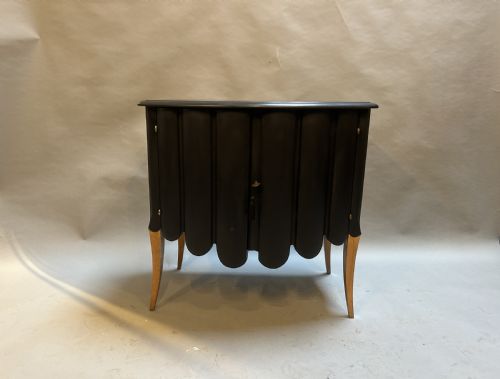
A black art deco cabinet encompasses side cabinets, drinks cabinets, display pieces, and commodes produced during the 1920s and 1930s. Buyers searching for a black art deco cabinet typically encounter ebonised wood finishes and black lacquer surfaces.
Forms range from freestanding glazed display units to low side cabinets and tall commodes. Each piece reflects the modernist design ethos of the interwar period.
How they were made
Maker workshops utilised ebonised wood and black lacquer to achieve deep, lustrous dark finishes on structural timbers. These surfaces were frequently paired with polished brass mounts, bronze details, and steel framing.
Cabinetmakers integrated glass panels for display sections and fitted specialist compartments for drinks storage within cocktail bars and side cabinets. Selected pieces incorporate marble tops and leather elements to complete the construction.
Listings feature pieces spanning the 1920s and 1930s, utilising ebonised wood, black lacquer, brass, glass, and bronze.
What varies in quality
The refinement of the surface finish distinguishes exceptional examples from standard production, particularly in the depth of black lacquer and the precision of ebonised wood polishing. Superior pieces display harmonious proportions across complex forms like cocktail bars and tall tower cabinets.
The integration of secondary materials such as cast brass mounts, bronze figures, and original glass tops elevates the overall execution. Quality also resides in the integrity of specialised internal fittings designed for drinks and display storage.
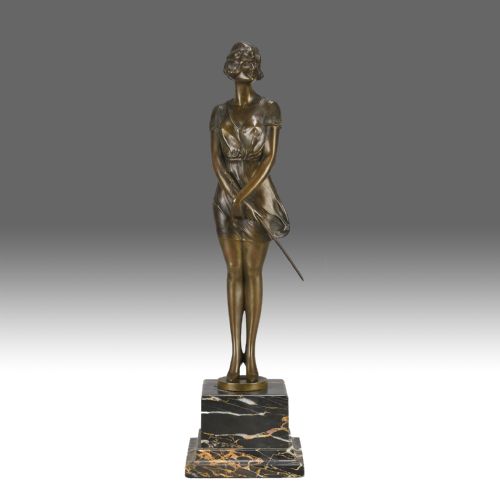
Bruno Zach·H and L Epstein
The Black Art Deco Cabinet Glossary
- Ebonised Wood
- Timber treated with stain or dye to imitate expensive ebony. This technique provided a deep black finish popular in modernist furniture.
- Chinoiserie
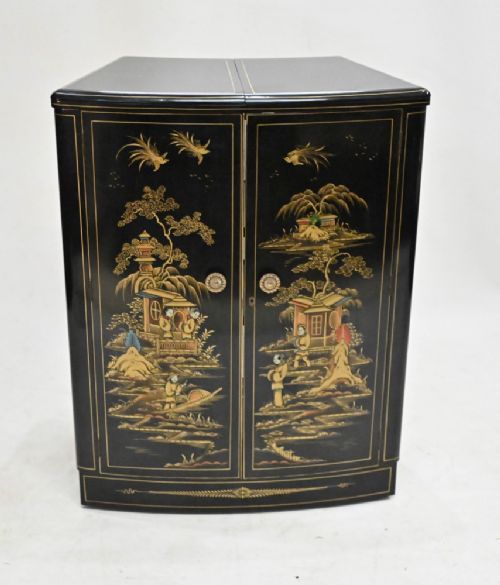
- European decorative style employing simulated Chinese motifs and techniques. Applied lacquer cabinets frequently featured oriental landscape designs.
- Commode
- A low freestanding cabinet or chest of drawers. French examples from the period often utilised ebonised finishes.
- Display Cabinet
- A glazed storage unit intended for showing objects. These pieces incorporated glass panels and brass framing.
- Cocktail Cabinet
- A specialist piece designed for beverage storage and preparation. Such furniture included fitted interiors for glasses and bottles.
Black Art Deco Cabinet: Frequently Asked Questions
What is a black art deco cabinet?
A black art deco cabinet is a storage or display piece from the 1920s or 1930s finished in ebonised wood or black lacquer. These items include side cabinets, drinks cabinets, and commodes.
Such furniture relies on the geometric lines and modernist styling characteristic of the period. The dark surfaces are often accented with brass, bronze, or glass.
How were these cabinets used?
These cabinets served multiple functions in homes of the interwar period, ranging from general storage to specialist beverage service. Drinks and cocktail cabinets included internal space for glassware and bottles.
Display units and side cabinets held decorative objects and tableware. Their designs suited both formal reception rooms and private entertaining spaces.
Where were these pieces made?
Surviving examples originate from workshops and makers across Europe, with French design featuring prominently in the available selection. Major cities served as centres for modernist furniture production.
Individual designers and firms exported these styles widely during the 1920s and 1930s. Production methods combined traditional cabinetmaking with contemporary industrial materials.
How do I style a black art deco cabinet?
A black art deco cabinet functions as a focal point in a room due to its dark finish and geometric silhouette. Pairing the piece with neutral walls allows the lacquer or ebonised wood to stand out.
Complementary styling often includes matching the brass or bronze mounts with similar metal hardware in the surrounding space. Original glass tops and mirrored interiors reflect light to balance the heavy dark exterior.