




Black and Gold Table Lamps
Black and gold table lamps combine dark lacquer, toleware, and gleaming metallic leaf to create striking contrasts that anchor a room.

Black and Gold Table Lamps
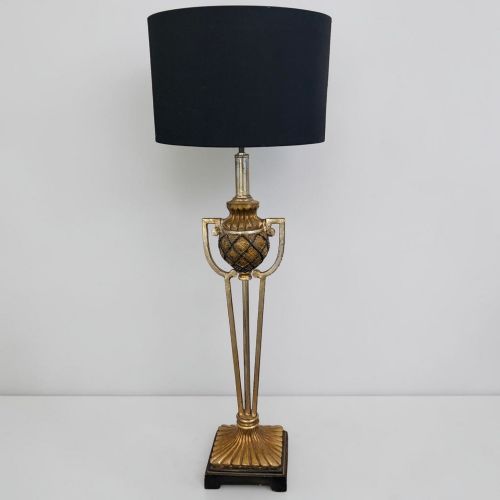
Black and gold table lamps encompass a striking mix of lighting and surfaces built around dark painted finishes, lacquer, and gilt decoration. When you search for black and gold table lamps, you encounter pieces spanning the eighteenth, nineteenth, and early twentieth centuries, drawing heavily on Regency, Chinoiserie, and Empire aesthetics.
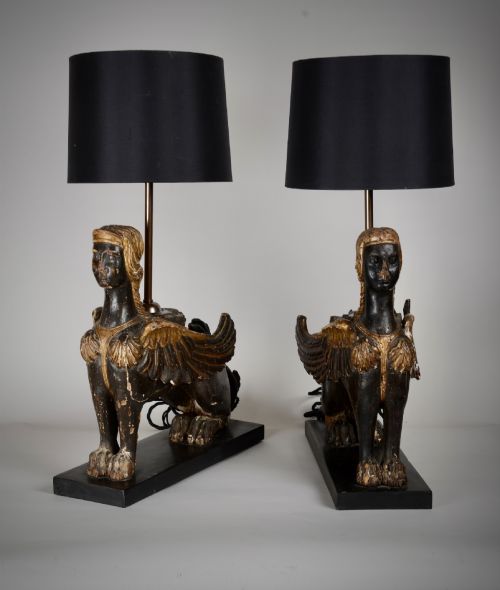
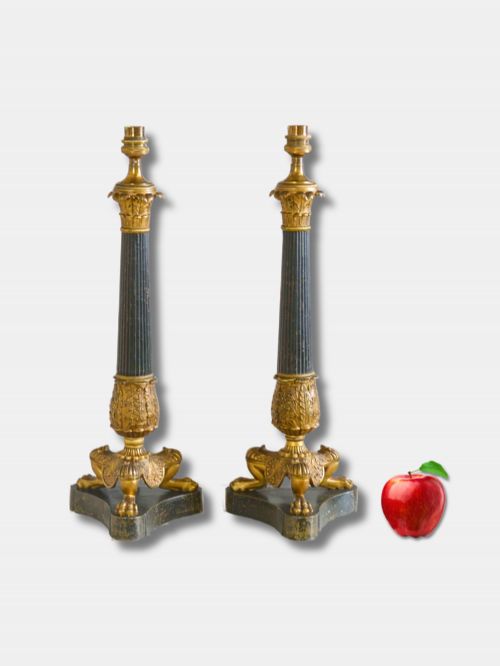
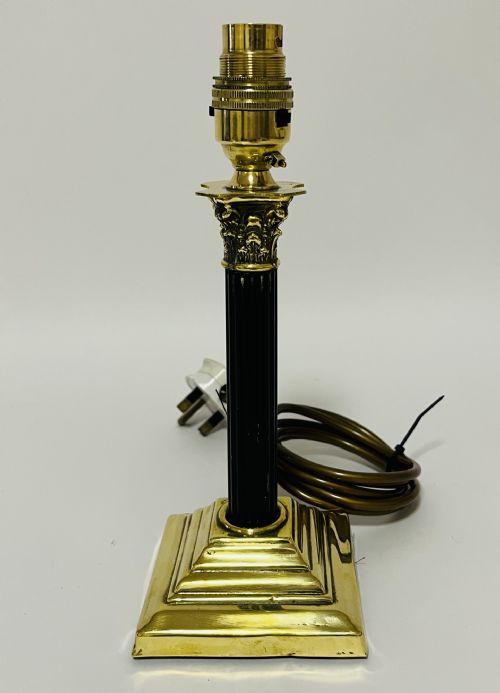
The selection here includes purpose-built lamp bases alongside adapted forms, such as tea canister lamps and converted sphinx figures. Many pieces integrate brass, marble, and toleware, reflecting classical columns, obelisks, and ornate vase profiles.
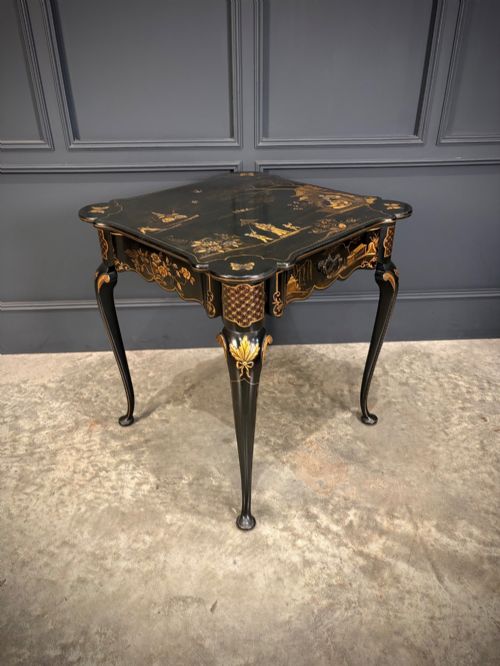
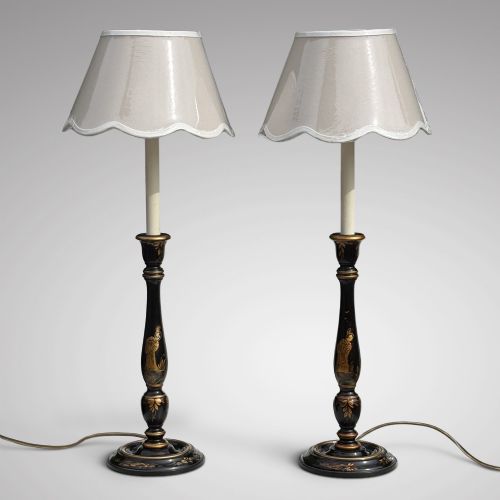
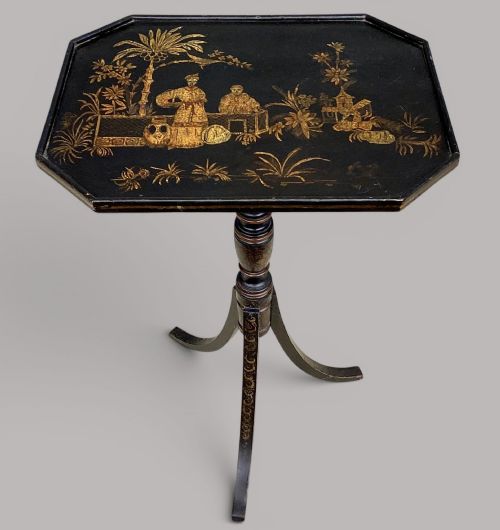
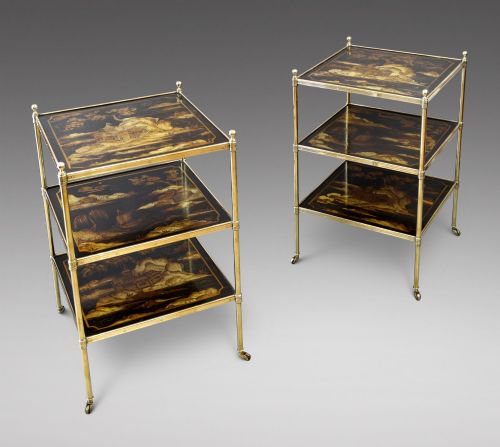
Chinoiserie designs feature prominently, often displaying hand-painted gilt decoration over black lacquer grounds on occasional tables or dedicated lamp bodies. These items bring together deep dark tones and bright metallic accents in forms ranging from compact side pieces to tall floor-standing lights.
How they were made
Maker construction relies heavily on traditional woodworking, metalcasting, and surface finishing techniques. Artisans shaped timber bases, toleware cylinders, and occasional tables before applying layers of black lacquer, paint, or ebony finishes.
Gilt ornamentation, gold leaf, and ormolu mounts were applied by hand to highlight classical motifs, Corinthian capitals, and intricate Chinoiserie scenes. Brass components, marble plinths, and gilt metal hardware were joined to create stable structures designed to support heavy fittings.
Black and Gold Table Lamps Retail Price Guide 2026
Typical asking prices for black and gold table lamps among the pieces listed under this phrase on Sellingantiques today, from the lower quarter to the upper quarter. They describe what is for sale here now, not the wider market.
Current listings feature materials such as brass, fabric, lacquer, gold leaf, wood, gilt, and marble across eighteenth to twentieth-century pieces.
What varies in quality
Quality rests in the crispness of the hand-painted detailing and the depth of the lacquer surface. Superior examples demonstrate finely executed gilt work, genuine ormolu mounts, and solid brass or marble foundations rather than light composite materials.
The integrity of the underlying material, whether seasoned wood, heavy toleware, or cast bronze, dictates the permanence of the piece. Well-preserved lacquer and securely mounted metalwork distinguish finer period items from later, simpler adaptations.
The Black and Gold Table Lamps Glossary
- Chinoiserie
- A decorative style reflecting European interpretations of Chinese artistic traditions, frequently utilising black lacquer and gold painted motifs. It appears extensively across eighteenth and nineteenth-century furniture and lighting.
- Toleware
- Enamelled or lacquered sheet metal, often painted in dark colours with gilt highlights. This material was commonly shaped into decorative canisters, urns, and lamp bases.
- Ormolu
- Gilt bronze ornamentation applied to furniture and lighting fixtures during the eighteenth and nineteenth centuries. It provides a bright golden contrast against dark wood and black lacquer surfaces.
- Regency
- An English design period spanning the early nineteenth century, characterised by classical revival motifs and influences from French Empire styles. Pieces from this era often incorporate bold contrasting colours like black and gold.
- Obelisk
- A tall, four-sided, tapering monument form adapted in the nineteenth and early twentieth centuries for decorative desk and table lamps. Solid brass and lacquered wood were frequently utilised for these geometric designs.
Black and Gold Table Lamps: Frequently Asked Questions
What periods do these lamps come from?
The pieces span several centuries, including eighteenth-century items, nineteenth-century Victorian and Regency examples, and early twentieth-century Edwardian or 1930s creations. Styles range from French Neoclassical and Empire to Anglo-Indian and Chinoiserie.
Design characteristics shift across these eras, moving from hand-carved gilded wood columns to mass-produced toleware cylinders and lacquered occasional tables adapted for lighting.
How do I identify Chinoiserie lighting?
Chinoiserie lamp bases and tables display hand-painted oriental scenes, figures, or botanical motifs rendered in gold leaf or yellow paint over a black lacquer ground. These pieces often feature cracked-ice patterns, pagodas, or stylized floral borders.
The aesthetic was popular during the eighteenth and early twentieth centuries, appearing on both dedicated lamp bodies and converted tea canisters or small drop-leaf tables.
Are these lamps original or converted?
The selection includes both purpose-built antique lamp bases and historic conversions, such as nineteenth-century tea canisters, bronze sphinx figures, and occasional tables fitted for electrical wiring. Conversions utilise existing decorative objects to create functional lighting.
Each conversion retains its original period hardware, patination, and construction methods while integrating modern internal wiring to suit contemporary domestic use.
How do I integrate black and gold lamps into a room?
The high-contrast palette of black lacquer and gold leaf pairs effectively with both neutral interiors and richly coloured traditional schemes. Tall column lamps, obelisks, and toleware urns suit sideboards, desks, and occasional tables.
Matching these lights with occasional tables or nests of tables in similar lacquered finishes creates a cohesive look across a living space or study.