



Birdcage Action Side Table
A birdcage action side table brings clever 18th-century mechanics and rich timber to a room, offering both a stable surface and a folding top.
Birdcage Action Side Table
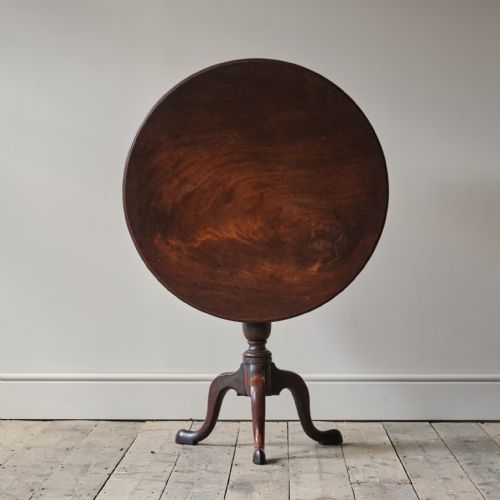
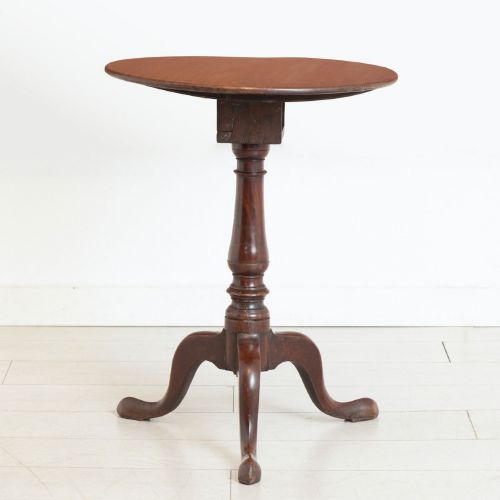
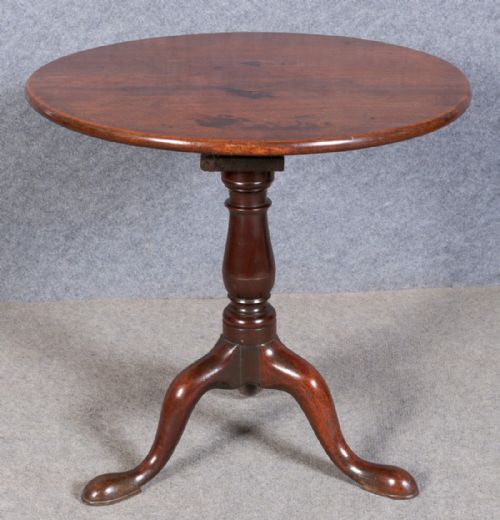
The version most commonly met on this page is the mahogany tripod table with a tilt top, often possessing a single-piece timber top or a shaped dish edge. Oak examples also appear, representing country workshop production from the same period.
Makers designed these occasional tables to stand beside seating or in corners of panelled rooms, where the folding mechanism saved valuable floor space when the table was not in use. The presence of the birdcage component distinguishes them from standard fixed-top tripod furniture.
How they were made
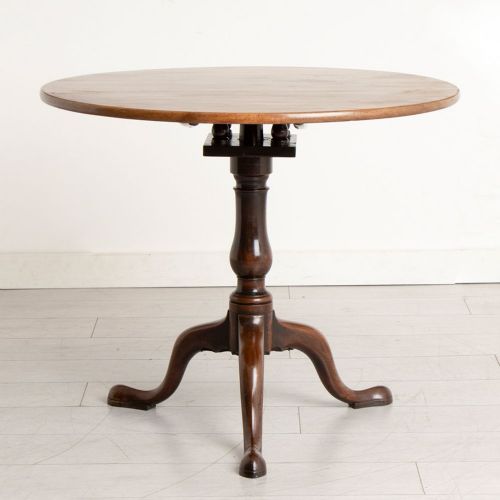
Cabinet makers constructed the distinctive birdcage frame from small blocks and turned wooden spindles that sit directly beneath the tabletop, creating the pivoting box that joins the top to the central column. This upper assembly required precise joinery so the table could tilt vertically and revolve horizontally without loosening over decades of use.
Mahogany and oak served as the primary timbers, shaped by hand with saws, planes and chisels to form the slender cabriole legs and turned baluster shafts of the tripod base. Some surfaces feature a raised dish edge carved directly from the solid plank of the tabletop rather than applied separately.
Birdcage Action Side Table Retail Price Guide 2026
Typical asking prices for birdcage action side table among the pieces listed under this phrase on Sellingantiques today, from the lower quarter to the upper quarter. They describe what is for sale here now, not the wider market.
Some country makers carved dish tops from a single thick plank of oak just to keep cups from sliding during lively card games.
What varies in quality
The choice of timber dictates much of the visual distinction, with wide single-piece mahogany boards commanding greater presence than joined tops. Grain figure, depth of colour and the crispness of the turned cage spindles separate standard workshop output from finer cabinet work.
Proportion and stability define the structural tier of these tables. Finer examples balance slender, well-curved tripod legs with a responsive, steady birdcage mechanism that holds the circular top firm when lowered.
The Birdcage Action Side Table Glossary
- Birdcage
- The wooden frame of small columns and blocks beneath the top that permits the surface to tilt and rotate. This clever mechanism allows the table to stand flat against a wall when not in use.
- Tilt top
- A tabletop hinged to tip into a vertical position. Eighteenth-century examples use the birdcage or a simple catch to lock the surface securely.
- Tripod table
- A small freestanding table supported by a central pillar and three legs. This three-legged construction prevents wobbling on uneven historic floors.
- Dish top
- A circular tabletop with a concave, raised rim carved from the solid wood. It prevented cups and small objects from sliding off the edge.
- Snaptop
- An alternative term for a tilt-top table utilising a spring catch to hold the top horizontal. The catch releases the surface for vertical storage.
Birdcage Action Side Table: Frequently Asked Questions
What is birdcage action?
Birdcage action refers to the small wooden framework of vertical spindles and horizontal plates fixed to the underside of a tabletop. It allows the surface to rotate fully in a horizontal circle and tilt up into a vertical position.
Cabinet makers developed this mechanism in the eighteenth century to make occasional tables easier to store out of the way against a wall.
How do you tilt the top?
Most tables use a wooden catch or pin passing through the birdcage frame to lock the top in a flat, horizontal position. Removing or releasing this catch lets the whole top pivot backward on its hinge.
When returning the table to use, ensure the catch engages fully to prevent the surface from tipping unexpectedly.
Where were they placed?
These tables served as versatile occasional furniture in Georgian sitting rooms, drawing rooms and libraries. Owners moved them easily beside chairs for reading, writing or serving tea.
Because the tops folded flat, servants could store multiple tables against the perimeter of a room during larger gatherings.
How do I spot an 18th-century piece?
Eighteenth-century examples display hand-cut joinery, pegged tenons in the tripod base, and dense timbers like mahogany or oak with deep patination accumulated over generations. The turning on the central pillar and cage spindles shows the slight irregularities typical of lathe work before industrial standardisation.
Examine the underside of the top for timber shrinkage and tool marks that confirm age.