




Bird and Flower Art
Bird and flower art brings together natural subjects across centuries of painting, bronze and porcelain, offering timeless decorative presence for any interior.
Bird and Flower Art
Bird and flower art encompasses diverse visual representations spanning the seventeenth to the mid-twentieth century, featuring heavily in both Eastern and Western traditions. When exploring bird and flower art, one encounters oil paintings on canvas, delicate watercolours on silk and paper, alongside heavy cast bronze and intricate porcelain vessels.
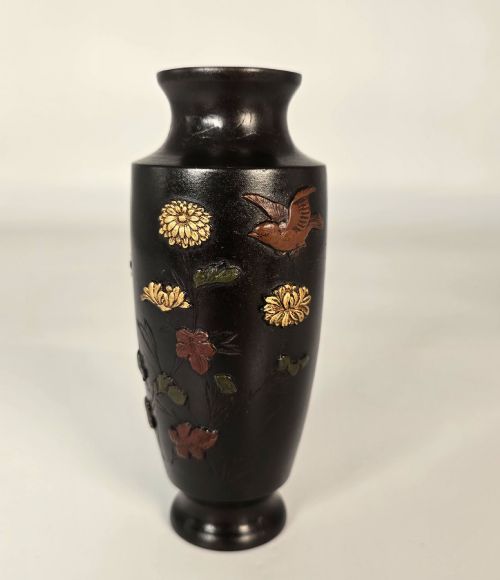
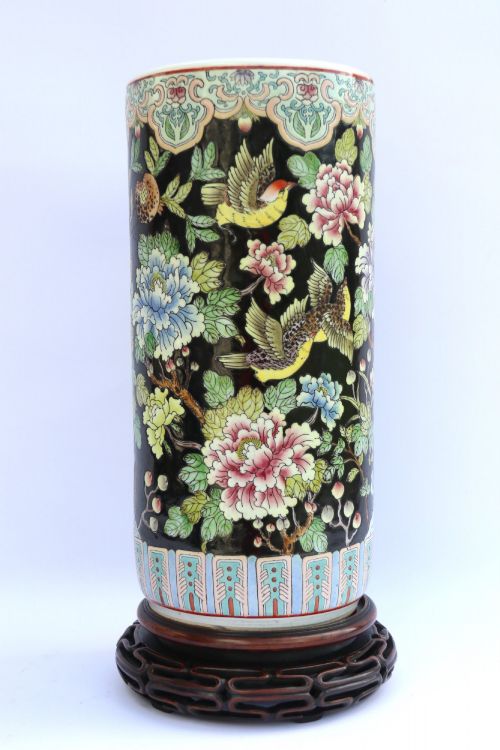
The objects take several distinct forms, most commonly oil paintings of still lifes, framed watercolours of nature scenes, and decorative ceramic or metal vases. Examples range from Dutch golden age style flower paintings to Japanese Meiji period cloisonné enamel and Chinese painted panels.
Origins stretch from European workshops in Flanders and the Netherlands to Asian centres including Japan and China, reflecting global artistic engagement with avian and botanical motifs. Pieces frequently incorporate traditional styling such as Qing influences or specific period markers like the Meiji era.
Materials and Techniques
Makers utilised traditional painterly mediums including oil paint on canvas and watercolour on paper or silk to capture intricate botanical and avian details. These painted works rely on layered pigments and precise brushwork to delineate feathers, petals and foliage.
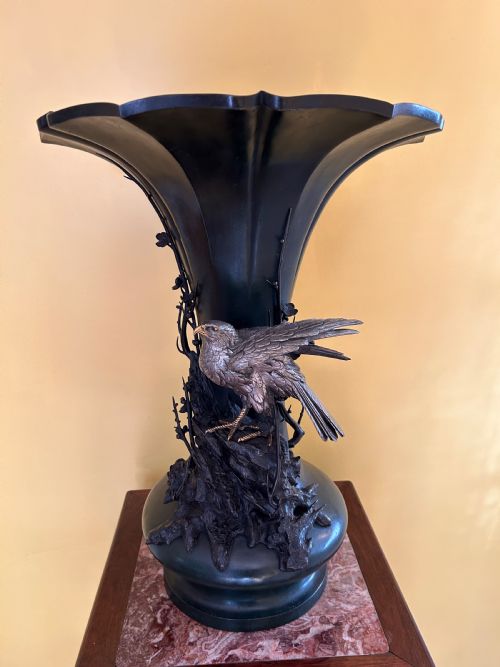
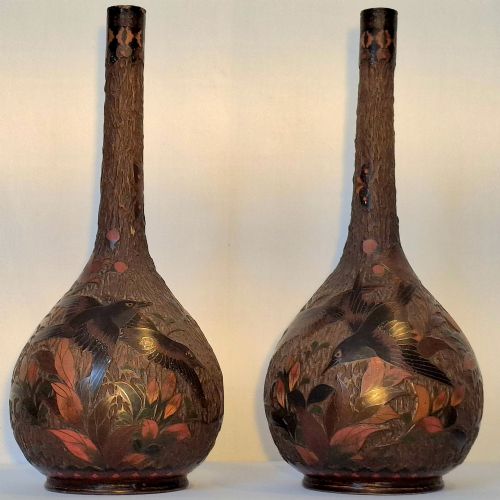
Three-dimensional pieces employ durable materials such as bronze, copper, wood, and porcelain, shaped through casting, turning, and ceramic firing. Metal vessels frequently incorporate applied finishes like cloisonné enamel, silver wire, and mixed metal patination to render coloured designs upon rigid substrates.
Bird and Flower Art Retail Price Guide 2026
Typical asking prices for bird and flower art among the pieces listed under this phrase on Sellingantiques today, from the lower quarter to the upper quarter. They describe what is for sale here now, not the wider market.
A painted leather screen keeps the draft out while casually housing a menagerie of historical flora and fauna.
Assessing Quality
Quality rests upon the execution of the hand, distinguishing meticulous brushwork or precise metal wire placement from mechanical or hurried production. Superior examples display depth of colour, balanced composition, and refined handling of natural textures.
The integrity of the underlying material and the preservation of surface finishes dictate the overall standing of an object. Intact enamels, stable canvas grounds, and crisp casting in bronze or porcelain separate the finest items from more standard domestic wares.
Gaspar Peeter Verbruggen·Ando Jubei·Eloise Harriet Stannard·Rene Lalique·Iracema Arditi
The Bird and Flower Art Glossary
- Cloisonné
- A metalwork technique where thin wire is soldered to a base to form compartments filled with enamel paste before firing. This method creates vibrant, patterned surfaces often seen on decorative vases.
- Still life
- A work of art depicting mostly inanimate subject matter, typically commonplace objects which may be either natural or man-made. In these selections, the genre focuses heavily on floral arrangements and natural specimens.
- Meiji Period
- The era in Japanese history spanning from 1868 to 1912, characterised by industrialisation and the opening of trade with the West. Works from this time often exhibit exceptional metalwork and enamel craftsmanship.
- Famille noire
- A Chinese porcelain classification distinguished by a glossy black enamel ground, usually decorated with polychrome floral or bird motifs. This distinctive palette creates high visual contrast.
- Basse-taille
- An enamelling technique in which the metal ground is carved or engraved so that enamel placed over it creates a translucent, low-relief design. It adds dimensional depth to metal surfaces.
Bird and Flower Art: Frequently Asked Questions
How are these pieces best displayed?
Paintings require stable interior walls away from direct sunlight to protect pigments and canvas grounds from environmental degradation.
Vases and plates function well on sturdy wooden furniture or dedicated stands, allowing secure viewing of detailed surfaces.
What subjects typically appear in this art?
Motifs frequently centre on botanical studies featuring roses, tulips, and plum blossoms alongside native birds such as pheasants and wild fowl.
Compositions often merge natural elements into decorative landscapes or structured still life arrangements.
How do I identify a Meiji period piece?
Japanese items from this era often display advanced metalworking techniques like mixed bronze and silver wire cloisonné.
Maker marks and specific production styles typical of late nineteenth-century workshops further confirm the period origin.
Are these works fragile?
Ceramics and enamelled metal vessels demand careful handling to prevent chipping or surface scratching on delicate glazes.
Canvas and paper items require controlled humidity levels to maintain the stability of the paint and silk supports.