
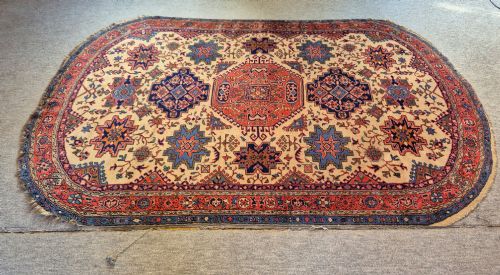
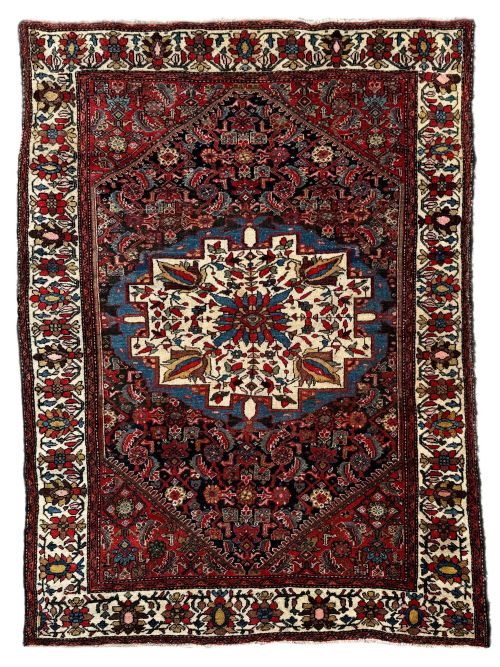


Bijar Wool Rug
A bijar wool rug is a heavy, durable Persian textile woven by Kurdish artisans, offering dense construction and lasting floor service for busy rooms.
Bijar Wool Rug
When you search for a bijar wool rug, you encounter traditional Persian tribal formats ranging from small area pieces to large room-size carpets and narrow runner rugs. The offerings span the nineteenth century and the early decades of the twentieth century, reflecting enduring weaving traditions from West Persia.
Many examples are designated as Kurdish or Bidjar pieces, often displaying classical formats such as the Kelleh carpet or flatwoven kilim structures. These textiles serve well in spaces requiring robust floor coverings that withstand heavy foot traffic while retaining distinct regional character.
Materials and construction
The construction relies heavily on durable wool and hand-spun wool fibres paired with cotton foundations to create a rigid, tightly packed pile. This dense knotting technique contributes to the legendary heavy weight and structural resilience associated with West Persian tribal weaving.
Weavers incorporate traditional regional designs, including the Herati motif and floral patterns, executed with resilient natural dyes. The meticulous packing of the foundation materials ensures the rugs maintain their physical integrity over generations.
Listings span periods from the 1870s through the 1930s, featuring wool, cotton, and hand-spun wool across various room-size and runner formats.
Judging quality in tribal carpets
Quality in these textiles depends on the density of the weave and the tightness of the wool packing, which dictates the rigidity and longevity of the carpet. Finer examples display precise execution of traditional motifs such as the Herati design across balanced fields.
The choice of ground colour and wool preparation also separates standard production from exceptional survivals, particularly when unusual tones like lemon appear. Condition of the foundation and uniformity of the pile structure further influence the overall calibre of each piece.
The Bijar Wool Rug Glossary
- Kelleh
- A specific rectangular carpet format that is longer than a standard area rug but narrower than a full room-size carpet. These pieces were traditionally designed to fit specific architectural spaces in Persian homes.
- Kilim
- A flatwoven textile produced without a pile, resulting in a lighter, reversible fabric. These are often utilised as runners or decorative floor coverings.
- Herati
- A recurring traditional Persian repeating pattern composed of a floral head enclosed within a rhombus and flanked by curved leaves. It is frequently seen on classical room-size carpets and smaller rugs.
- Foundation
- The underlying structure of warp and weft threads that supports the pile knots. In these textiles, cotton is commonly used to provide a stable base for the dense wool.
Bijar Wool Rug: Frequently Asked Questions
How do I clean my rug?
Vacuum gently without using a rotating brush roll to protect the wool pile from unnecessary friction and fibre loss.
Professional specialist cleaning is recommended for heavier carpets to preserve the integrity of the cotton foundations and natural dyes.
Where were these woven?
These textiles originate from West Persia, specifically produced by Kurdish tribes in and around the town of Bijar.
The regional weaving traditions combine Persian design symmetry with robust Kurdish tribal knotting techniques.
Are these suitable for hallways?
Narrow runner formats and specific long rugs from this tradition fit well in corridors and high-traffic transitional spaces.
Their dense wool construction provides exceptional durability against daily foot traffic.
How do I date a piece?
Dating relies on stylistic markers, structural analysis of the wool and cotton foundation, and comparison with documented nineteenth and early twentieth-century examples.
Slight variations in regional motifs and dye palettes often point toward specific production decades.