






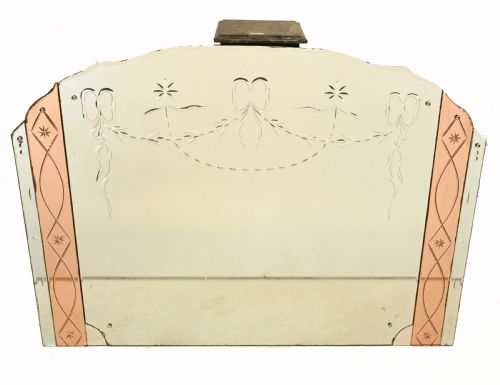


Bevelled Glass Mantel Mirror
A bevelled glass mantel mirror catches the room's light and anchors a hearth, bringing both depth and period character to a mantelpiece.
Bevelled Glass Mantel Mirror
When you search for a bevelled glass mantel mirror, you encounter overmantel mirrors and wall-hanging examples spanning the Victorian, Edwardian, and Art Deco periods. These pieces sit squarely above a fireplace or upon a principal wall, serving both a functional and a decorative purpose in the interior.
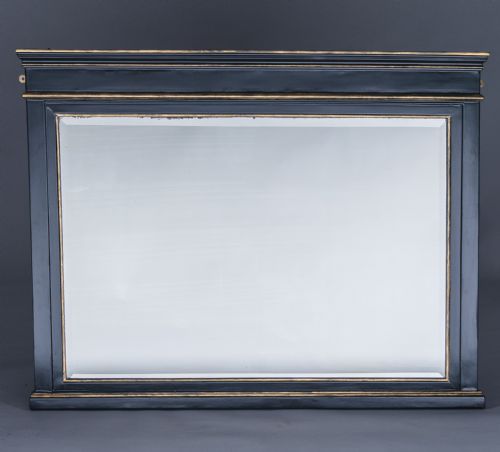
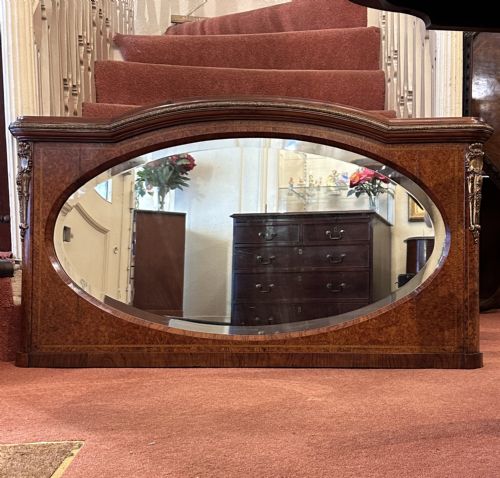
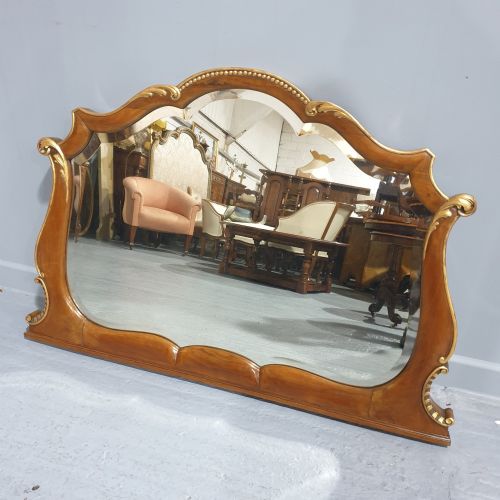
The versions you meet most frequently on this page belong to the nineteenth century, finished in gilt, walnut, or ebonised wood, alongside geometric Art Deco interpretations from the nineteen-twenties and thirties. Their proportions range from large, architectural overmantels designed for grand chimney breasts to compact, round or panelled glass designs.
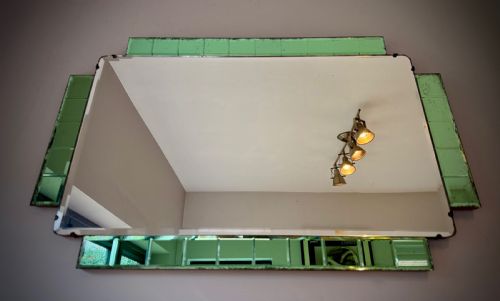
Originating largely from British and French workshops, these mirrors reflect the changing tastes of their eras, shifting from ornate Victorian gilt frames and French neoclassical revivals to clean lines and emerald green glass panels of the interwar years.
Evaluating quality
The refinement of the frame carving and the depth of the gilding set the standard for earlier examples, where hand-carved wood and gesso demonstrate superior artisan skill. Finer pieces maintain crisp moulding details and retain their original mirror glass, which displays natural age without losing its reflective clarity.
In later twentieth-century pieces, quality lies in the precision of the geometric glass assembly and the secure integration of contrasting panels, such as emerald green glass or metal mounts, within the overall design.
One unexpected nineteen-thirties piece trades reflection for sound entirely, appearing as an Art Deco Westminster chiming mantel clock set with glass.
The Bevelled Glass Mantel Mirror Glossary
- Bevelled glass
- Glass with an edge that has been cut and polished to an angle of less than ninety degrees. This technique creates a decorative framing effect and refracts incoming light.
- Overmantel mirror
- A large mirror specifically designed to be hung or placed upon the mantelpiece above a fireplace. These pieces often feature wide proportions to match the span of the chimney breast.
- Giltwood
- Timber, commonly gesso-coated wood, covered with a thin layer of gold leaf or metallic powder. It provides a luminous surface that catches low candlelight and daylight.
- Ebonised wood
- Timber treated with chemical stains or black finishes to imitate the dark, dense appearance of ebony. Victorian makers frequently used this technique to create strong contrast with gilt details.
- Marquetry
- The art of applying small pieces of veneered wood to a structure to form decorative patterns and pictures. Edwardian makers utilised this technique on mirror frames.
Bevelled Glass Mantel Mirror: Frequently Asked Questions
How do I hang a heavy overmantel mirror?
Secure heavy timber and gilt overmantel mirrors directly into the wall studs using robust brackets rated for the weight of the frame and glass. Distribute the load evenly across multiple fixing points to ensure stability above the hearth.
Alternatively, rest the weight of the mirror securely on the mantelpiece itself while using hidden wall tethers to prevent the tall frame from tipping forward into the room.
How do I clean antique mirror glass?
Clean the glass gently using a soft, lint-free cloth and a mild, ammonia-free cleaning solution applied to the cloth rather than directly to the surface. This prevents moisture from seeping behind the glass plate and damaging the original silvering.
Avoid pressing hard on fragile corners or areas where the bevelled edge meets the rebate of the wooden or gilt frame.
Are Art Deco mirrors original to the period?
Examine the backing boards, fixings, and the composition of the glass to determine the period of an Art Deco mirror. Pieces from the nineteen-twenties and thirties often feature characteristic metal fixings, layered glass panels, and period-appropriate timber or coloured glass.
Look for honest signs of age in the silver backing and the weight of the mirror plate, which differ significantly from modern reproductions.
What is the difference between an overmantel and a wall mirror?
Overmantel mirrors are traditionally proportioned to sit lengthways along the shelf of a fireplace, matching the horizontal width of the hearth below. Their dimensions and frames are designed to command the central wall space of a reception room.
Standard wall mirrors take on circular, vertical, or square formats suited for general placement across different rooms rather than anchoring a specific architectural fireplace feature.