






Beveled Glass Clock
A beveled glass clock brings together heavy brass frames and clear panes that show the movement ticking inside.
Beveled Glass Clock
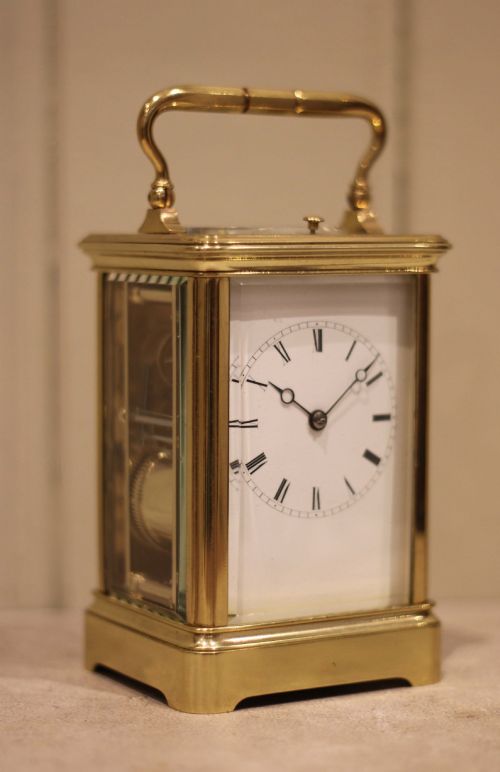
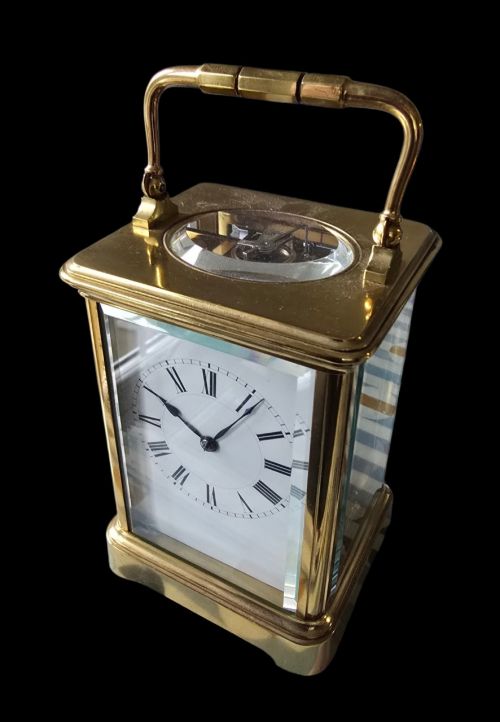
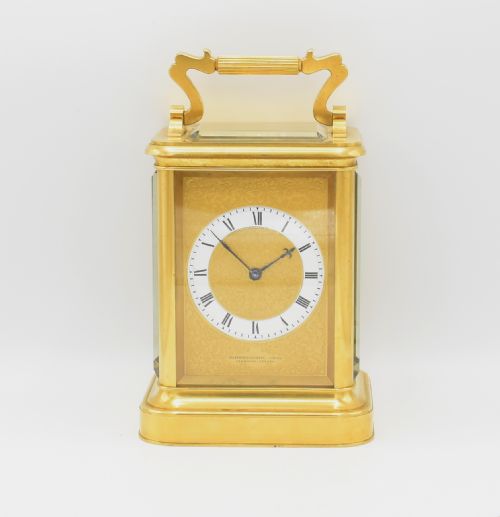
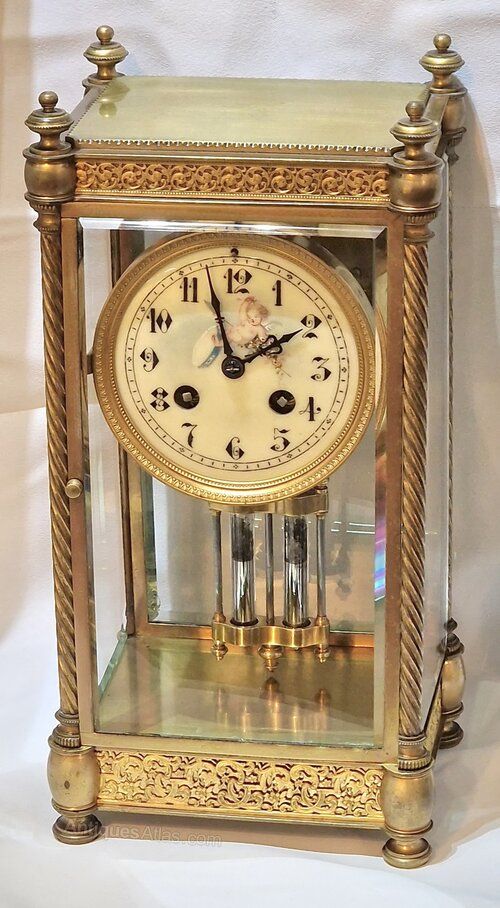
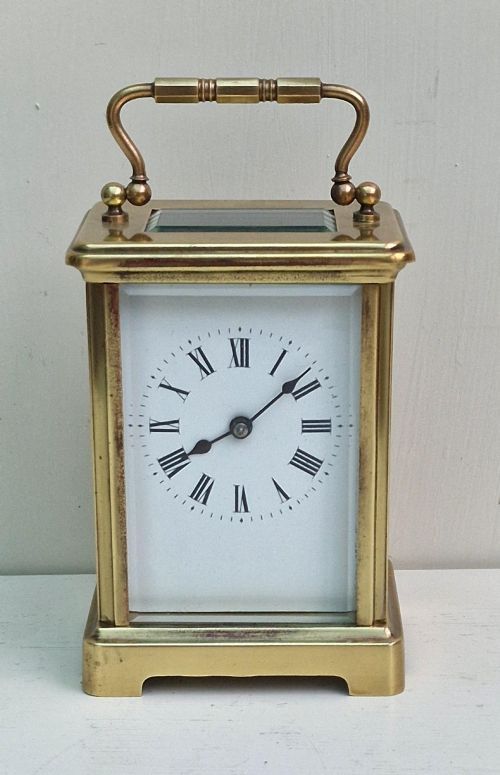
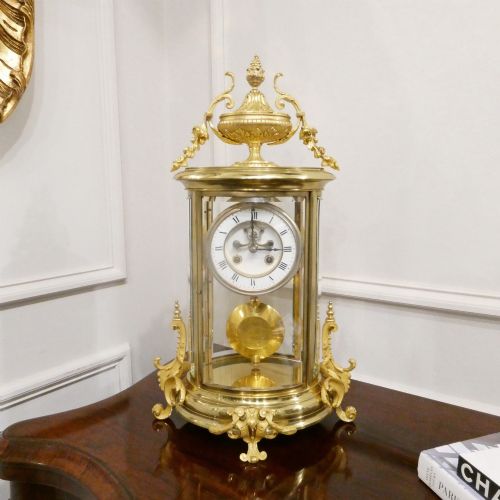
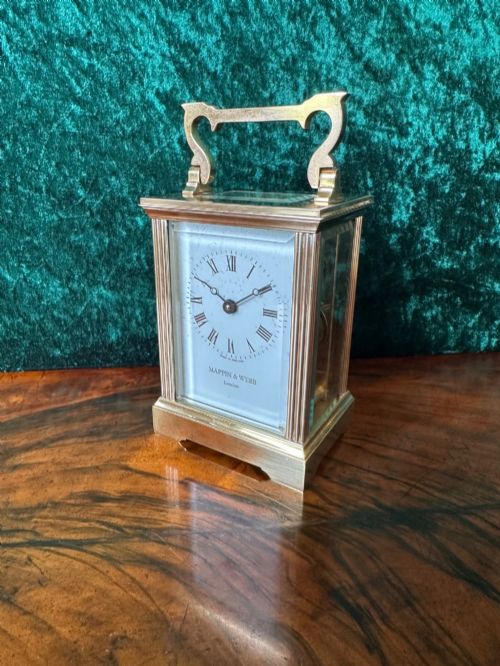
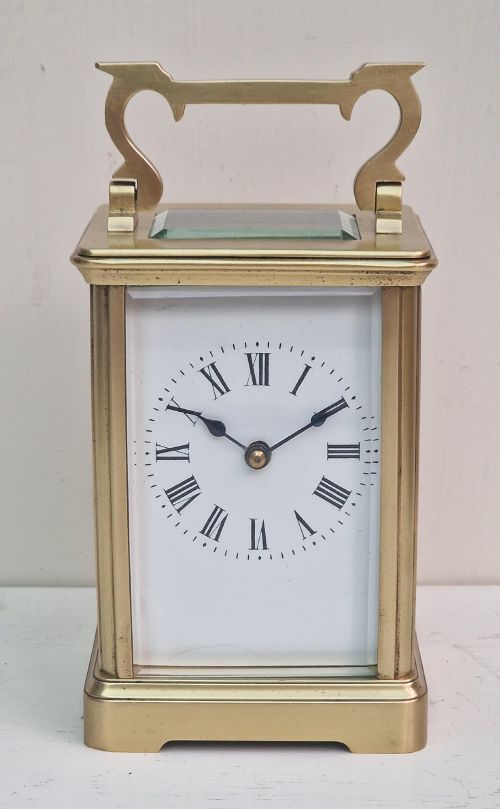
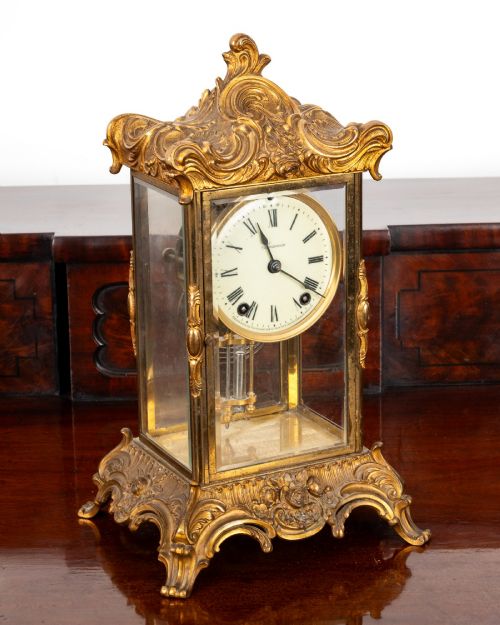
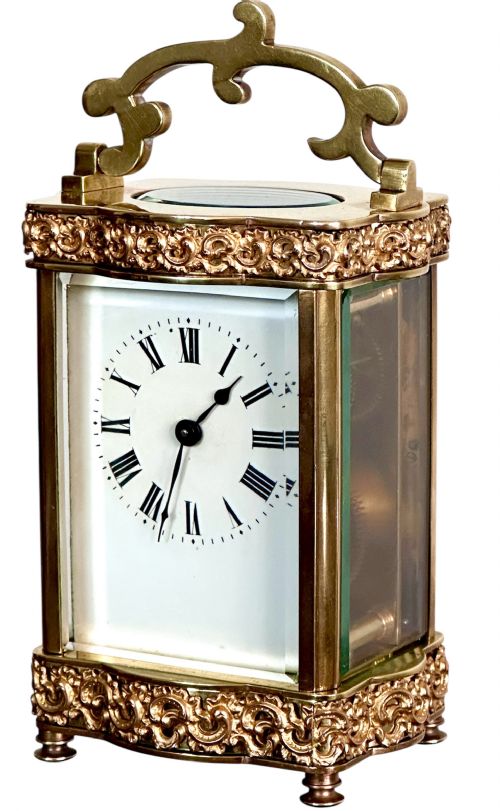
When you examine a beveled glass clock on this page, you are looking at carriage clocks and four-glass mantel clocks housed in brass, gilt bronze, or gilt brass cases. These pieces date from the Victorian era, the nineteenth century, and the early twentieth century, spanning periods from 1870 to 1950. French workshops produced many of these examples, alongside British makers who also supplied carriage clocks during the same decades.
The form relies on thick panes of glass with angled, polished edges that fit securely into metal frames. You will most commonly encounter carriage clocks with integral handles for travel, and four-glass mantel clocks designed to sit steadily on a shelf or tabletop. The dial often sits behind a primary glass panel, sometimes accented with enamel or cherub motifs, exposing the escapement and gear trains to the light.
How they were made
Maker's workshops built these clocks using cast and polished brass, gilt bronze, and steel components assembled into rigid metal chassis. The heavy glass panes required careful grinding and edge-beveling to fit snugly into the metal rebates without rattling. Enamel was frequently applied to the dial faces for numerals, while the cases themselves often featured engraved brass details or serpentine outlines.
The movements rely on brass gear trains, steel pivots, and escapements designed for either eight-day running, striking, repeating, or alarm functions. Crystal regulators and four-glass mantel clocks utilised transparent panels on all sides to showcase the mechanical complexity of the interior pendulum or balance wheel.
Beveled Glass Clock Retail Price Guide 2026
Typical asking prices for beveled glass clock among the pieces listed under this phrase on Sellingantiques today, from the lower quarter to the upper quarter. They describe what is for sale here now, not the wider market.
Some models hide tiny ships wheel pendulums behind their crystal panes, turning the steady tick of time into a nautical display.
What varies in quality
The standard of a beveled glass clock depends on the crispness of the case casting, the depth of the bevels on the glass panes, and the reputation of the maker. Finer examples display precise engraving on the gilt brass or bronze frames, tightly fitted doors, and movements that incorporate striking, chiming, or repeating mechanisms by recognised makers.
Simpler timepieces present plainer brass cases and standard glass panels without complicated train work or supplementary alarms. The weight of the metal, the clarity of the enamel dial, and the presence of signed plates on the movement separate ordinary production models from high-end workshop pieces.
Samuel Marti·Mappin and Webb·John Morley·Duverdrey and Bloquel·Drocourt
The Beveled Glass Clock Glossary
- Bevelled glass
- Glass with an edge ground and polished to an acute angle. This catches the light and creates a decorative border within the metal frame.
- Carriage clock
- A portable spring-driven timepiece with a handle, originally designed for officers travelling during the nineteenth century.
- Four glass clock
- A mantel clock featuring glass panels on the front, back, and both sides, allowing an unobstructed view of the movement.
- Gilt brass
- Brass coated with a thin layer of gold or gold-coloured wash to enhance its appearance and protect the base metal from tarnishing.
- Escapement
- The mechanical linkage that controls the release of power from the gear train to the balance wheel or pendulum.
- Repeating movement
- A mechanism that chimes the hours and quarters on demand when a lever or button on the case is pressed.
Beveled Glass Clock: Frequently Asked Questions
What is a carriage clock?
A carriage clock is a portable spring-driven timekeeper fitted with a top handle for travel. These pieces rely on a robust frame and thick glass panels to protect the internal movement.
Victorian and French makers produced them in large numbers, often equipping them with striking or repeating mechanisms for use away from home.
How do four glass clocks work?
Four glass clocks are mantel timepieces that replace wooden or solid metal cases with transparent panels on the front, back, and sides. This design lets light pass straight through to highlight the oscillating pendulum or balance wheel.
They generally sit on a shelf or desk, functioning as both decorative objects and precise timekeepers.
How do I wind my clock?
Wind these clocks using the appropriate key inserted into the winding squares on the rear dial plate or movement backplate. Turn the key gently until you feel firm resistance, avoiding any attempt to force the spring past its limit.
Most nineteenth-century examples require winding every eight days to maintain accurate timekeeping.
What is a repeating movement?
A repeating movement is an added mechanical function that chimes the last hour or quarter-hour when a button or cord is operated. This allowed owners to check the time in total darkness.
Such complications generally indicate a higher grade of manufacture from established French or British workshops.