

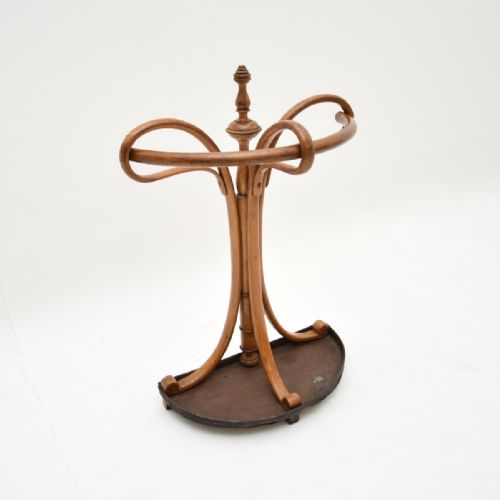
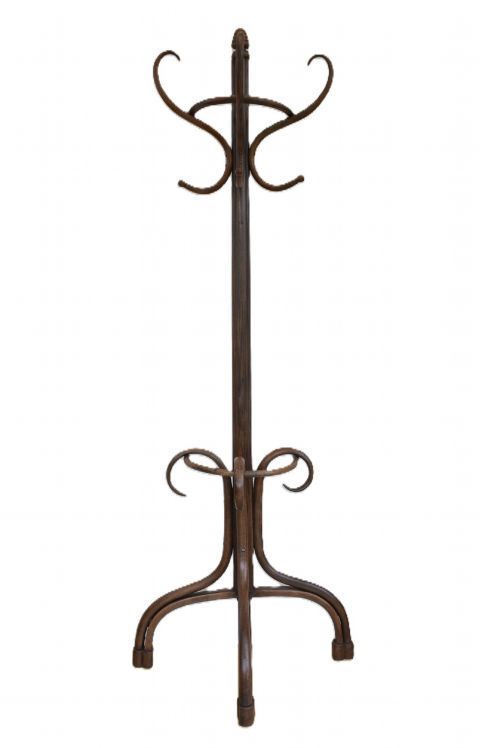


Bentwood Wood Umbrella Stand
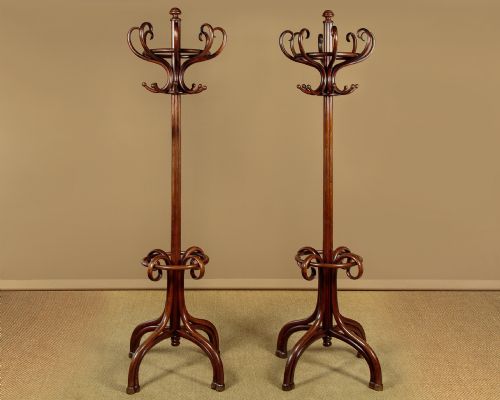
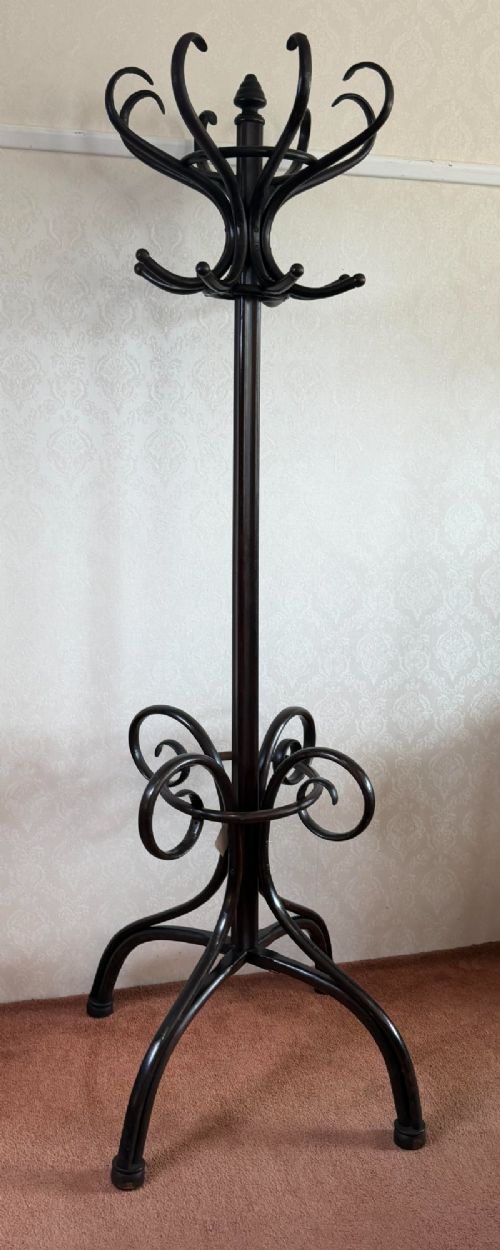
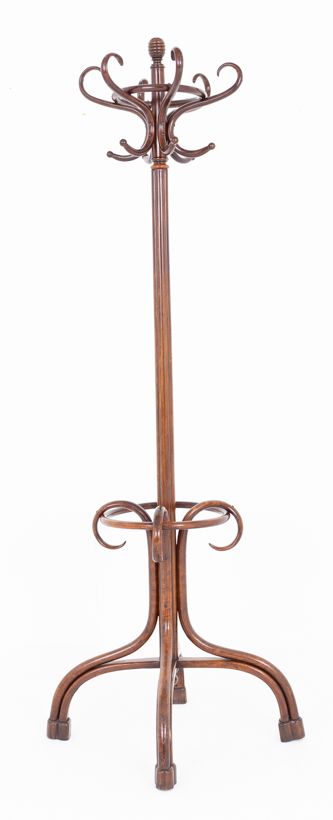
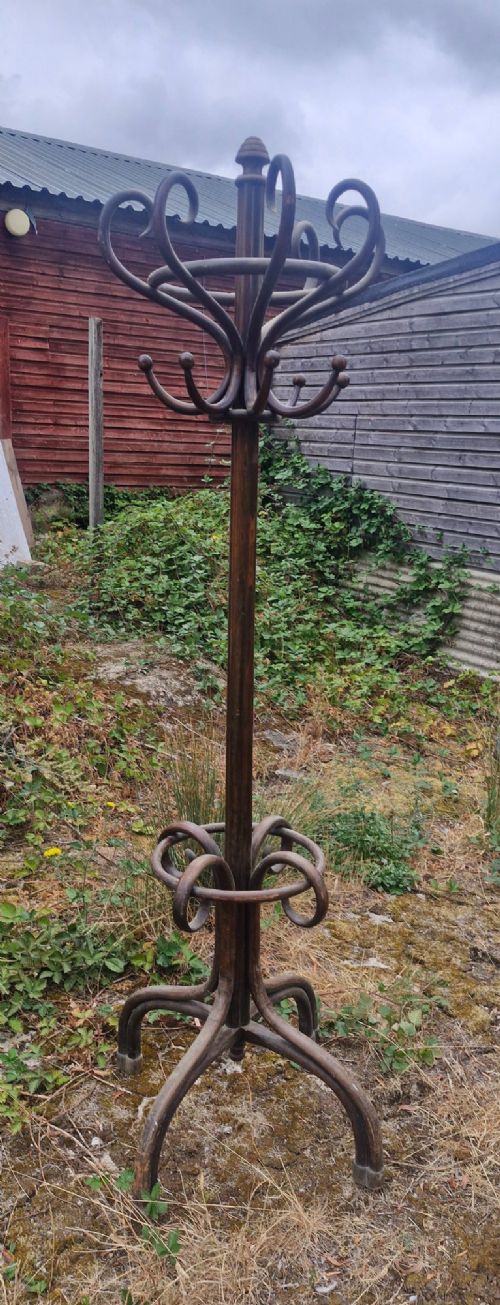
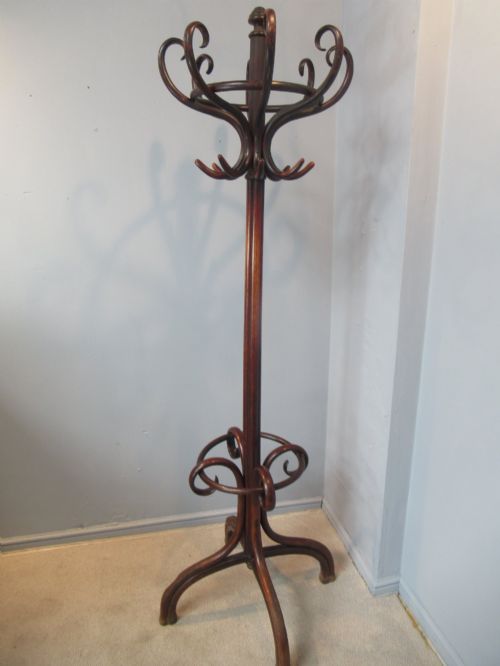
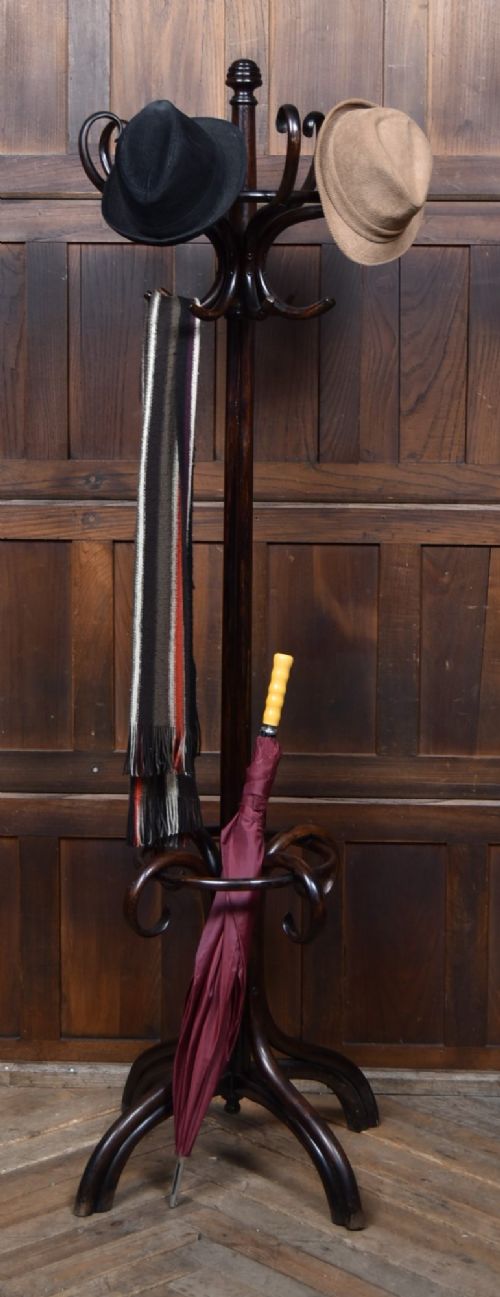
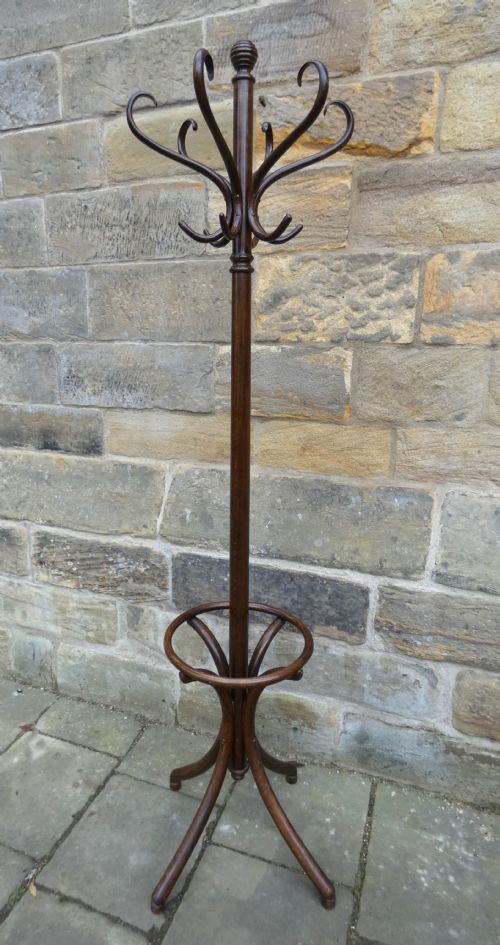
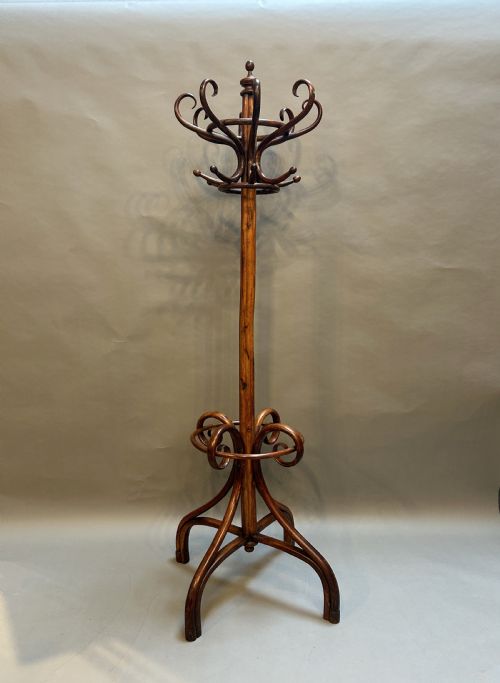
A bentwood wood umbrella stand brings lightness and curving organic form to a hallway, created through steam-heating beech into fluid structural shapes.
Bentwood Wood Umbrella Stand
A bentwood wood umbrella stand represents the clever intersection of domestic utility and innovative furniture design emerging from the late nineteenth and early twentieth centuries. These pieces typically take their place in hallways alongside matching coat trees, hat racks, and hall stands from the Victorian and Edwardian periods.
The items you encounter most frequently on this page span from the 1880s through the 1920s, reflecting the peak era of Austrian and Viennese production. Makers like Thonet championed these styles, transforming simple timber into practical hallway furniture that remains durable and sought after today.
How they were made
Makers relied principally on beech and steamed beechwood, utilising moisture and heat to make the timber pliable enough to bend into curves. Once softened, the wood was placed in iron forms to dry and retain its permanent shape.
Wood stain and metal components frequently complete the construction, adding rich colour to the beech and reinforcing the joints where curving struts meet the central column.
Bentwood Wood Umbrella Stand Retail Price Guide 2026
Typical asking prices for bentwood wood umbrella stand among the pieces listed under this phrase on Sellingantiques today, from the lower quarter to the upper quarter. They describe what is for sale here now, not the wider market.
A revolving hall stand lets you spin your coat round like a lazy Susan while looking for your car keys.
What varies in quality
The distinction between standard examples and superior pieces rests in the complexity of the curves and the crispness of the turning on the central columns. Better examples exhibit more ambitious structural forms, such as revolving tops or double-tier arrangements.
Original surface finishes and the integrity of the steam-bent joins also determine the standing of a piece. Fine quality items maintain tight, unwarped frames where the timber has held its tension across decades of daily use.
Thonet
The Bentwood Wood Umbrella Stand Glossary
- Bentwood
- Wood that has been heated with steam to make it pliable and then bent into curved shapes. This technique defines the entire aesthetic of the furniture listed here.
- Beech
- A hard, light-coloured timber commonly used for steam-bending because of its strength and uniform grain. It takes wood stain exceptionally well.
- Hall stand
- A piece of hallway furniture designed to hold coats, hats, and walking sticks or umbrellas. These often combine multiple functions into a single vertical structure.
- Thonet
- The pioneering firm associated with the mass production of bentwood furniture. Their workshops set the standard for nineteenth-century design.
Bentwood Wood Umbrella Stand: Frequently Asked Questions
How do I date a bentwood stand?
Dating relies on stylistic clues, construction methods, and period characteristics recorded across the late nineteenth and early twentieth centuries. Pieces often carry paper labels or stamps from makers active during the Victorian and Edwardian eras.
Examining the complexity of the bent elements and the type of metal hardware used helps narrow down whether a piece originates from the 1880s or later decades like the 1920s.
Are these stands sturdy enough for daily use?
The clever engineering of steam-bent beechwood distributes weight efficiently, making these structures surprisingly robust for holding coats and umbrellas. The organic flexibility of the curved timber absorbs daily impacts well.
Placing them on a flat surface ensures the wall-standing or freestanding designs remain balanced under the weight of heavy garments and walking sticks.
How should I care for bentwood furniture?
Maintenance involves keeping the timber away from extreme moisture and direct heat sources that might affect the wood stain or vintage finish. Occasional dusting with a soft cloth preserves the natural sheen of the beech.
Avoiding harsh chemical polishes protects the historic surface integrity developed over a century of existence in domestic hallways.
What is the difference between hall stands and coat stands?
Hall stands often incorporate multiple functions including umbrella rings, hat hooks, and sometimes mirrors or glove boxes within a larger footprint. Coat stands focus more narrowly on vertical posts with curving arms for garments and headwear.
Both forms share the characteristic bentwood construction technique, though umbrella-specific stands feature dedicated metal drip pans or lower rings at the base.