



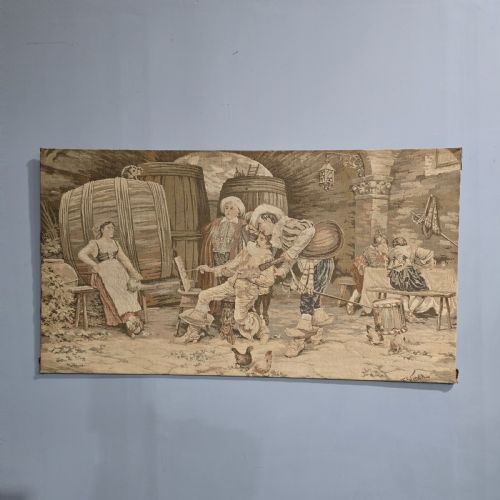
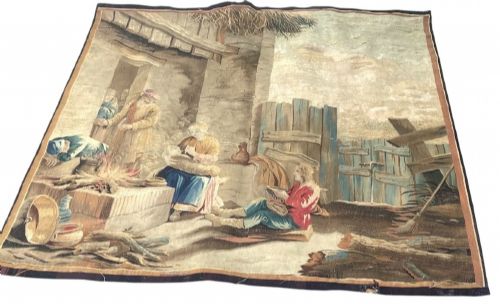
Beige Wool Wall Panel
A beige wool wall panel brings warmth and tactile depth to a room through centuries-old textile artistry.
Beige Wool Wall Panel
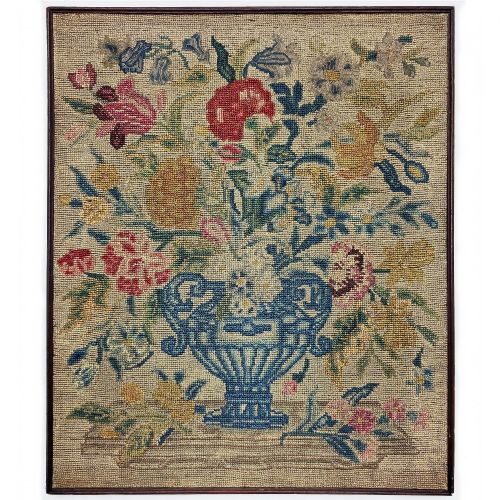
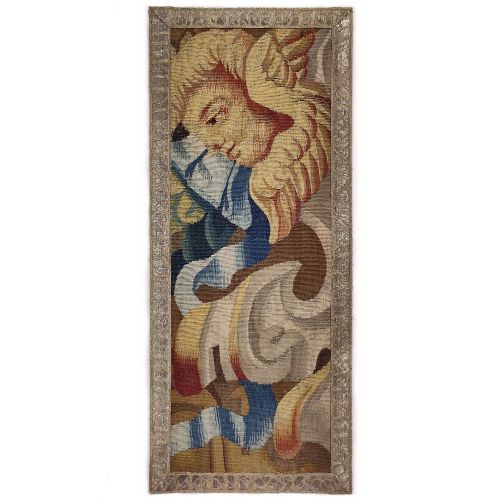
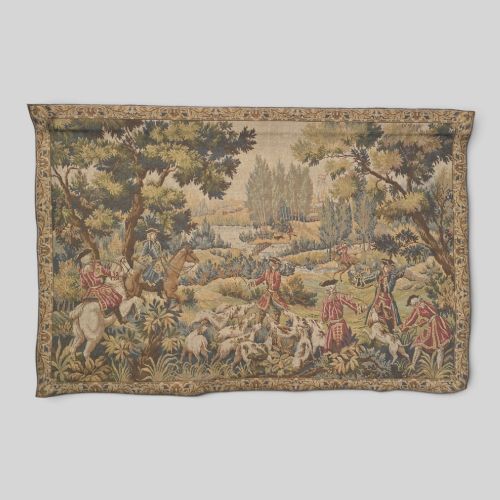
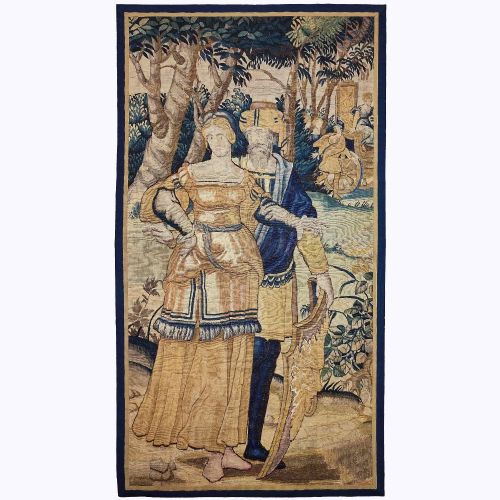
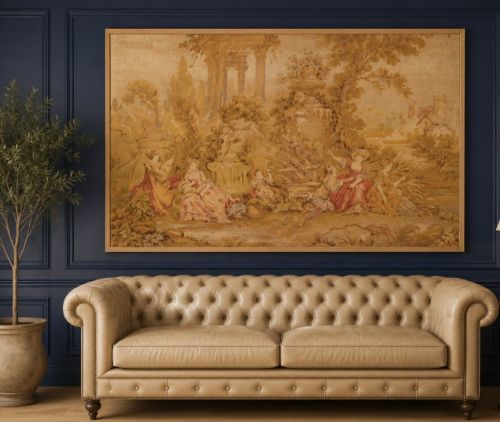
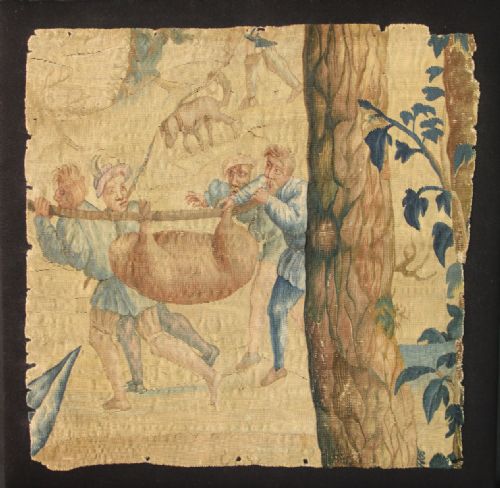
A beige wool wall panel encompasses historic tapestries, needlework fragments, and framed textile art spanning from the sixteenth century to the early twentieth century. Buyers seeking this phrase encounter Flemish Renaissance and Baroque fragments alongside French pastoral scenes and nineteenth-century needlepoint works.
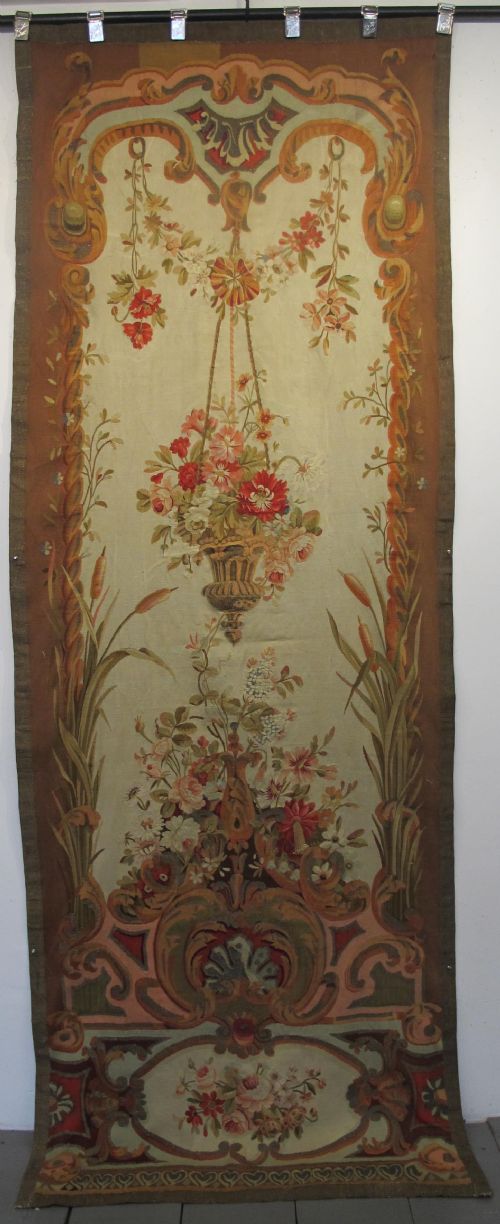
The selections on this page lean heavily toward French and Flemish origins, featuring framed tapestry panels, borders, and entre-fenêtre pieces. Wool predominates as the primary medium, frequently blended with silk, cotton, and linen across canvas and timber frames.
How they were made
Weavers constructed these textiles using hand-worked wool yarns, often incorporating silk, cotton, and linen to achieve textural contrast and subtle colour variation. Artisans mounted many of these antique panels onto canvas backings or enclosed them within wooden and walnut frames for structural support.
Techniques range from high-warp tapestry weaving to detailed needlework and stitched sampler creation. Earlier sixteenth and seventeenth-century pieces rely on complex Flemish and French looms, while later nineteenth-century works showcase folk art stitching and signed needlepoint compositions.
Beige Wool Wall Panel Retail Price Guide 2026
Typical asking prices for beige wool wall panel among the pieces listed under this phrase on Sellingantiques today, from the lower quarter to the upper quarter. They describe what is for sale here now, not the wider market.
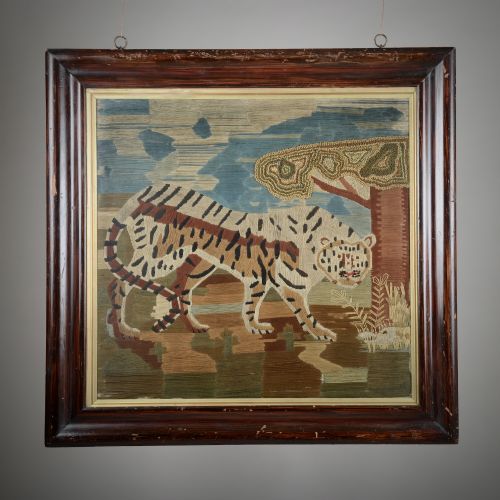
A tiger occasionally peers out from the woolwork, proving that historic textile artists enjoyed a walk on the wild side.
What varies in quality
Quality rests upon the fineness of the wool and silk yarns, the complexity of the narrative depiction, and the crispness of the woven or stitched motifs. Pieces after Teniers or originating from established centres like Brussels and Aubusson demonstrate superior draftsmanship and tonal nuance.
The integrity of the textile substrate and the survival of the original borders or framing dictate the piece's visual impact. Intricately rendered subjects, such as figurative pastoral scenes or detailed animal depictions, outshine simpler repetitive patterns.
The Beige Wool Wall Panel Glossary
- Aubusson
- A style of tapestry originating from the French town of Aubusson, known for pictorial pastoral scenes and architectural panels. These works often feature muted beige and earthy wool palettes suitable for wall hanging.
- Entre-fenetre
- A tall, narrow tapestry designed to fit on the wall space between two windows. This French format typically displays vertical floral or allegorical motifs.
- Tapestry fragment
- A surviving section of a larger historic wall hanging, repurposed and framed as an independent artwork. These pieces retain the age and hand-woven character of the parent textile.
- Needlework panel
- A textile created by stitching yarn onto a canvas ground by hand rather than using a loom. These panels often demonstrate individual folk art styles and personal maker interpretations.
- Flemish Baroque
- A seventeenth-century artistic style characterised by theatrical composition, rich foliage, and dramatic narrative scenes. Flemish workshops produced many of the dense wool panels found in this tradition.
Beige Wool Wall Panel: Frequently Asked Questions
How do I hang a heavy wool wall panel safely?
Most framed panels utilise a sturdy wooden or walnut support that accommodates standard picture hanging wire or mirror plates fixed securely into masonry or studs.
Larger unframed tapestries often require a discreet fabric sleeve sewn along the top reverse edge to slide onto a metal or wooden hanging rod.
Are these wool panels cleaned easily?
Historic textiles demand gentle care, meaning water washing and standard detergents must be avoided to prevent fibre shrinkage and dye transfer.
Light surface dust is best removed using a soft brush or low-suction vacuum applied through a protective mesh screen.
How do I distinguish sixteenth-century Flemish work from nineteenth-century pieces?
Sixteenth-century Flemish panels display dense verdure, complex mythic or pastoral narratives, and hand-spun wool yarns with natural dye variations that reflect early European workshop practices.
Nineteenth-century examples often utilise standardised mechanical frames or show distinct needlepoint regularity and brighter chemical undertones in the wool.
What rooms suit a beige wool wall panel best?
The neutral beige wool tones complement quiet studies, libraries, and living rooms where sound absorption and tactile warmth are desired.
Direct sunlight should be avoided to protect the natural wool and silk fibres from fading over time.