

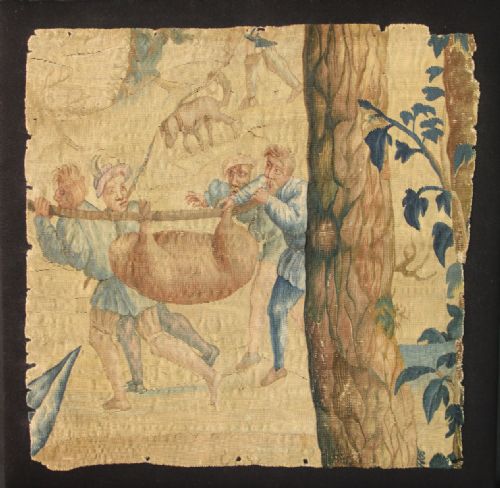


Baroque Textile Fragment
A baroque textile fragment brings tangible seventeenth and eighteenth-century history into a room through surviving panels, borders, and wall hangings.
Baroque Textile Fragment
A baroque textile fragment represents a surviving piece of historical weaving, embroidery, or tapestry originating primarily from the seventeenth and eighteenth centuries.
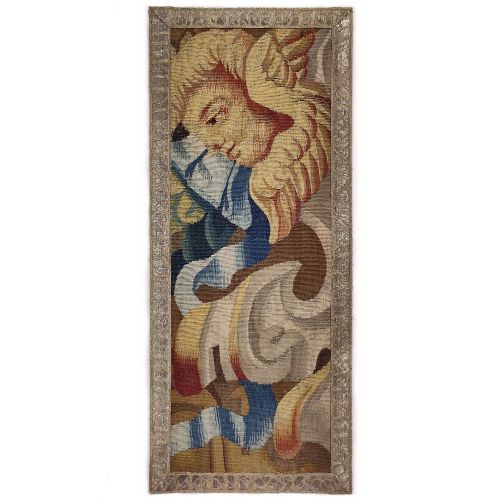
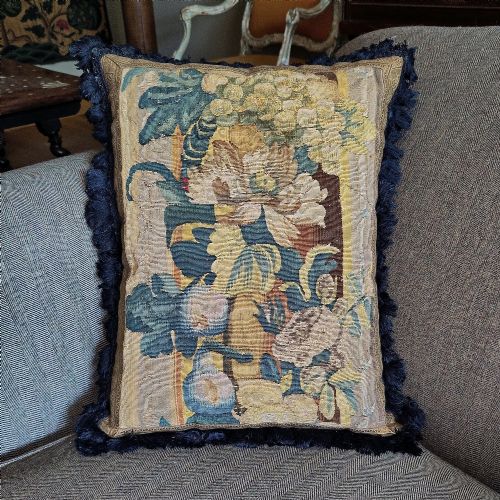
The selections available here span framed textile art, wall hangings, and constructed items such as cushions made from tapestry borders.
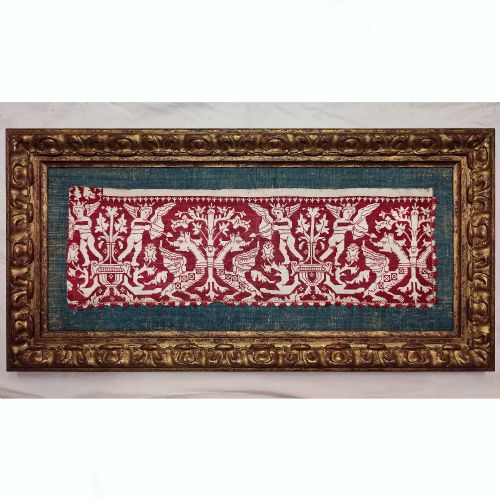
Continental examples, particularly from Flemish and Italian workshops, dominate the range alongside needlework panels.
How they were made
These textiles utilise traditional organic materials including silk, wool, linen, and cotton, often worked onto a canvas ground.
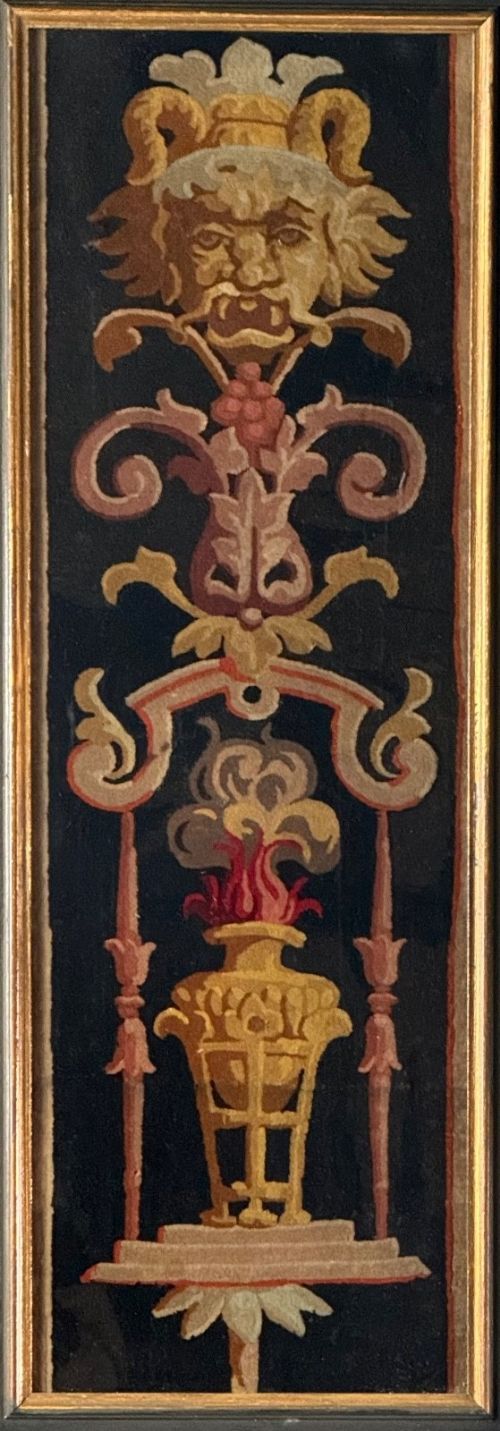
Many items incorporate detailed needlework, classical embroidery featuring masks and grotesques, or woven tapestry techniques.
Certain fragments are subsequently mounted within wooden frames or gilded wood frames for display.
Baroque Textile Fragment Retail Price Guide 2026
Typical asking prices for baroque textile fragment among the pieces listed under this phrase on Sellingantiques today, from the lower quarter to the upper quarter. They describe what is for sale here now, not the wider market.
The inventory includes Flemish and Italian pieces alongside framed textile art and cushions.
What varies in quality
The intricacy of the needlework and the complexity of the woven imagery dictate the visual impact of each fragment.
Condition varies according to age and survival, with some panels retaining vibrant pictorial details like game park scenes or classical figures.
Mounting choices, such as period wood frames or bespoke canvas backing, influence how successfully these historic textiles integrate into modern interiors.
The Baroque Textile Fragment Glossary
- Baroque
- A European style spanning the seventeenth and eighteenth centuries characterised by ornate detail and dramatic composition. This aesthetic governs the design of these textiles.
- Tapetum
- A woven textile traditionally produced on a vertical or horizontal loom. These historic pieces form the basis of many surviving fragments.
- Grotesque
- A style of decorative ornamentation involving fanciful combinations of animals, human figures, and foliage. This motif appears frequently in seventeenth-century embroidered panels.
- Needlework
- Hand-stitched ornamentation created using yarn or thread upon a foundation fabric. Eighteenth-century examples rely heavily on this technique.
Baroque Textile Fragment: Frequently Asked Questions
What is a baroque textile fragment?
A baroque textile fragment is a surviving portion of an older tapestry, embroidery, or wall hanging dating from the seventeenth or eighteenth century.
These pieces allow collectors to own genuine historical fabric art without acquiring an entire full-scale wall hanging.
How were these fragments used originally?
Originally, these textiles formed parts of large wall hangings, tapestries, or decorative furnishings inside grand continental properties.
Over time, larger damaged textiles were cut down into smaller sections, borders, or panels to salvage the best preserved workmanship.
How do I display a framed textile?
Framed textile fragments should be hung away from direct sunlight to protect delicate silk, wool, and linen fibres from fading.
Ensuring stable indoor humidity levels also helps preserve the structural integrity of both the fabric and its wooden frame.
Can these fragments be made into cushions?
Yes, historic tapestry borders and needlework panels are frequently repurposed into decorative cushion covers.
This practice transforms flat wall fragments into functional soft furnishings while protecting the historical needlework.