


Beech Spindle Back Chairs
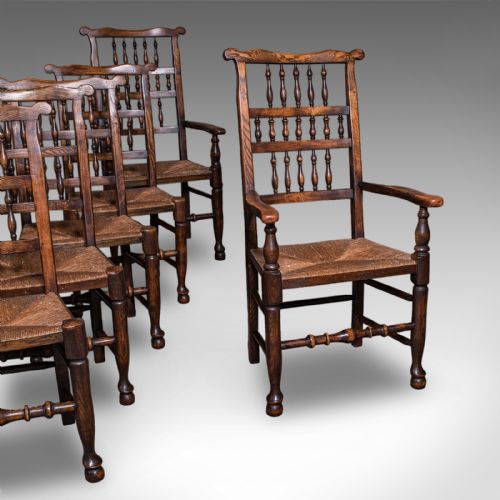
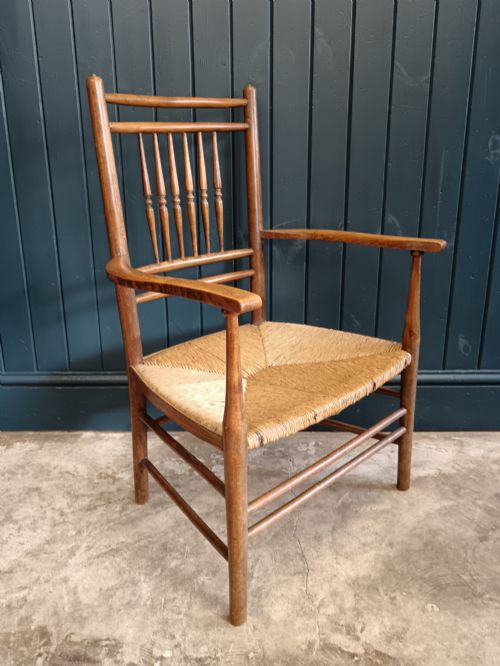
Beech spindle back chairs combine turned wooden uprights with sturdy country frames, offering practical seating shaped by nineteenth and early twentieth-century vernacular traditions.
Beech Spindle Back Chairs
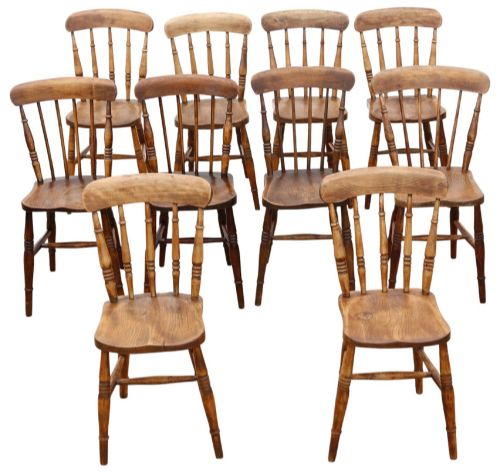
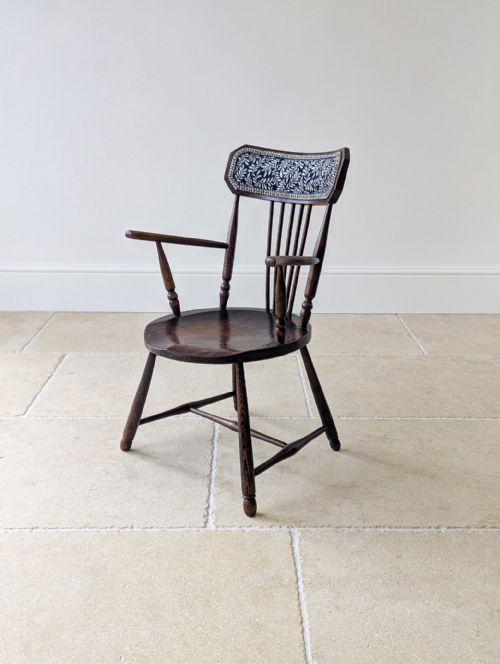
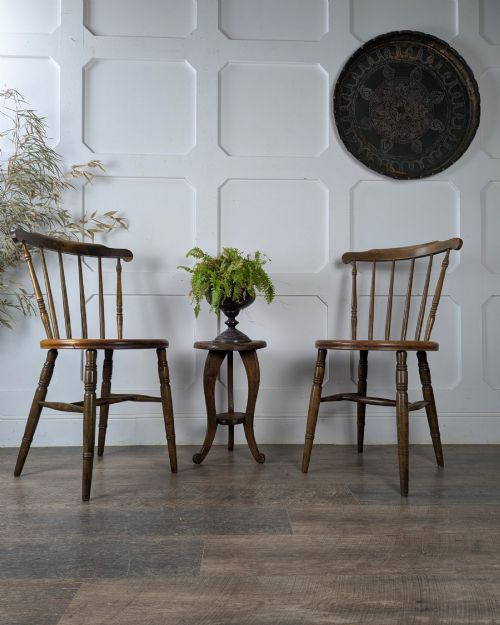
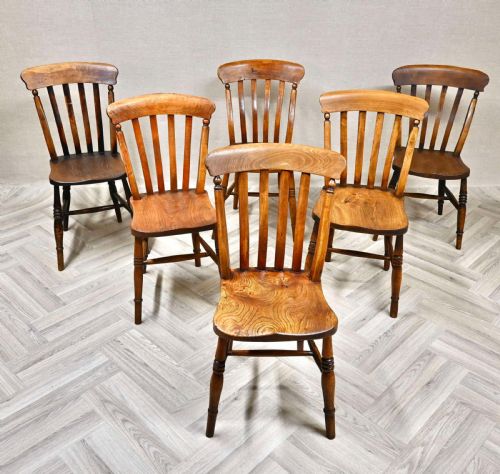
When searching for beech spindle back chairs, buyers encounter practical seating shaped by nineteenth and early twentieth-century vernacular traditions. These pieces range from kitchen dining sets and Windsor armchairs to desk chairs, rocking chairs, and occasional seating.
The selections recorded here span the Victorian, Edwardian, and interwar periods, with nineteenth-century examples appearing most frequently. Makers utilised resilient local timbers to supply farmhouse kitchens, country houses, and public rooms with durable furniture.
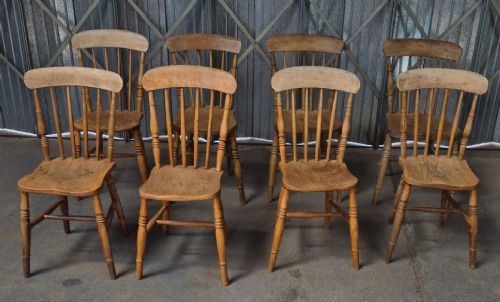
Forms vary from single side chairs and matched dining sets to larger harlequin collections and miniature items. Buyers find both simple provincial designs and artistic creations influenced by the Arts and Crafts movement.
What Varies in Quality
The standard of a beech spindle back chair rests upon the integrity of its turned components and the balance of its frame. Superior examples display crisp joinery and uniform spindle turning that withstands centuries of movement.
The choice of secondary timber and seat shaping marks a division between standard utility pieces and finer workshop productions. Chairs featuring well-figured elm seats and intact original rush or hide show greater craftsmanship.
Completeness of sets and historical surface finishes influence the character of surviving pieces. Matched sets and untouched original patinas command more attention than heavily altered or mismatched groups.
The archive includes miniature Windsor chairs alongside full-sized kitchen and rocking armchairs.
Codina·Morris and Co·Philip Webb·Liberty of London
The Beech Spindle Back Chairs Glossary
- Spindle back
- A chair back constructed from vertical turned wooden rods fitted into horizontal rails. This design distributes weight evenly while reducing overall weight.
- Windsor
- A traditional chair type featuring a solid wooden seat into which the legs and back spindles are wedged directly. They often incorporate a curved bow or arched back.
- Smokers bow
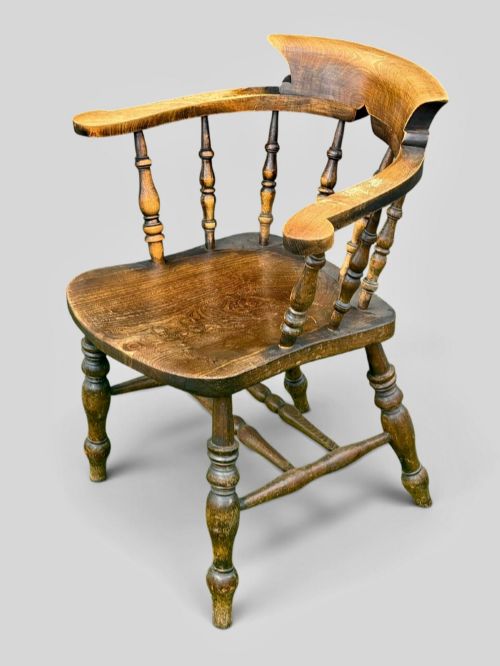
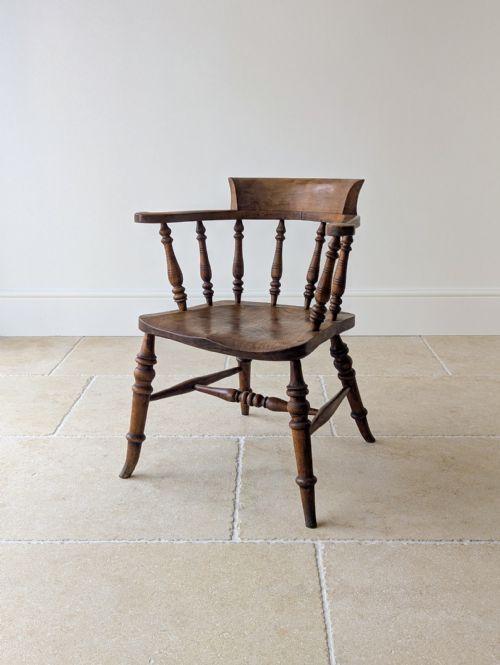
- A low-backed Windsor armchair with a continuous curved armrail supported by turned spindles. These were common in nineteenth-century smoking rooms and offices.
- Rush seat
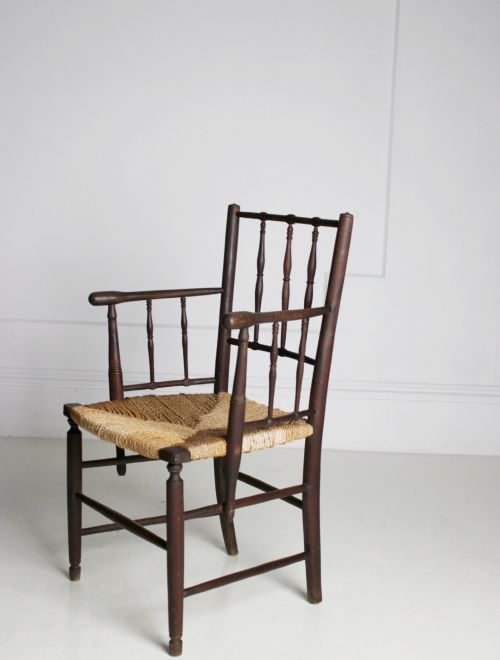
- A seating surface woven from dried marsh rushes around a wooden frame. It provides a flexible and supportive base.
- Harlequin set
- A collection of dining chairs that share similar stylistic traits but were gathered from different origins rather than manufactured together as one batch.
Beech Spindle Back Chairs: Frequently Asked Questions
How do I identify a Victorian beech chair?
Nineteenth-century pieces often display deeper turned details and heavier timber sections than later Edwardian versions. Examining the wear patterns on the elm seat and the construction of the joints helps confirm the period.
Makers during this era relied on local turning lathes, resulting in subtle individual variations across spindle shapes within the same set.
Are these chairs suitable for daily dining?
Most historic country chairs were built for heavy domestic use and remain entirely functional for everyday seating. Their solid wood construction and sturdy undercarriages handle regular dining room activity well.
Care should be taken with rush or woven seats, which benefit from gentle cleaning and protection from excessive moisture.
What is the difference between a kitchen chair and a Windsor chair?
Kitchen chairs frequently feature simpler ladder or stick back configurations intended for utilitarian household tasks. Windsor chairs incorporate a distinct saddle seat and steam-bent back bows.
Both types often utilise beech frames combined with elm seats for structural strength.
How should I care for a rush seat?
Rush seats require dry environments and occasional gentle dusting to prevent the natural fibres from becoming brittle. Direct sunlight and high humidity can weaken the dried material over time.
Applying minimal moisture during cleaning helps preserve the tensile strength of the historical weave.