



Bedroom Dressing Seat
A bedroom dressing seat provides a low, comfortable perch before the glass, ranging from simple mahogany stools to upholstered Victorian chairs.
Bedroom Dressing Seat
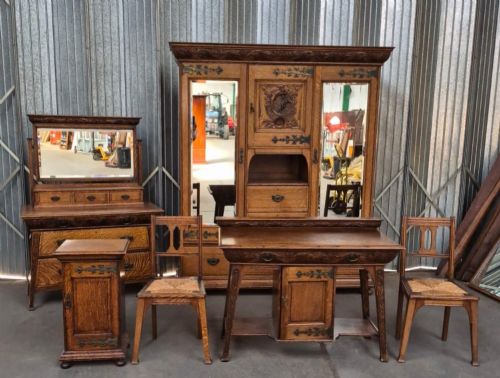
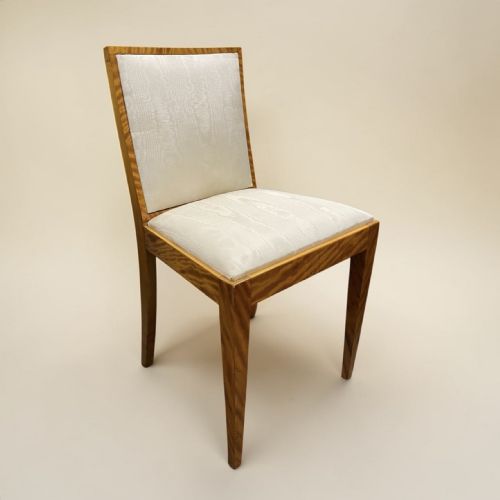
A bedroom dressing seat encompasses low stools, benches, and chairs designed for use at a dressing table or in a bedroom suite. The pieces seen here span the Regency, Victorian, and Edwardian eras, alongside later Art Deco examples from the nineteen thirties.
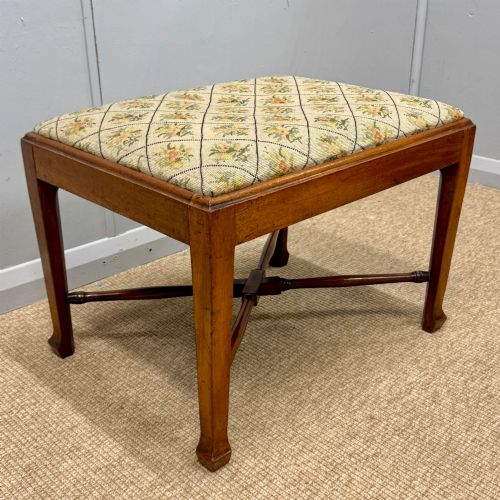
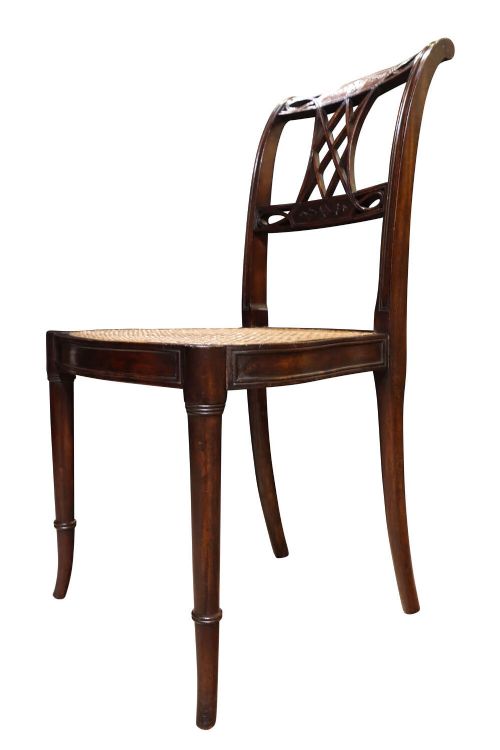
Stools and dressing stools dominate the selection, appearing with rectangular tops, X-frames, and cross stretchers. Side chairs, nursing chairs, and occasional bedroom chairs also serve this function, reflecting the varied seating arrangements of past domestic interiors.
Materials and construction
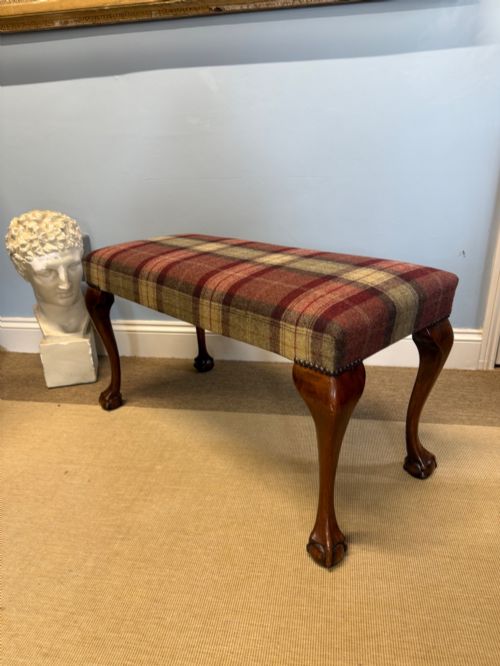
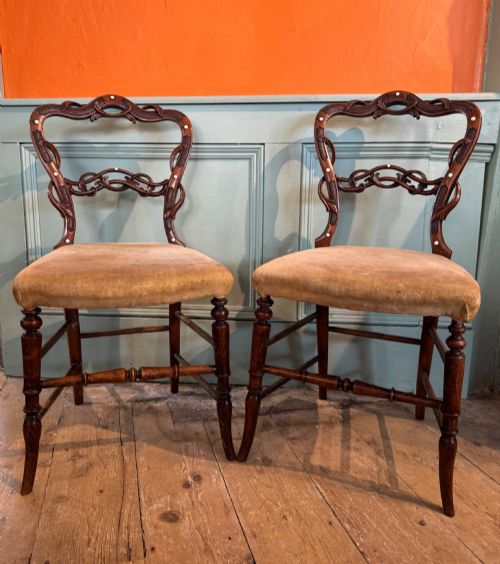
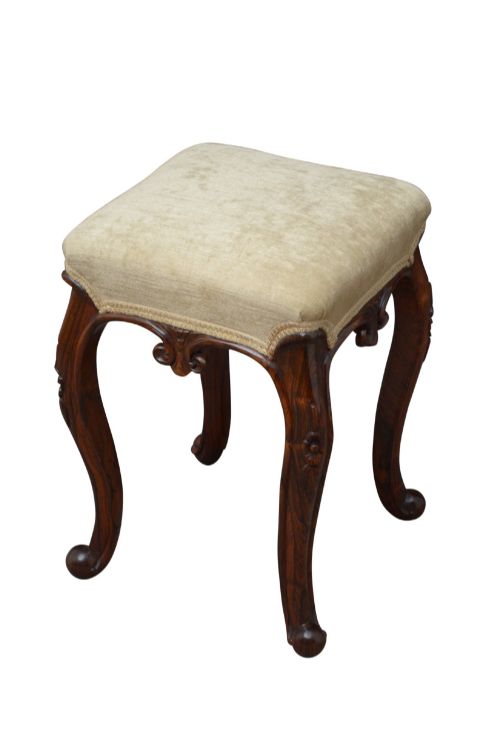
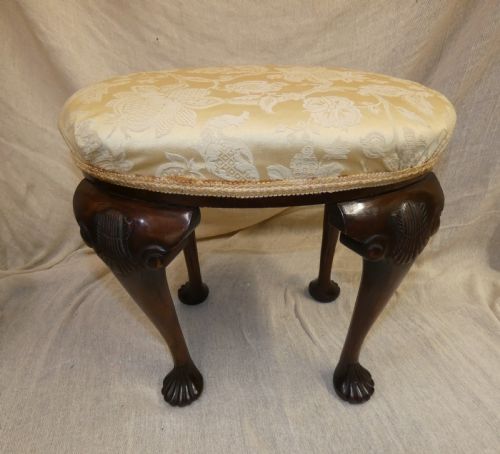
Makers utilised timber frames of mahogany, walnut, satinwood, oak, and rosewood, often shaping the wood into cabriole legs or turning supports with twisted rope details. Inlays of brass or lighter woods adorn select Regency and Edwardian surfaces.
Upholstery forms a central part of the construction, employing fabrics such as velvet, chenille, and textile covers, alongside cane seating inserts in Edwardian chairs. Needlepoint and new flowery top covers appear on pieces spanning multiple decades.
One oak dressing stool hides a drum-shaped storage compartment inside.
Craftsmanship and distinction
The standard of a bedroom dressing seat rests on the crispness of its carved details, such as scroll-carved backs or solid wood framing. Greater care in the joinery and timber selection marks out superior examples from ordinary household seating.
Design ambition distinguishes individual pieces, moving from plain rectangular frames to distinctive drum-shaped storage compartments, X-frame forms, or pieces bearing known cabinet maker attributions.
Bath Cabinet Makers·Harry and Lou Epstein
The Bedroom Dressing Seat Glossary
- Cabriole leg
- A furniture leg that curves out and then narrows inward to a footing, characteristic of Victorian and revival pieces. It mimics the natural shape of an animal's leg.
- X-frame
- A structural base formed by two intersecting diagonal members supporting the seat. This design appears on nineteenth-century stools and window seats.
- Satinwood
- A hard, yellowish wood with a lustrous grain used for fine cabinet work and decorative dressing tables. It takes a high polish.
- Chenille
- A fuzzy, tufted fabric often utilised for upholstery on nineteenth-century seating. It provides a tactile and durable surface.
Bedroom Dressing Seat: Frequently Asked Questions
What is a bedroom dressing seat?
A bedroom dressing seat is a low stool, bench, or small chair designed specifically for sitting at a dressing table or vanity mirror.
These pieces prioritise comfort and appropriate height for grooming tasks, appearing in wood frames with upholstered tops.
How do I date a dressing stool?
Dating relies on identifying timber choices, leg profiles, and upholstery styles associated with periods like the Victorian era or Art Deco.
Details such as X-frames, cabriole legs, or inlaid mahogany point towards specific decades of manufacture.
Where were these seats used?
They originated in bedrooms, boudoirs, and dressing rooms of period homes, accompanying large dressing tables and washstands.
Today they function equally well as piano stools, hallway perches, or low occasional seats.
Are dressing seats upholstered?
Most examples feature padded tops covered in velvet, textile, chenille, or needlepoint, though some Edwardian variants use cane.
Upholstery materials often reflect either original period fabrics or later replacement covers.