

Bedroom Chest with Mirror
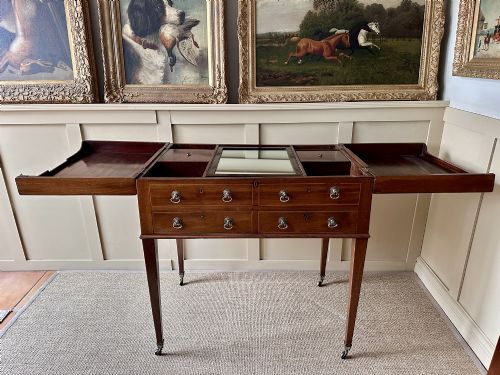
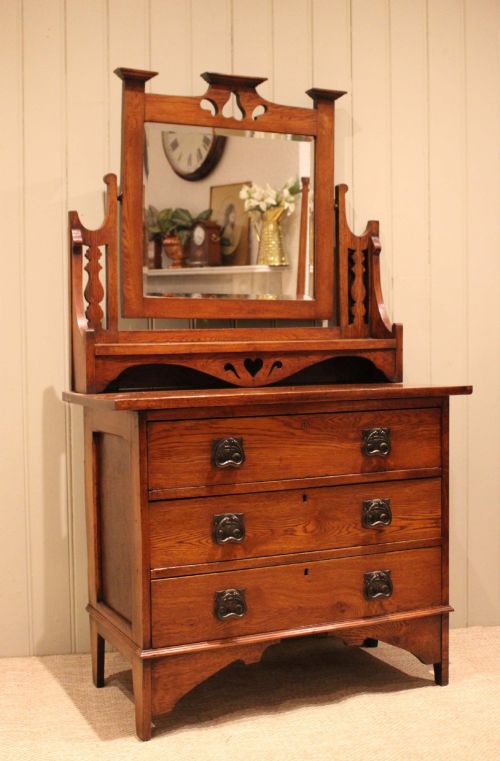
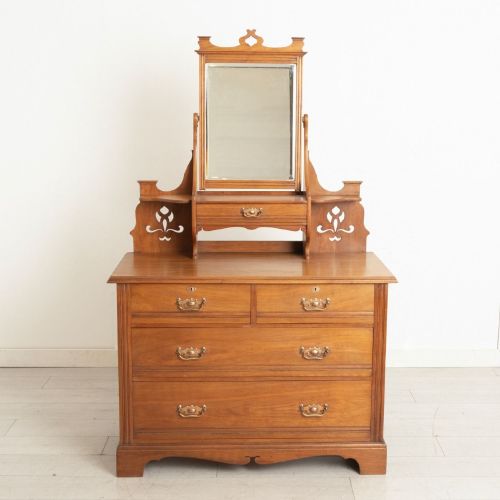
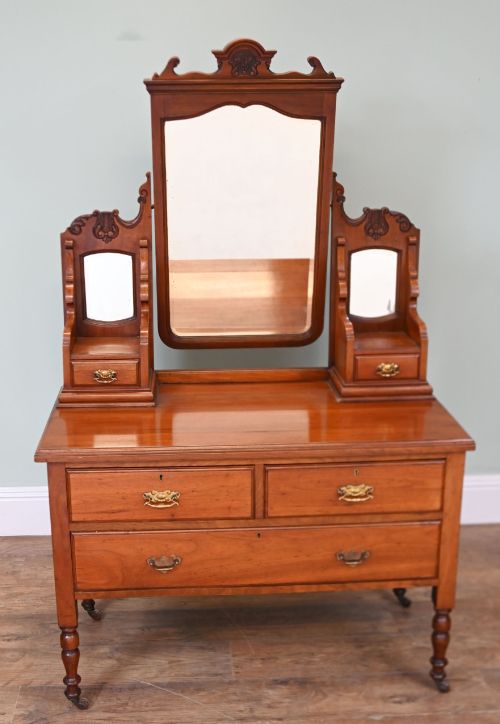
A bedroom chest with mirror combines storage and a dressing glass, appearing in Victorian, Edwardian, and Art Deco designs.
Bedroom Chest with Mirror
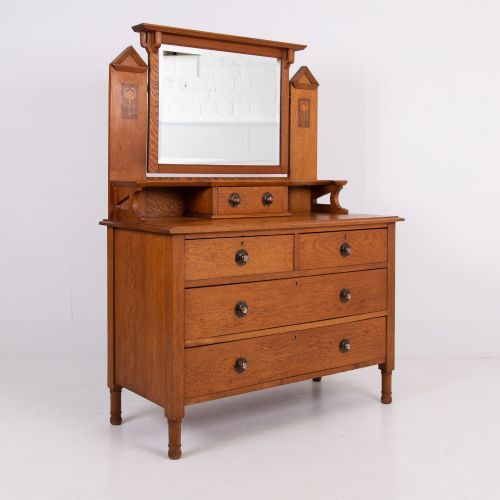
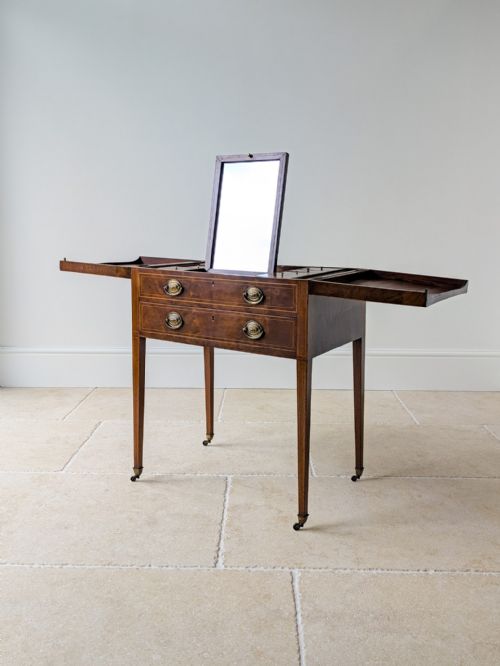
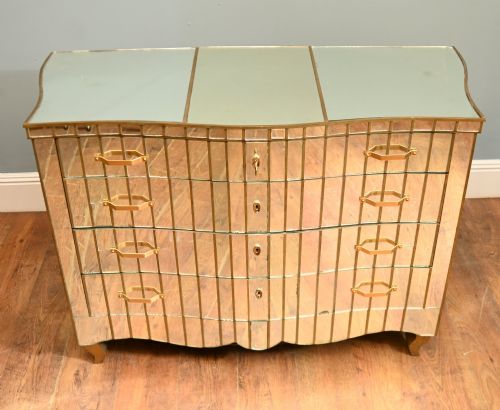
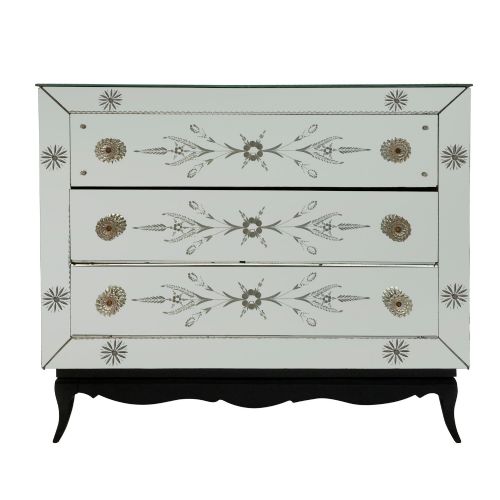
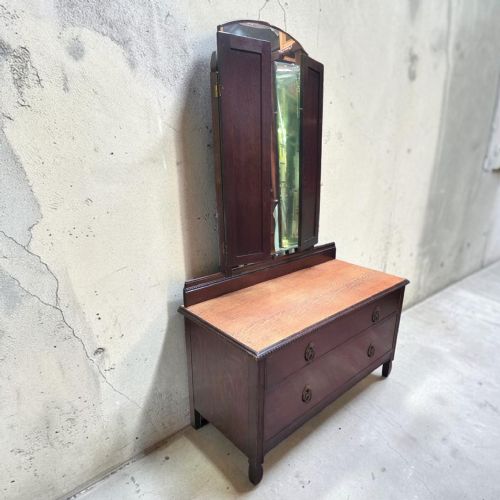
A bedroom chest with mirror serves as a primary piece for morning routines, combining functional drawer space with an attached glass. Most examples on this page date from the Victorian and Edwardian eras, alongside later pieces from the 1920s and 1930s.
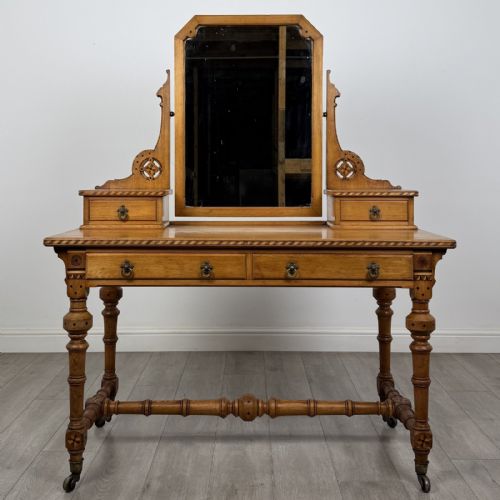
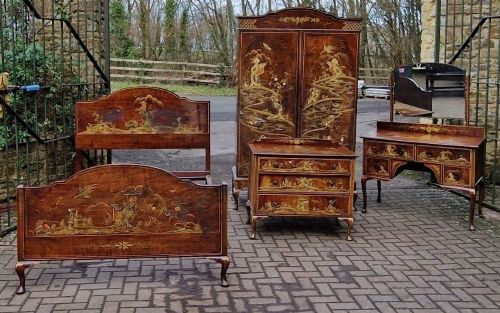
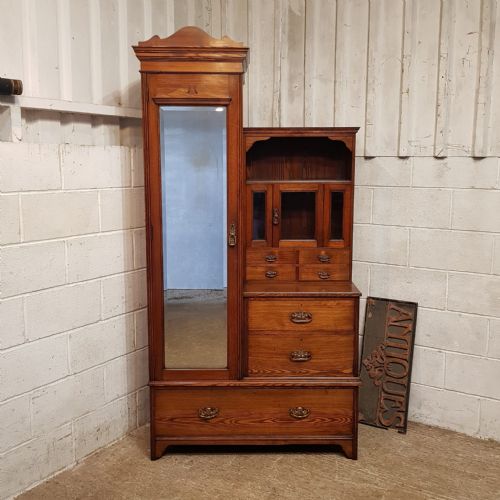
The form spans various regional interpretations and stylistic movements, including Arts and Crafts, Art Deco, and Georgian revivals. Pieces range from straightforward oak or pine utility items to elaborate burr walnut and mahogany dressing tables.
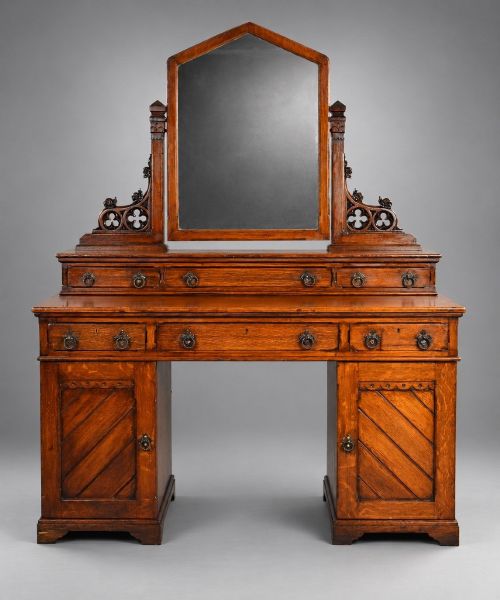
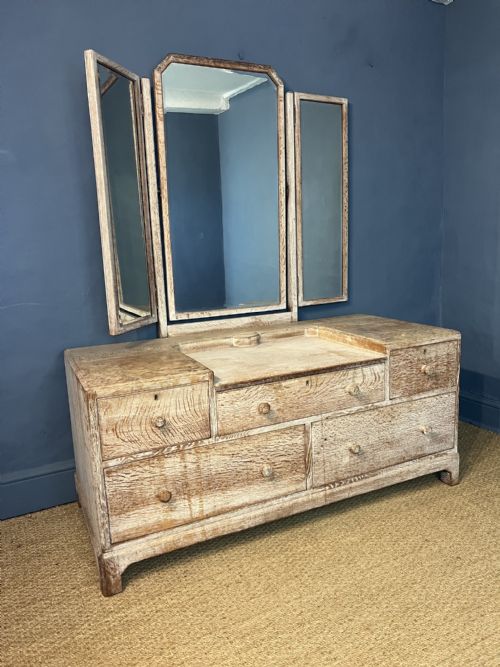
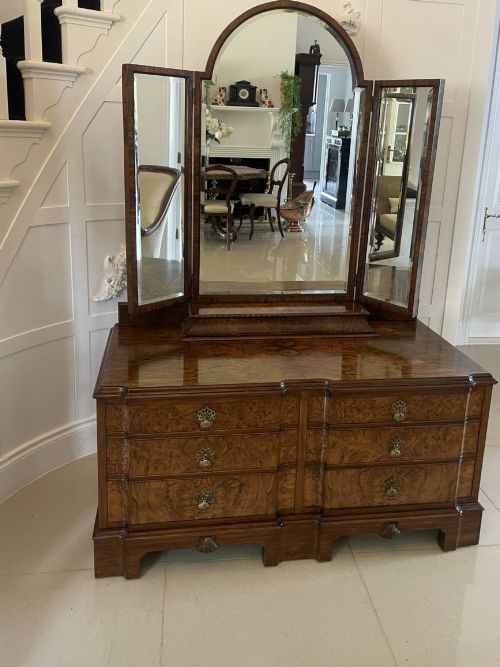
Makers integrated mirrors in several ways, featuring adjustable shield glasses, oval plates, and triple mirror arrangements mounted above sets of drawers. Smaller variations include pedestal dressing tables and compactum configurations.
How They Were Made
Cabinetmakers utilised solid timbers such as mahogany, oak, walnut, and satin birch, often applying decorative veneers like burr walnut and maple to visible surfaces. Drawer construction relied on traditional joinery, paired with brass handles and fittings.
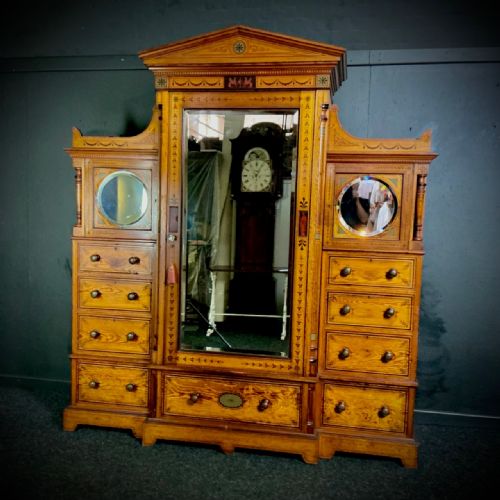
Mirrors utilised bevelled glass plates secured within wooden frames, sometimes attached via pivoting brass arms to allow adjustment. Inlaid details, stencilling, and carved panels completed the decoration on Arts and Crafts and Aesthetic movement pieces.
Bedroom Chest with Mirror Retail Price Guide 2026
Typical asking prices for bedroom chest with mirror among the pieces listed under this phrase on Sellingantiques today, from the lower quarter to the upper quarter. They describe what is for sale here now, not the wider market.
Listings feature periods from the nineteenth century through the 1930s, utilising oak, mahogany, walnut, and pine alongside brass and mirror glass.
What Varies in Quality
The standard of timber selection and veneer matching defines the character of each piece, distinguishing simple utility furniture from ambitious workshop commissions. Finer examples display carefully chosen grain patterns across drawer fronts and mirror surrounds.
The integration of the mirror assembly reveals the maker's attention to detail, from plain upright supports to articulated brass brackets and carved framing. Superior hardware, such as original brass handles and locks, indicates a higher grade of manufacture.
Shapland and Petter·Maurice Adams·Wright and Hunter·George Walton·Harris Lebus
The Bedroom Chest with Mirror Glossary
- Swing mirror
- A looking glass hung on pivots within a frame, allowing the user to tilt the angle. This feature is commonly found on dressing chests and tables.
- Burr walnut
- A prized timber veneer showing swirling, knotty grain patterns. Cabinetmakers applied it to prominent surfaces for decorative effect.
- Compactum
- A large wardrobe combining hanging space with internal drawers and shelving. It offers comprehensive clothes storage in a single unit.
- Aesthetic movement
- A late nineteenth-century design style emphasising visual beauty over narrative meaning. Pieces often feature ebonised details and inlaid decoration.
- Pedestal dressing table
- A dressing table with twin banks of drawers supporting the top. This configuration creates a kneehole space in the centre.
Bedroom Chest with Mirror: Frequently Asked Questions
What is a bedroom chest with mirror?
A bedroom chest with mirror is a combination of a set of drawers and a dressing table, designed to provide clothes storage and a surface for grooming. These pieces range from simple pine wash stands to elaborate walnut dressing tables with pivoting glasses.
Most variants incorporate a fixed or adjustable mirror mounted to the upper section. They served as central furnishings in nineteenth and early twentieth-century sleeping quarters.
How do I date a dressing chest?
Dating relies on observing timber choices, construction methods, and stylistic cues. Victorian pieces often use mahogany, walnut, or stained pine, while Edwardian examples frequently feature satin walnut or lighter mahogany.
Art Deco and 1920s items introduce maple and geometric veneers. Hardware types, such as brass drop handles or wooden knobs, also provide clues to the period of manufacture.
Are the mirrors original?
Many pieces retain their original glass, which can exhibit light foxing or minor silvering losses due to age. Replacements are sometimes necessary if the original plate suffered breakage over the decades.
Examining the mirror backboards and frame fixings helps determine whether the glass dates from the same period as the cabinetwork.
How do I care for antique wood furniture?
Protect wooden surfaces by keeping them away from direct sunlight and maintaining stable room humidity. Regular dusting with a soft, dry cloth prevents the accumulation of grit.
Occasional application of appropriate wax polish helps nourish timber finishes without building up heavy residues. Avoid placing wet items or unsealed containers directly onto polished wood tops.