

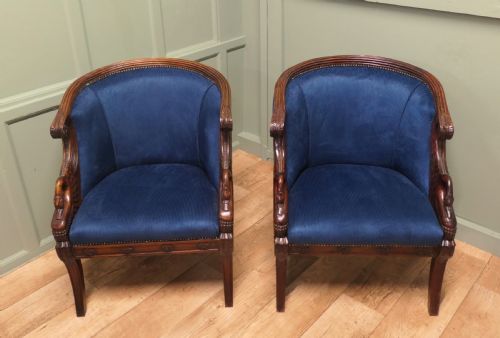
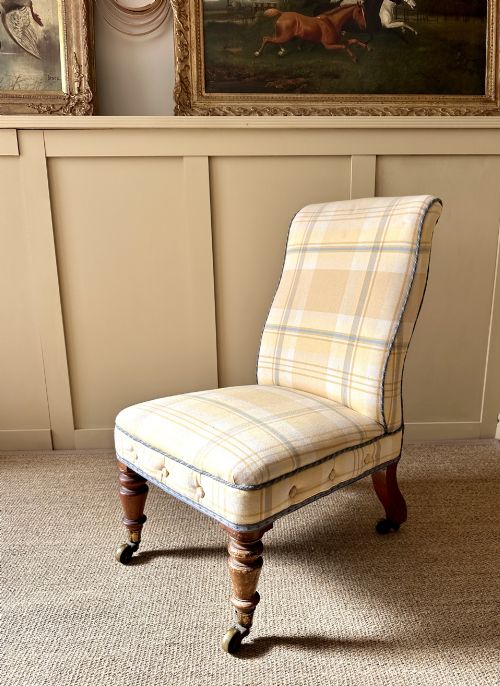
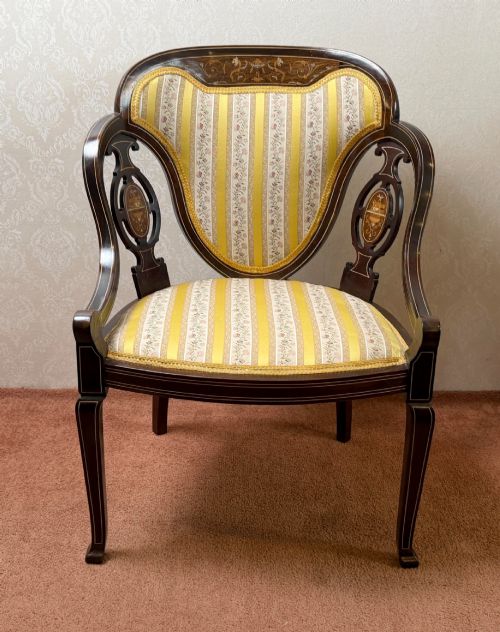
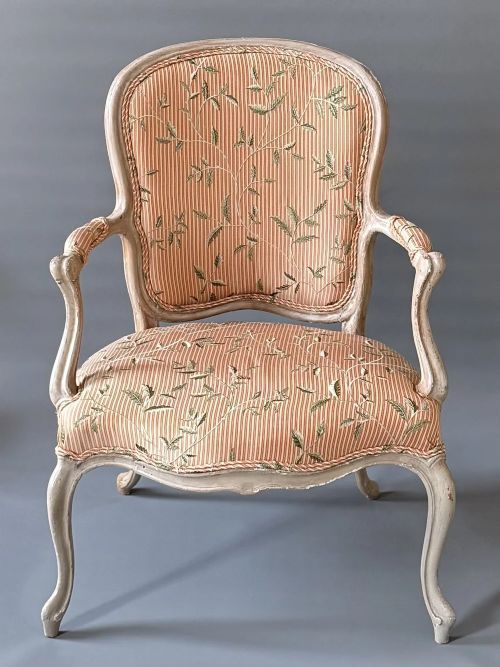
Bedroom Armchair
A bedroom armchair provides a comfortable seat for dressing and reading, bringing character and practical function to a corner of the room.
Bedroom Armchair
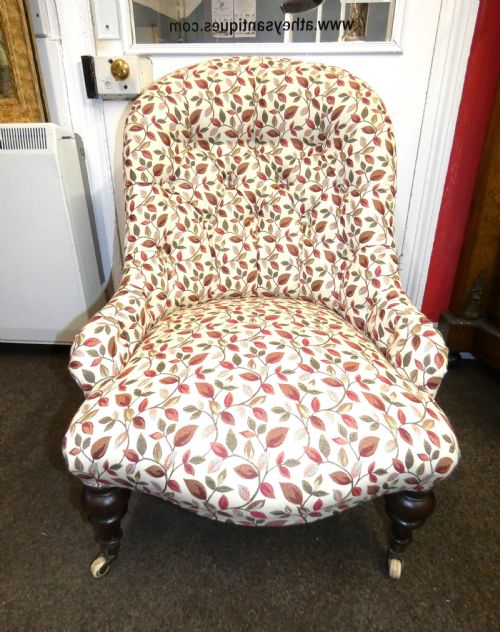
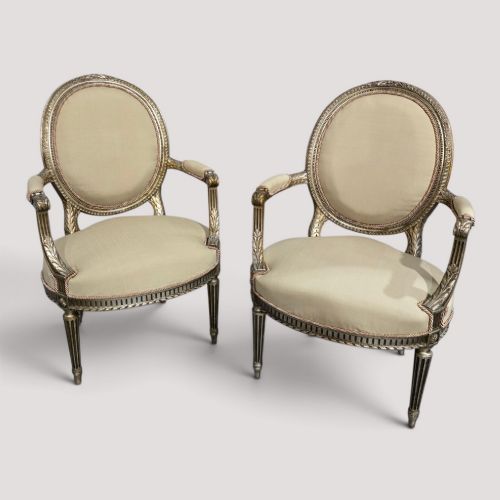
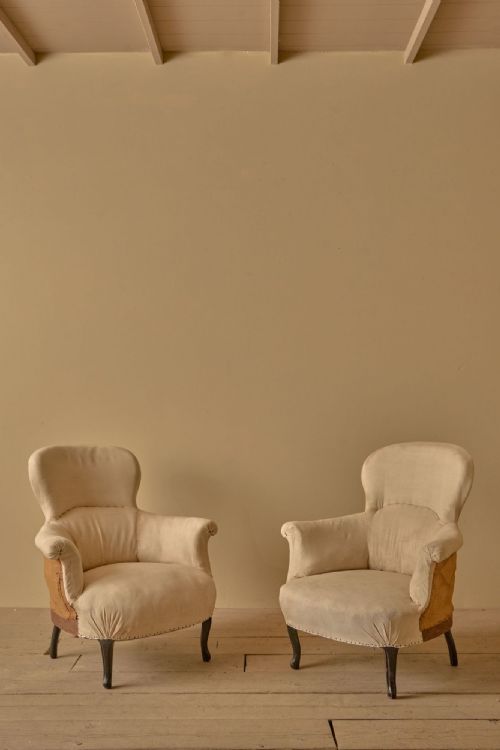
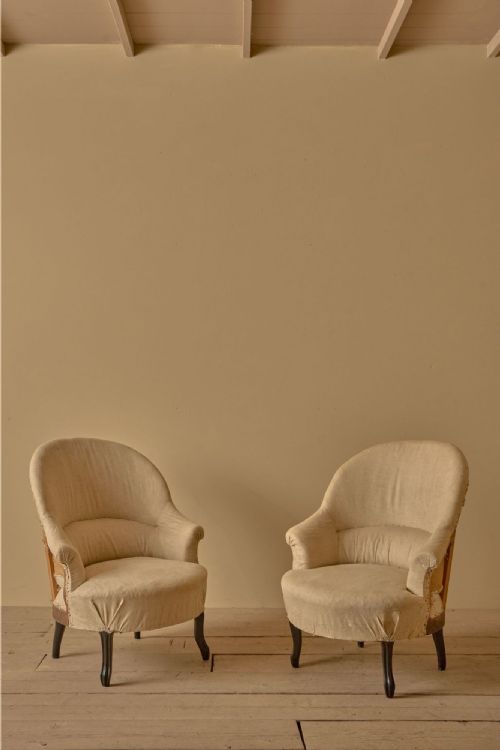
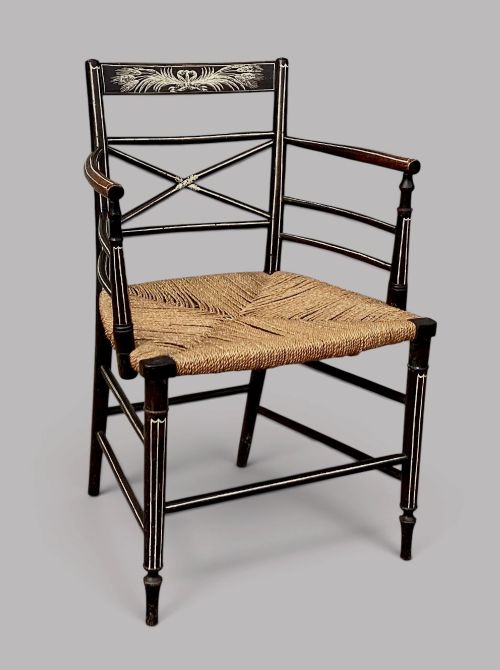
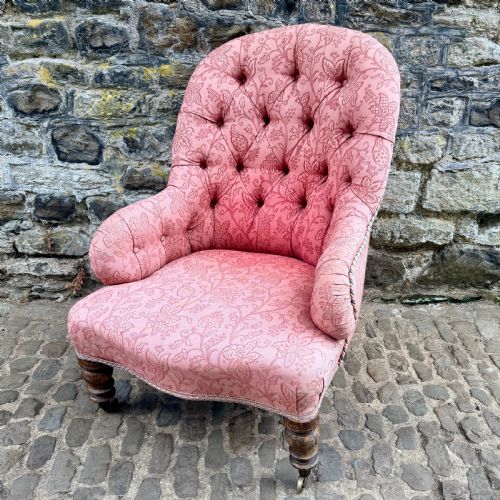
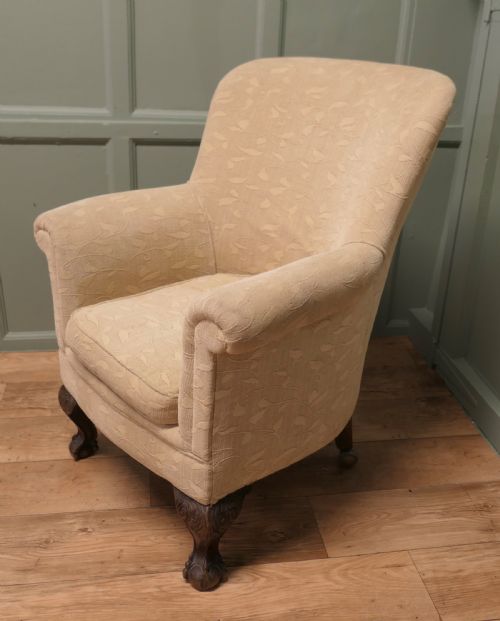
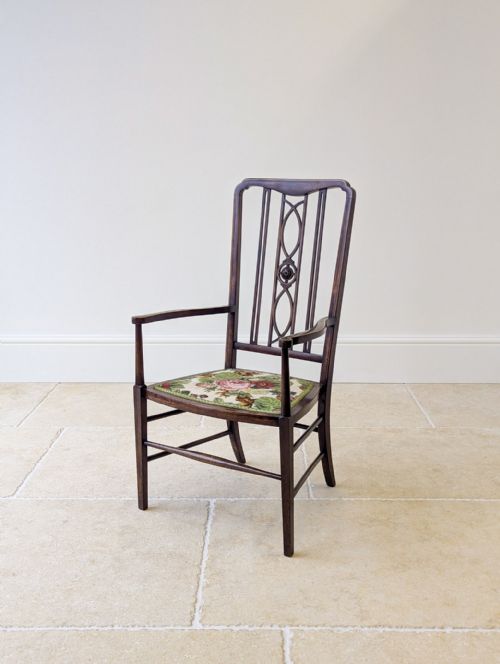
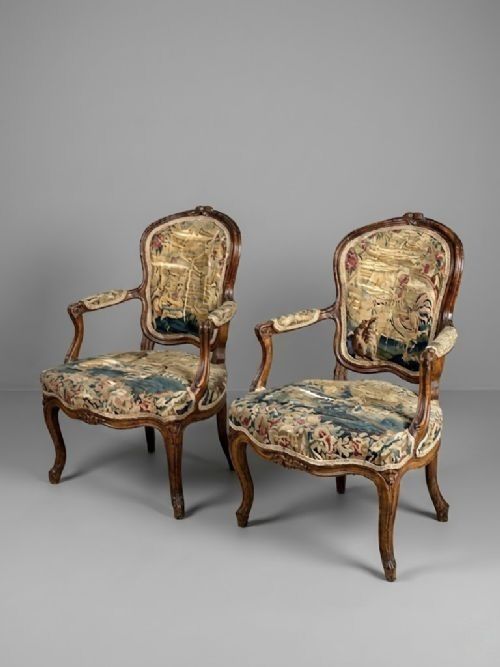
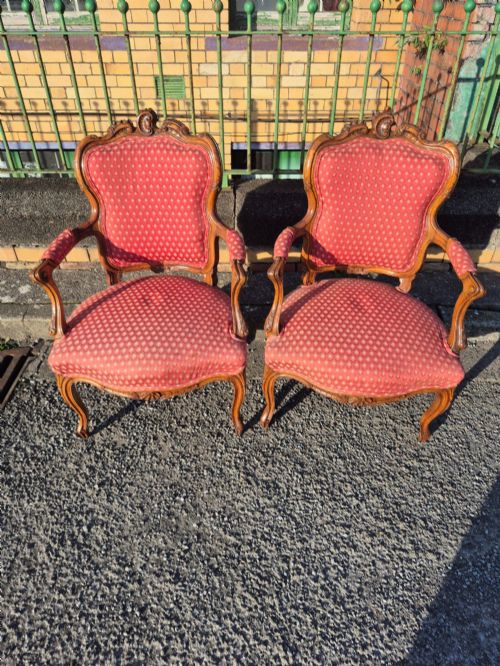
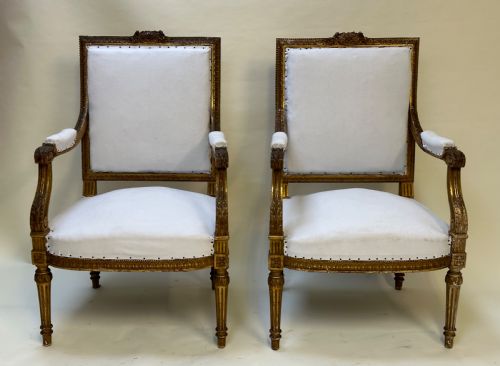
When you search for a bedroom armchair, you encounter a varied selection of seating designed for private quarters, boudoirs and dressing rooms rather than formal reception spaces. These pieces span from the 18th century through to the Edwardian period, encompassing styles such as Victorian, Regency, Louis XVI and Napoleon III.
Buyers select these chairs for their compact proportions and decorative upholstery, which range from calico and hessian to Aubusson tapestries and printed cottons. Whether you prefer an inlaid Edwardian mahogany model or a curved Napoleon III spoon back, each piece offers a distinct period silhouette tailored for domestic comfort.
Materials and construction
Cabinetmakers utilised hardwoods such as mahogany, walnut, beech, oak and rosewood to form the structural frames of these seats, frequently incorporating timber and wood veneers. Details such as bone and boxwood inlay, hand-carved motifs, cane panels and original paint finishes reveal the underlying craftsmanship of each period.
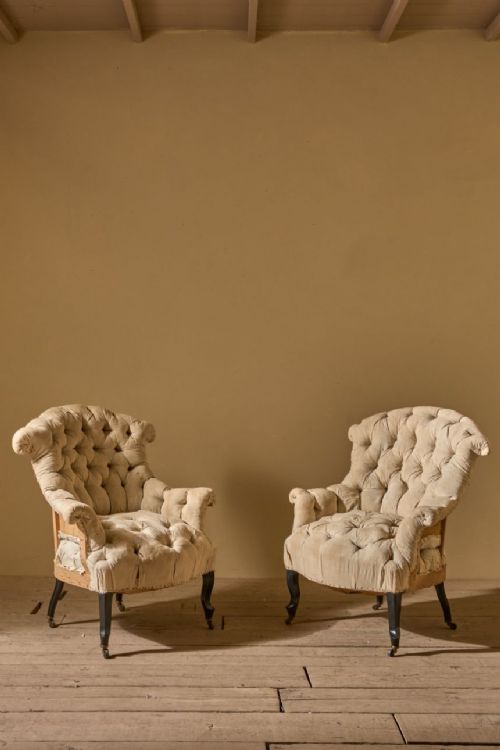
Upholstery techniques involved traditional stuffing secured beneath layers of calico, hessian and decorative top fabrics, with buttoning and spring construction evolving across the Victorian and Edwardian eras. Gilt decoration and carved wooden details completed the frames of French salon chairs and revival pieces.
Bedroom Armchair Retail Price Guide 2026
Typical asking prices for bedroom armchair among the pieces listed under this phrase on Sellingantiques today, from the lower quarter to the upper quarter. They describe what is for sale here now, not the wider market.
The furniture spans multiple eras, capturing Victorian, Edwardian, Regency and 18th-century revival styles.
Distinctions in quality
The standard of a bedroom armchair rests upon the crispness of its timber carving, the integrity of its joinery and the authenticity of its finish. Finer examples display refined proportions, precise inlay work and structural members that remain completely rigid.
Upholstery execution also defines the upper tier, where hand-stitched elements, sympathetic fabric choices and preserved maker signatures indicate superior workshop provenance. Lesser pieces may show heavy structural alterations, compromised frames or secondary replacement timbers that diminish the integrity of the design.
Charles Hindley & Sons·Holland & Sons·Howard and Sons
The Bedroom Armchair Glossary
- Spoon back
- A padded chair back shaped in a concave oval resembling the bowl of a spoon, designed to fit the human spine.
- Tub chair
- An armchair featuring a continuous curved back and arms that form a deep, enclosed seating shell.
- Slipper chair
- A low-seated upholstered chair originally designed for bedrooms to assist with putting on shoes.
- Ebonised
- Timber treated with a dark finish to imitate expensive ebony wood, common in Victorian aesthetic movement furniture.
- Ormolu
- Gilded bronze mounts applied to the wooden frames of French furniture for decorative enrichment.
Bedroom Armchair: Frequently Asked Questions
What is a bedroom armchair used for?
These chairs provide practical seating in private rooms for tasks such as dressing, putting on footwear or quiet reading.
Their compact proportions allow them to fit into bedroom corners where larger armchairs would overwhelm the available floor space.
How do I identify a Victorian bedroom armchair?
Victorian examples often feature dark woods like mahogany or walnut, substantial buttoned upholstery, and characteristic shapes such as low salon chairs or spoon backs.
They reflect the period's preference for comfort and heavier textiles, sometimes incorporating ebonised finishes or inlaid details.
Are Edwardian bedroom armchairs different?
Edwardian pieces generally present lighter proportions, frequently utilising inlaid mahogany frames and cane panels for an airy aesthetic.
They often appear alongside barrel backs and smaller elbow chair designs that suit early twentieth-century decorative tastes.
How do I care for antique upholstery?
Protect the fabric from direct sunlight to prevent fading, and use gentle vacuum attachments with low suction to remove surface dust.
For valuable or historic textiles, professional conservation cleaning preserves the integrity of the original stuffing and covering materials.