


Bearded Man Painting
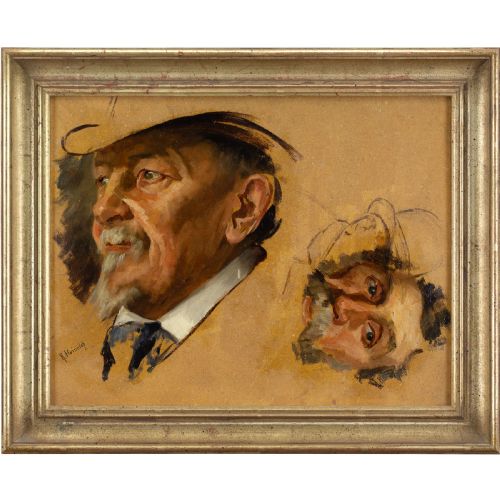
A bearded man painting brings character and gravitas to a room through traditional portraiture spanning multiple centuries.

Bearded Man Painting
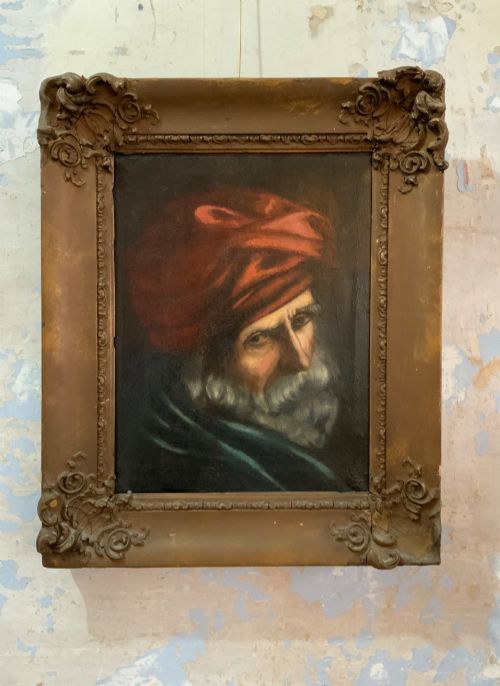
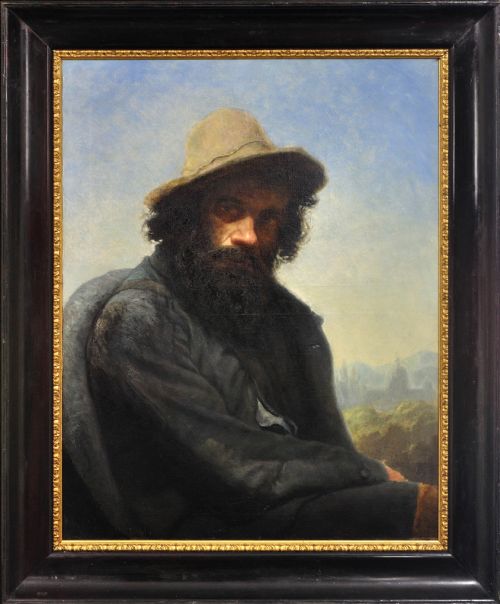
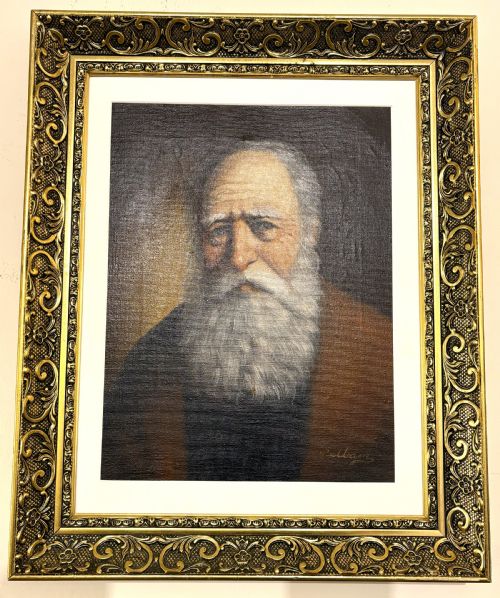
A bearded man painting captures male subjects with facial hair, ranging from Victorian gentlemen and military officers to artists and scholars. These works primarily take the form of framed oil paintings on canvas or panel, alongside occasional snuff boxes and watercolours.
The versions most commonly met on this page date from the nineteenth century, including Academic Realism and Victorian styles. Subjects often appear in formal attire, historical clothing, or regional costume such as Persian and Arabic garb.
Origins span Britain, France, Germany, Denmark, and Italy, reflecting diverse European portrait traditions from seventeenth-century philosophy to mid-century realism.
Materials and techniques
Artists painted primarily with oil paint on stretched canvas or wooden panels, applying pigment to build depth in skin tones and facial hair. Papier-mâché serves as the base for small decorative objects like snuff boxes.
Gold leaf and gilt moulding frequently form the frames enclosing these works, providing decorative borders that complement the dark tones of traditional portraits.
Several bearded gentlemen captured on canvas turn out to be museum curators, geologists, and sculptors staring back down the decades.
Separating top tier from standard work
Quality rests upon the artist's ability to render facial expression, bone structure, and the texture of a beard with convincing realism rather than formulaic brushwork. Superior examples capture individual psychology and personality rather than a generic likeness.
The integration of the subject with proper lighting and background atmosphere distinguishes accomplished academic and realist painters from lesser studio productions.
Albin Mattenheimer·Edouard Julien·Ferdinand Victor Leon Roybet·Frederick Goodall·Bernd Funke·Frederick Christian Lund·William Robert Dickinson·Roberto Venturi·George Frederic Watts·William Biscombe Gardner·Henry John Dobson·Fritz Reusing·Georg Achen·Frederik Vermehren
The Bearded Man Painting Glossary
- Oil on canvas
- Pigment suspended in drying oil applied to a woven fabric support. This combination allows for rich blending and depth of colour.
- Gilt moulding
- Wooden framing decorated with a thin layer of gold leaf or metallic gilt. It enhances the visual weight of traditional portraiture.
- Academic realism
- Painting executed under the influence of European academies of art. It emphasises precise drawing, smooth finishes, and classical subject matter.
- Papier-mâché
- A composite material consisting of paper pieces or pulp bound with an adhesive. It was moulded and lacquered to create small items like snuff boxes.
Bearded Man Painting: Frequently Asked Questions
What periods do these paintings cover?
The works span from the seventeenth century through the Victorian era and into the mid-twentieth century. Most examples originate in the nineteenth century.
Styles range from traditional academic realism and orientalism to post-impressionist approaches.
Who are the subjects in the portraits?
Subjects include engineers, geologists, sculptors, curators, military officers, and philosophers. Many depict unidentified Victorian or Edwardian gentlemen.
Others portray men in historical costumes, such as musketeers or regional travellers from North Africa and the Middle East.
How should I frame an oil painting?
Traditional oil paintings on canvas suit gilt gesso frames that match the period of the artwork. These frames protect the edges and complement the composition.
Ensure the display wall avoids direct sunlight and excessive humidity to preserve the canvas and paint layers.
Are all the works on canvas?
While canvas is the primary support material, several pieces utilise wood panels. Smaller items such as snuff boxes employ papier-mâché.
Watercolours on paper also appear among the selection of portraits.