
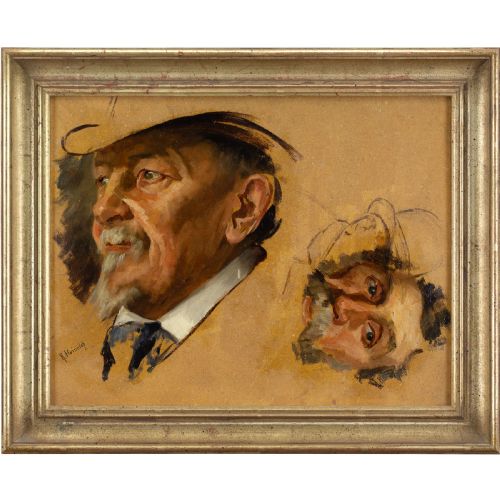
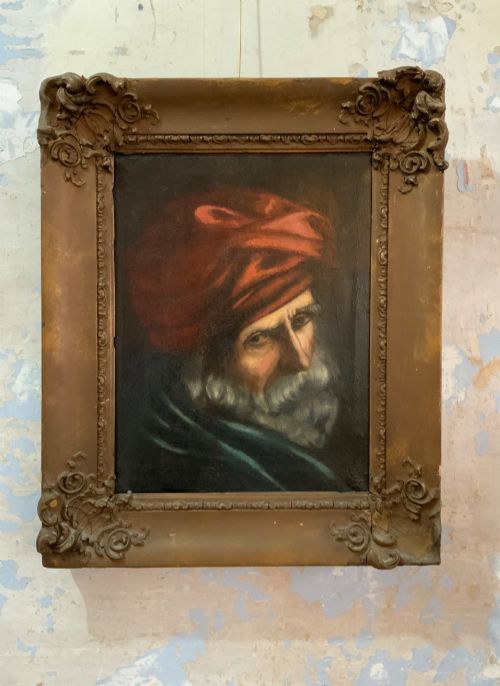
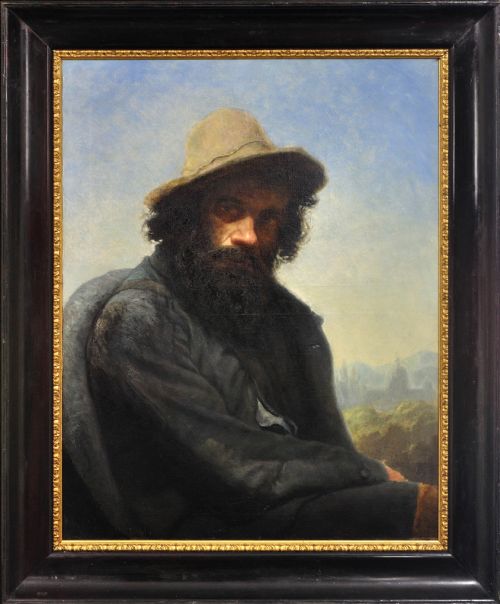
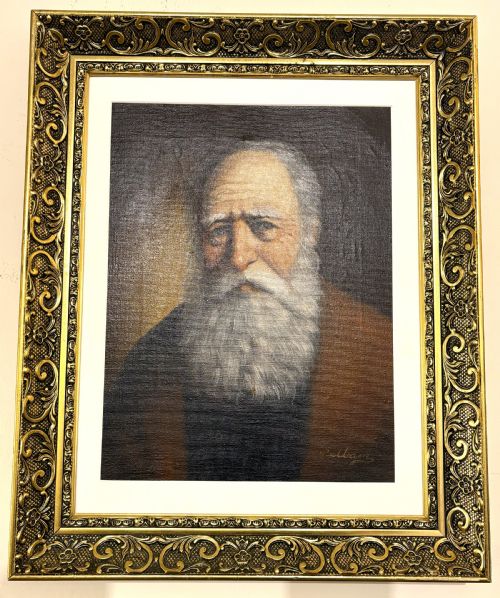


Bearded Man Oil Portrait
When a collector hunts for a bearded man oil portrait, they are looking for character, gravity, and strong brushwork preserved on canvas or panel.
Bearded Man Oil Portrait
A bearded man oil portrait captures the distinct likeness of a sitter, ranging from Victorian gentlemen and academics to musketeers and historical figures. These works span centuries of portraiture, with nineteenth-century examples forming a major part of the selection.
The subjects appear in various guises, including self-portraits, orientalist studies of Arab gentlemen, and formal depictions of engineers, geologists, and philosophers. Oil on canvas and oil on panel are the primary mediums used to render these intense facial studies.
How They Were Made
Artists applied oil paint to stretched canvas or wooden panels, building up rich tones and deep shadows to model the contours of the face and beard. Many of these works are housed in their original gilt moulding or gesso frames, which were often leafed in gold.
The technique relies on the slow-drying nature of oil paint, allowing portraitists to blend pigments smoothly or apply thick impasto to capture the texture of fabric, hair, and weathered skin.
Musketeers, curators, geologists, and philosophers all stare out from these walls, proving that magnificent facial hair commands serious artistic attention.
What Varies in Quality
Quality rests in the psychological depth of the sitter and the confidence of the brushwork, where master portraitists capture bone structure and expression with minimal hesitation. The handling of light across the beard and eyes distinguishes a routine commission from a compelling study.
The preservation of the paint surface and the integrity of the original wood panel or canvas support also determine the standing of a piece, alongside the presence of period framing.
Albin Mattenheimer·Edouard Julien·Ferdinand Victor Leon Roybet·Frederick Goodall·Bernd Funke·Frederick Christian Lund·William Robert Dickinson·Roberto Venturi·George Frederic Watts·William Biscombe Gardner·Henry John Dobson·Fritz Reusing·Georg Achen·Frederik Vermehren
The Bearded Man Oil Portrait Glossary
- Oil paint
- A slow-drying medium consisting of pigments suspended in a drying oil, typically linseed oil. This medium allows for subtle blending and rich colour depth.
- Gesso
- A plaster-like material applied to wooden panels or frame mouldings to create a smooth surface for gilding and painting. It provides a crisp base for decorative details.
- Orientalism
- An artistic style and movement depicting scenes and people from the Middle East and North Africa. In portraiture, this often includes sitters in regional dress.
Bearded Man Oil Portrait: Frequently Asked Questions
What periods do these portraits come from?
The works span multiple centuries, with a heavy concentration of pieces originating in the nineteenth century, alongside examples from the seventeenth, eighteenth, and twentieth centuries.
Artists during these eras captured everyone from Victorian professionals and military figures to historical characters and philosophers.
What surfaces were used for these paintings?
Painters predominantly utilised canvas and wood panels as the physical base for their oil compositions.
These supports were often housed within elaborate gilt moulding or gesso frames that complemented the tonal depth of the portrait.
How should I care for an oil portrait?
Keep the painting away from direct sunlight and dramatic fluctuations in temperature and humidity to protect the canvas, panel, and oil paint from cracking.
Dust the surface gently with a soft, dry brush and avoid using liquid cleaners on either the canvas or the frame.
Are these portraits signed by the artists?
Many of the works retain the original signature of the painter, while others are attributed to specific academic schools or known portraitists.
Signatures, when present, help place the work within the artist's known chronology and regional background.