
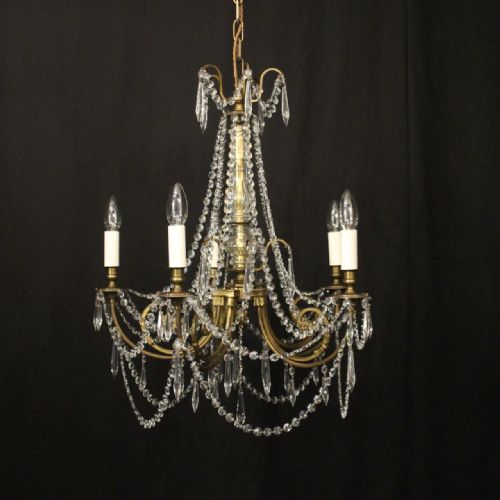


Beaded Crystal Ceiling Pendant
These beaded crystal ceiling pendant light fittings bring unmistakable sparkle and period character to a room through cascading glass and metal frames.
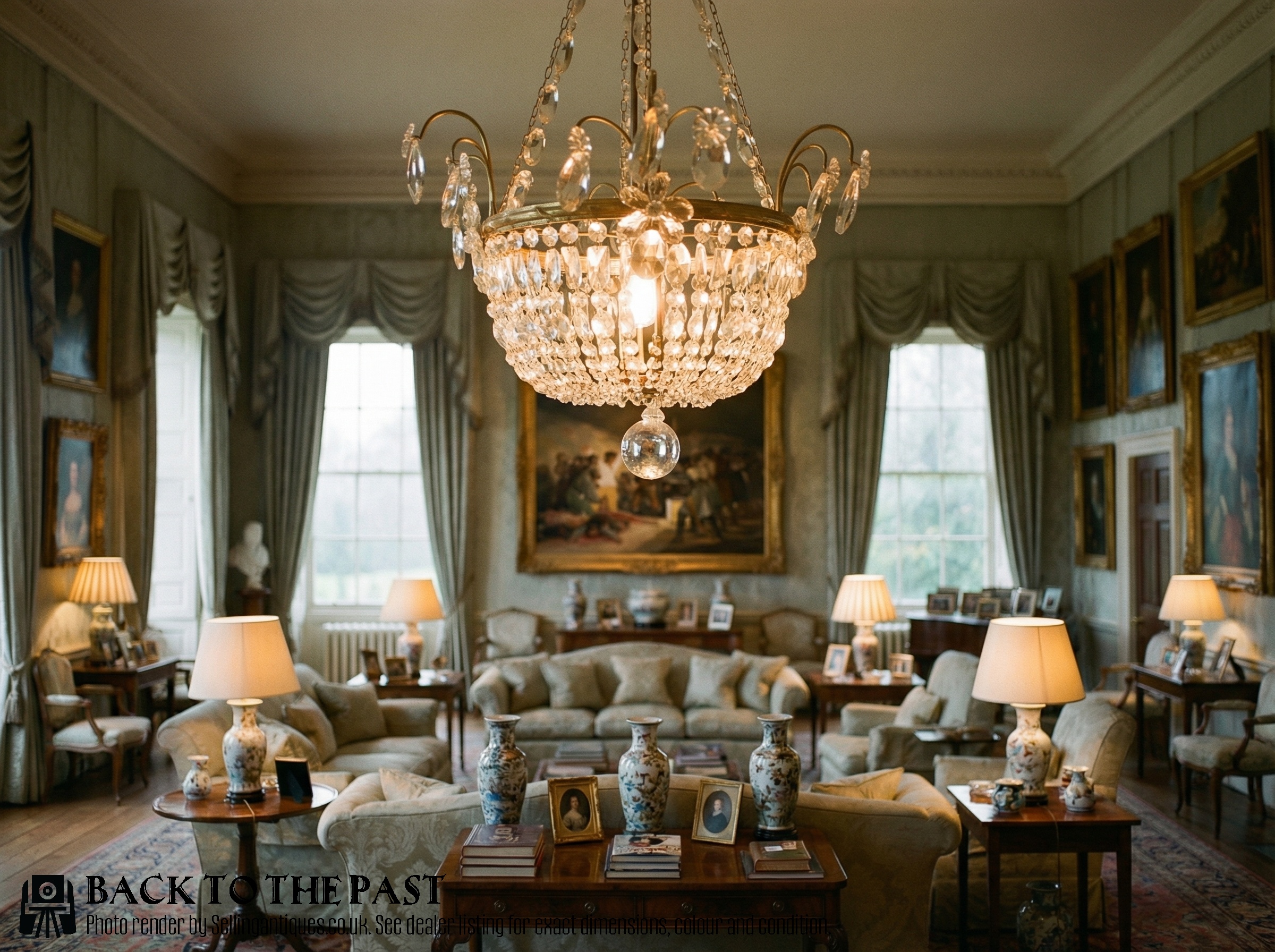
Beaded Crystal Ceiling Pendant
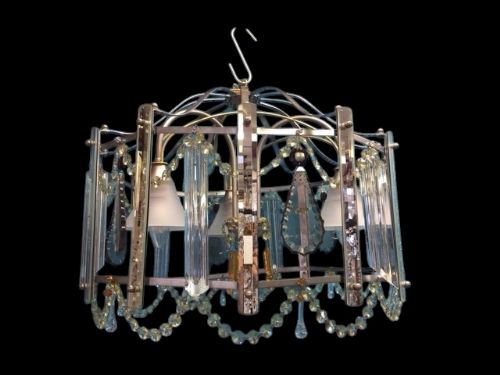
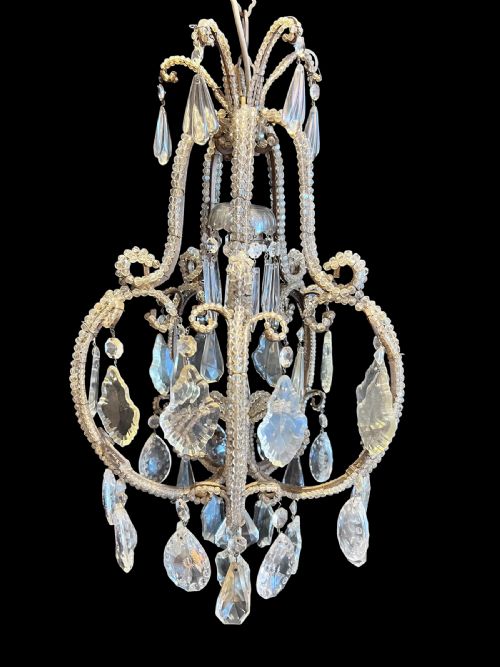
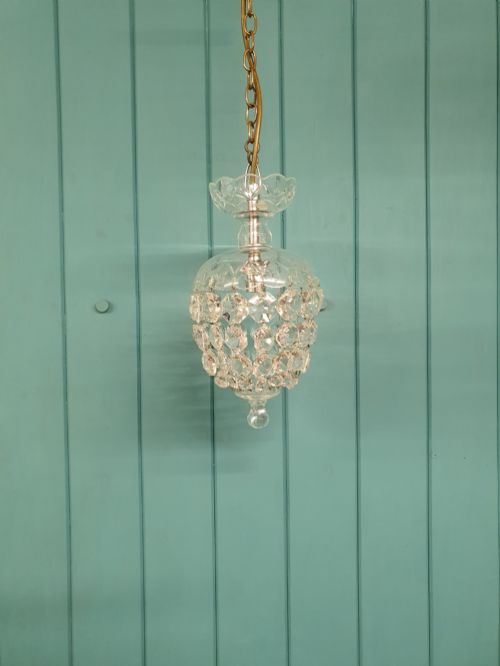
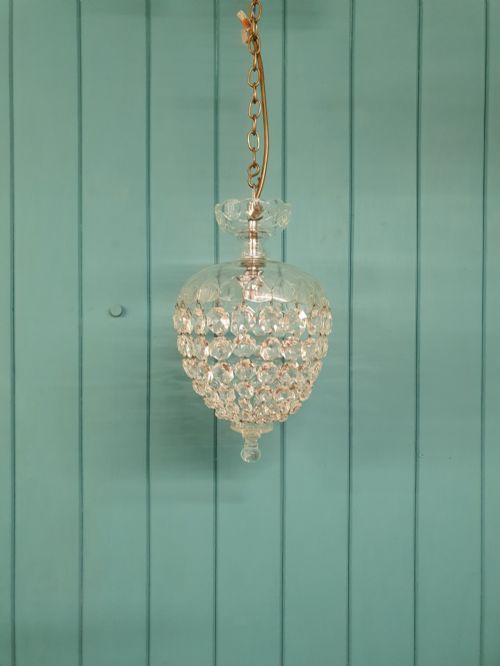
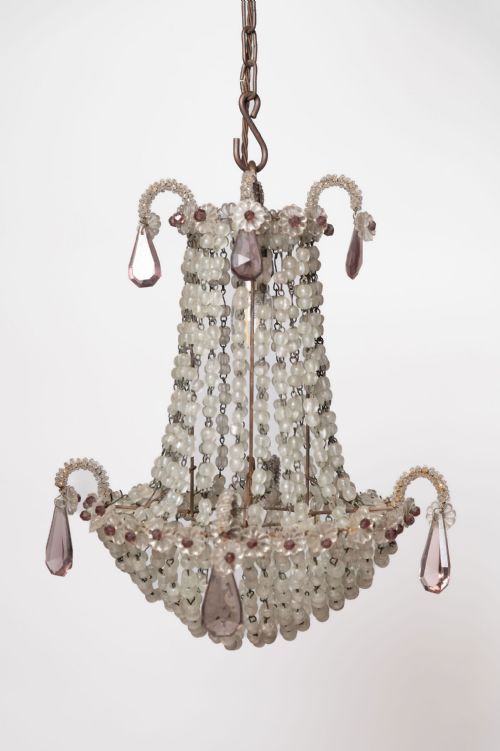
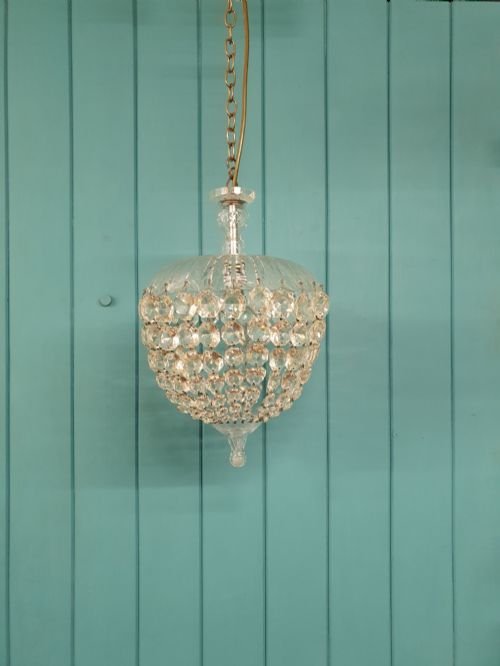
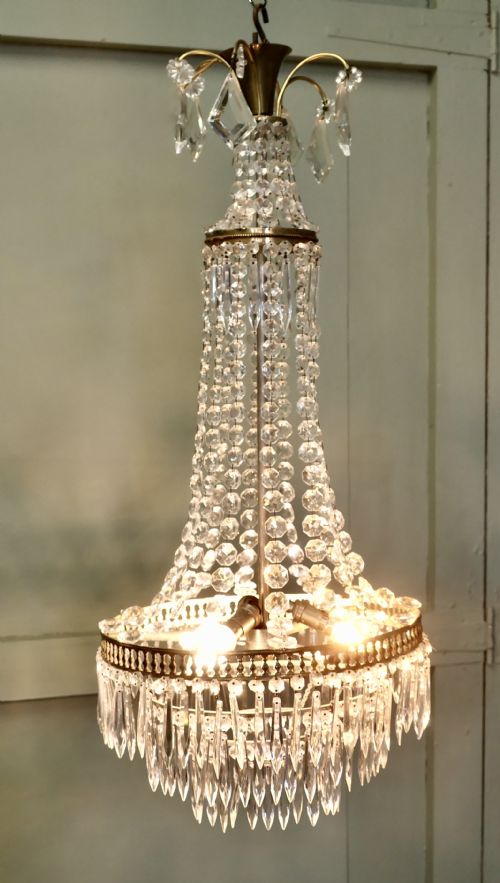
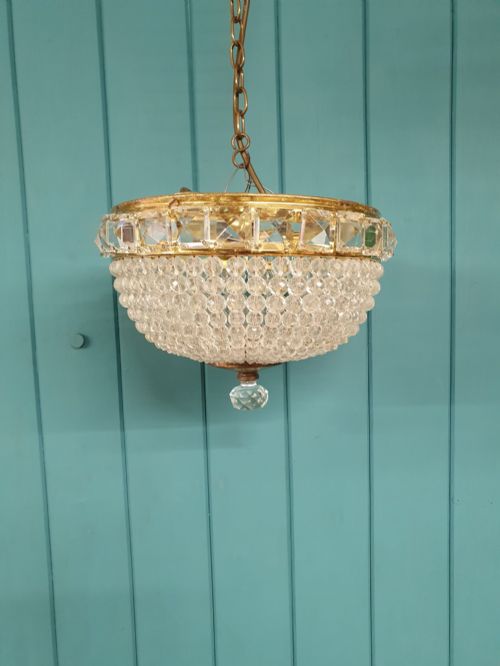
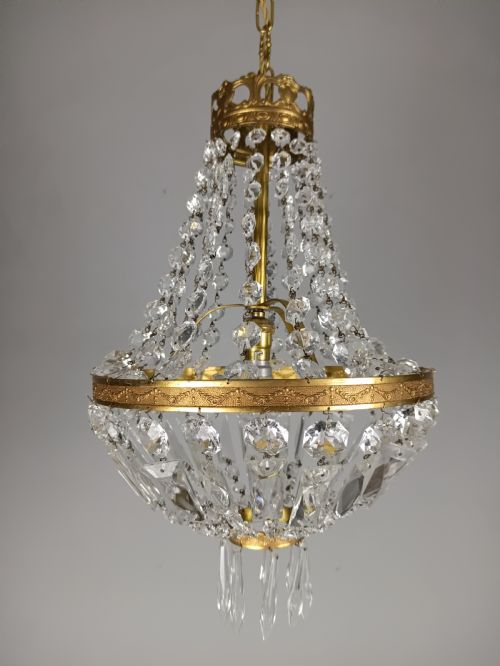
A beaded crystal ceiling pendant combines structural metal framing with suspended glass elements, taking forms such as dome top fixtures, bag chandeliers, and basket lights. When searching for a beaded crystal ceiling pendant, buyers encounter examples originating largely from the early twentieth century, including Edwardian pieces alongside creations from the nineteen-twenties and nineteen-thirties.
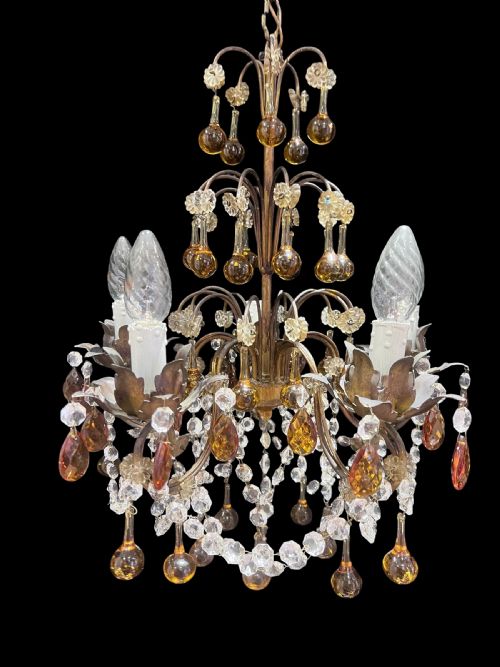
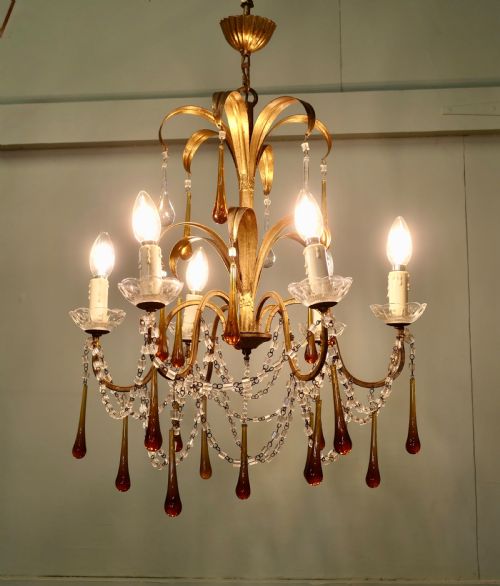
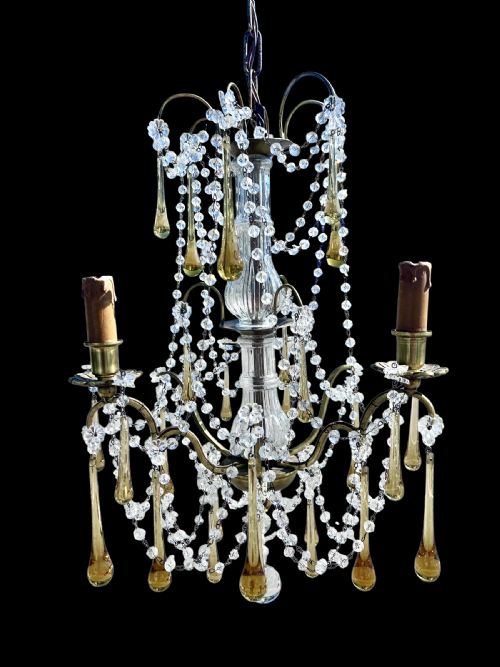
The selection ranges from small single-light domes measuring several inches across to multi-armed French Empire style tent and waterfall fixtures and large Italian Florentine chandeliers. Forms span classical silhouettes, galleon designs, and iron frameworks hung with coloured crystal fruits like grapes, apples, and pears.
Geographic influences are strongly represented by French and Italian aesthetics, encompassing French Chateau, French Country, Italian Venetian, and Italian Rococo Revival styles. Alongside these, Edwardian and Art Deco pieces demonstrate how varied lighting design became during the opening decades of the twentieth century.
How They Were Made
Craftsmen built these light fittings using structural frameworks of brass, gilt metal, iron, and wire to support arrangements of glass and crystal. Metal components were often gilded, painted, or left in their natural brass state to form the armature for the hanging components.
Artisans wired individual cut glass crystals, teardrops, beads, and prisms into swags, tents, and waterfalls using fine metal connections. Coloured crystals in shades of amber, red, blue, and cobalt were integrated alongside clear cut glass to create rich plays of light.
Materials documented across the inventory include brass, gilt metal, iron, wire, glass, cut glass, and crystal glass.
What Varies in Quality
The distinction between standard production and superior craftsmanship lies in the density and cutting of the crystal elements, as well as the solidity of the metal armature. Heavier brass or gilt frames and finely faceted cut glass drops produce a sharper refraction of light and greater structural longevity.
Execution of decorative details, such as the complexity of the beadwork swags, the integration of coloured crystal fruit motifs, and the cohesion of the chosen French or Italian style, separates simpler utilitarian pieces from grander architectural examples.
Wedgwood
The Beaded Crystal Ceiling Pendant Glossary
- Bag chandelier
- A lighting fixture featuring a tapered or basket-shaped lower section constructed from closely strung crystal beads. This form directs light through a dense web of glass.
- Tent and waterfall
- A chandelier style characterised by an upper triangular tent of beads cascading down into a wider waterfall of crystal drops and swags. This arrangement maximises surface area for light reflection.
- Tolewear
- Painted sheet metal used in lighting and decorative objects, frequently seen finished in white or gilt. It provides a distinct matte contrast to sparkling glass elements.
- Prism
- A geometric cut glass element suspended to refract light into spectral colours. These are often placed at the top and centre of light fittings.
- Florentine
- A decorative style originating from Italy, noted for ornate gilt framing and lavish use of crystal beadwork. Such pieces often incorporate floral or organic metal motifs.
Beaded Crystal Ceiling Pendant: Frequently Asked Questions
Where should I hang a beaded crystal ceiling pendant?
These fixtures suit spaces where decorative illumination and period character are the primary focus, such as entrance halls, dining rooms, or living areas. Their suspended crystal drops interact well with natural and artificial light sources in smaller or medium-sized rooms.
Larger multi-light Florentine or Empire style examples require higher ceilings and adequate clearance to accommodate their expanded drop and width, ensuring the proportions of the room remain balanced.
How do I identify an Edwardian crystal pendant?
Edwardian examples typically date from the first decade of the twentieth century and often feature brass frames combined with cut glass beads, dome top profiles, or basket configurations. They lean towards refined proportions and delicate wirework.
Comparing the specific metalwork characteristics, crystal cuts, and overall silhouette against documented period pieces helps confirm the date of manufacture and stylistic lineage.
What is the difference between a basket and a bag chandelier?
A basket chandelier usually has a more open, bowl-like lower metal frame containing loose or wired drops, reminiscent of a shallow container. The structure itself remains visible beneath the glass.
A bag chandelier narrows into a defined pointed or tapered silhouette formed entirely by tight vertical strings of beads enclosing the light source within a geometric net.
How do French and Italian styles differ in these pendants?
French lighting from this era frequently utilises Empire style tent and waterfall configurations, gilt bronze, and structured symmetry. The emphasis rests on formal geometric cascading drops and refined metalwork.
Italian pieces often display more organic or flamboyant forms, including Florentine gilt frames, galleon silhouettes, and the inclusion of coloured crystal fruits or flowers. These designs prioritise exuberant decoration and vibrant colour palettes.