


Beach Scene Oil Painting
A beach scene oil painting captures the shifting light and human activity along the shore across multiple centuries.
Beach Scene Oil Painting
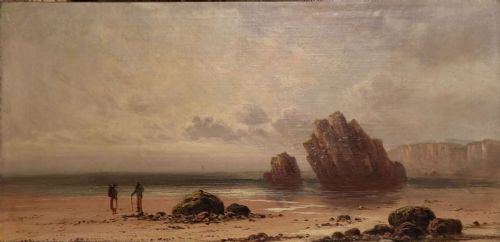
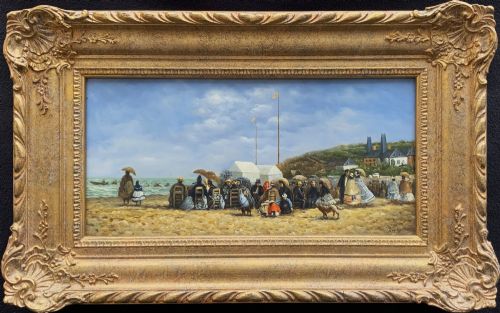
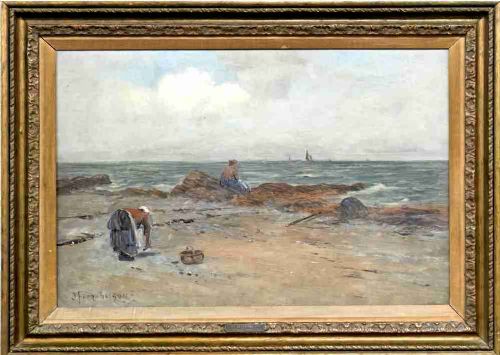
A beach scene oil painting represents coastal landscapes, fishing communities, and leisure activities by the sea. These works range from Victorian marine studies to mid-century impressionist coastal views.
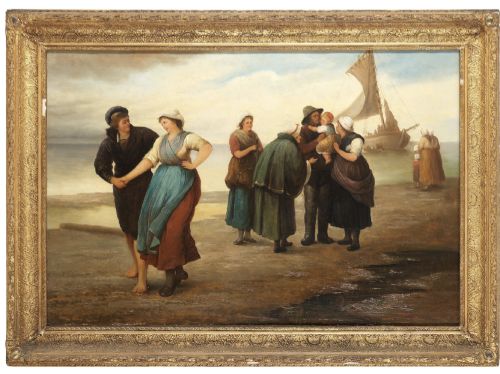
The most common examples on this page date from the nineteenth century through to the mid-twentieth century. They typically depict figures on the shore, boats on the sand, or expansive seaside vistas.
Makers and schools represented span British impressionism, the Newlyn school, and various continental traditions. Each piece records a specific coastal environment through the medium of oil paint.
How they were made
These works are built with oil paint applied to canvas, wood, or board. Artists often used gesso preparations to prime the support before laying down pigment.
Frames frequently incorporate gold leaf and giltwood, particularly on larger country house canvases from the eighteenth and nineteenth centuries. Brushwork varies from tight realism to looser impressionist application.
Listings feature works spanning from the eighteenth century to 1960, executed in oil paint on canvas and wood.
What varies in quality
The sophistication of the handling of light and atmospheric coastal conditions distinguishes finer works from simpler decorative pieces. Compositional balance and the rendering of figures within the landscape play a significant part.
The presence of period frames, particularly original giltwood or gesso surrounds, alters the integrity of the piece. Attribution to recorded artists or identifiable schools elevates historical interest.
Joseph Farquharson R A·James Webb·Donald McIntyre·Sir David Murray RA·Jeffrey Pratt·William Shayer Snr·Owen Bowen·Robert Macaulay Stevenson·William Greaves·William Edward Webb·George Smith·Daniel Sherrin·Charles McAuley·Henri Cadiou·Alfred Egerton Cooper·Harry John Pearson·William Smith
The Beach Scene Oil Painting Glossary
- Impressionism
- A style of painting emphasising light and unblended brushstrokes. This approach appears frequently in mid-twentieth-century coastal scenes.
- Gesso
- A plaster mixture used to coat wood or canvas before painting. It provides a smooth surface for oil application.
- Marine landscape
- A work depicting the sea, ships, or coastal activities. Many nineteenth-century examples focus on fisher folk and boats on the shore.
- Giltwood
- Wood carved and covered with thin gold leaf. It is commonly found on antique frames enclosing large canvases.
- Post-Impressionism
- A development following impressionism that pushes form and colour further. French and British examples demonstrate this shift in coastal subjects.
Beach Scene Oil Painting: Frequently Asked Questions
How do I date a beach painting?
Examine the canvas preparation, stretcher construction, and framing materials alongside any signatures or stylistic clues. Victorian works often show darker palettes and detailed figures, while mid-century pieces employ freer brushwork.
Historical clothing and vessel types depicted in the scene also provide reliable chronological markers.
Where should I hang an oil painting?
Keep works away from direct sunlight and damp environments to protect the oil paint and canvas support. Stable room temperatures prevent the wood stretcher and gesso from cracking.
Ensure the wall can support heavier giltwood frames if you are hanging a large country house canvas.
What is the Newlyn school?
The Newlyn school was an art colony based in Cornwall focusing on naturalistic plein-air painting. Artists captured local fisher folk and coastal life directly from observation.
Works associated with this group often display a strong connection to West Cornwall coastal environments.
Are these paintings signed?
Many works bear artist signatures, initials, or studio attributions inscribed on the front or reverse. Some pieces remain unsigned but are attributed through style, subject matter, and recorded provenance.
Documentation in archive records helps connect unsigned coastal scenes to specific periods and regions.