






Baroque Writing Desk
A baroque writing desk brings dramatic presence and rich timber grain to a room, offering deep drawers and fitted interiors for everyday use.
Baroque Writing Desk
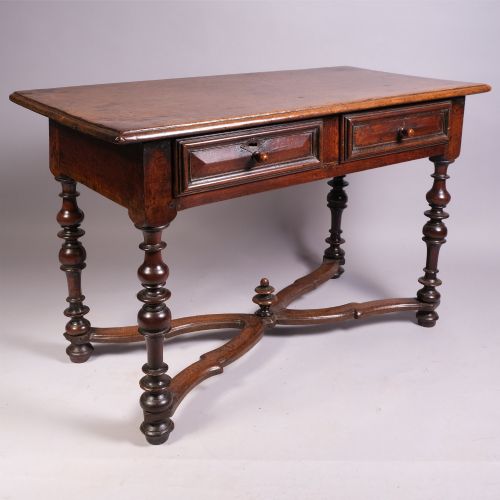
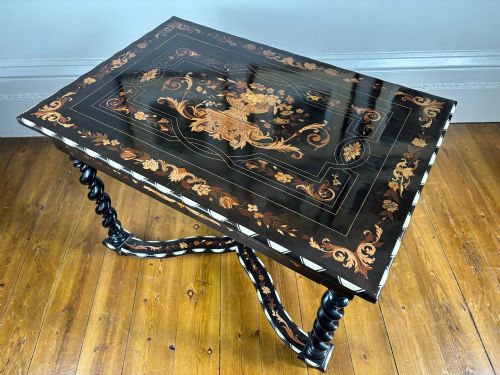
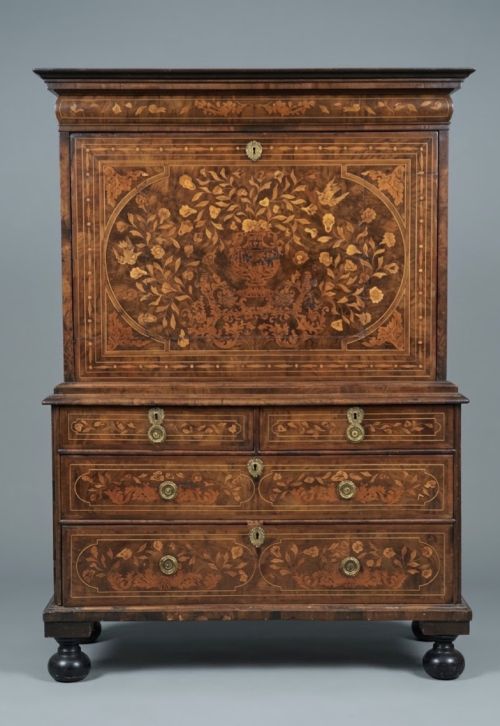
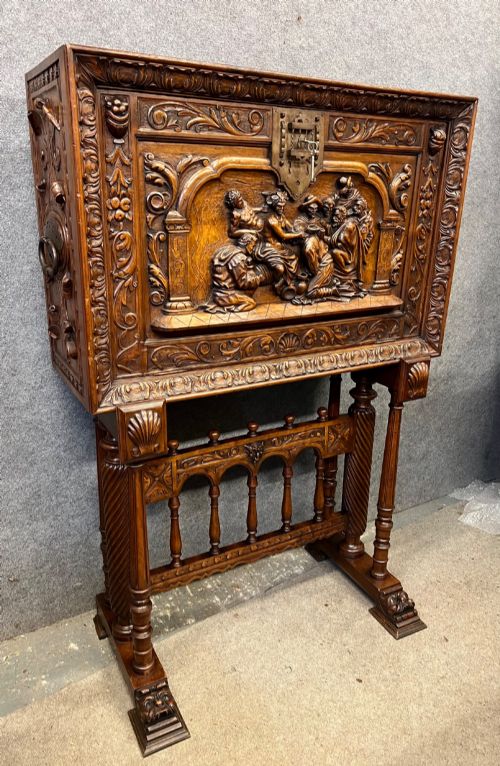
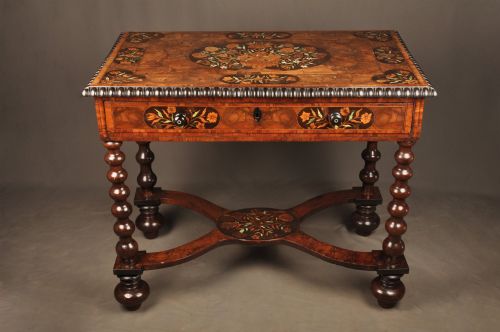
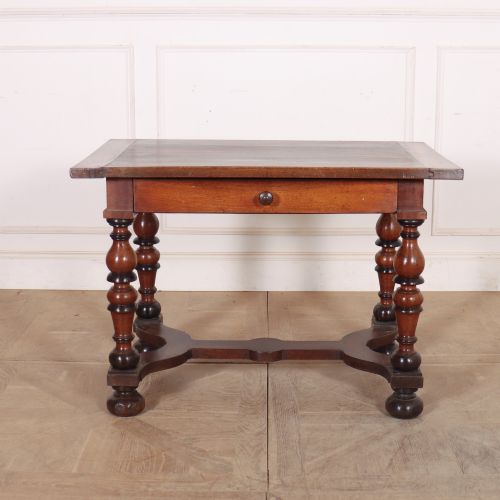
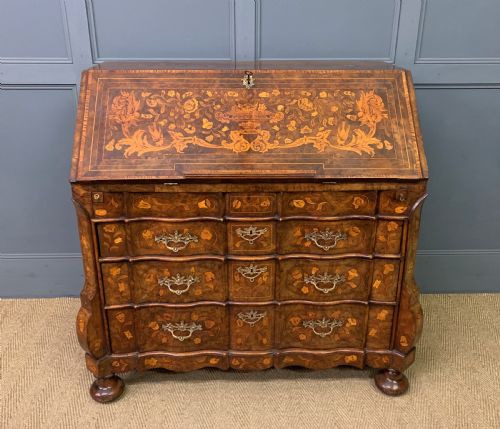
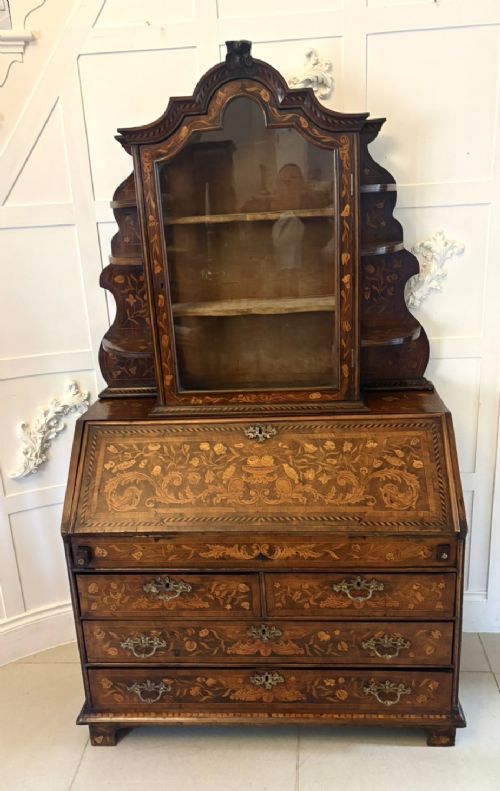
A baroque writing desk encompasses substantial bureau bookcases, fall-front secretaires, and sturdy tables originating from seventeenth and eighteenth century workshops across Europe. You will encounter robust Spanish walnut pieces alongside elaborately inlaid Dutch floral marquetry variants.
The form serves both storage and writing, often combining drop-front panels with internal pigeonholes and concealed compartments. Many examples balance architectural authority with intimate scale, making them practical focal points for a study or library.
Materials and construction
Cabinetmakers built these pieces primarily using solid walnut, oak, and fruitwood, frequently applying intricate marquetry veneers of floral and geometric patterns. Surfaces gained warmth from hand-applied finishes that highlighted the deep figure of the timber.
Hardware played an essential structural and decorative role, featuring cast brass handles, escutcheons, and occasionally iron mounts. Joinery relied on traditional dovetailed drawer construction and pegged frames designed to support heavy timber sections.
Baroque Writing Desk Retail Price Guide 2026
Typical asking prices for baroque writing desk among the pieces listed under this phrase on Sellingantiques today, from the lower quarter to the upper quarter. They describe what is for sale here now, not the wider market.
Distinguishing quality
The sophistication of the marquetry and the crispness of carved wooden details set superior examples apart from simpler regional pieces. Master workshops achieved remarkable depth in floral inlays by contrasting various fruitwoods against darker walnut grounds.
Structural integrity and the retention of original brass hardware and fitted interior drawers determine the standing of an individual desk. Proportion and balance across monumental bureau bookcases dictate how successfully the piece occupies a modern interior.
Angiolo Barbetti Firenze
The Baroque Writing Desk Glossary
- Marquetry
- The art of applying pieces of veneer to a structure to form decorative patterns. Craftsmen utilised tinted woods and botanical elements to create elaborate floral motifs.
- Bargueño
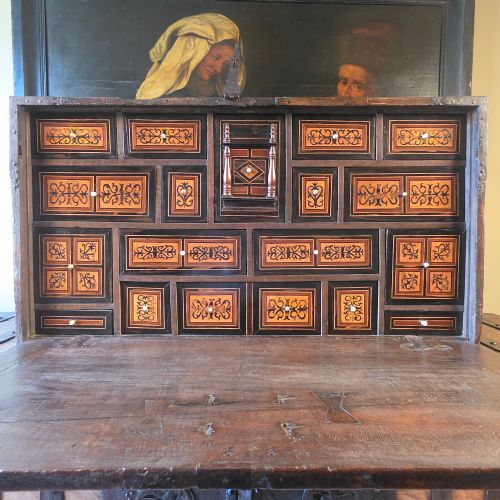
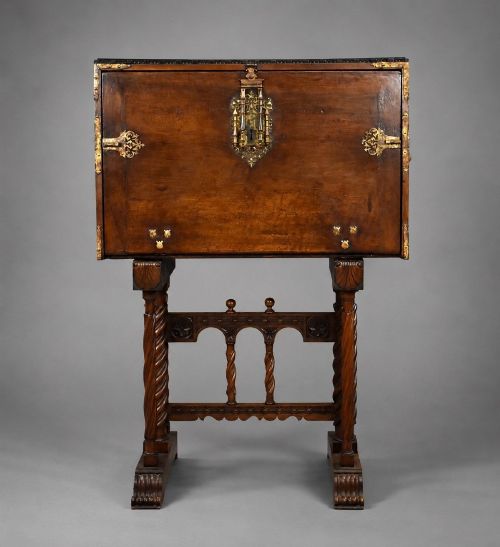
- A traditional Spanish cabinet with a drop front that conceals numerous small drawers and compartments. These pieces typically rest upon a sliding support frame or a dedicated stand.
- Bureau bookcase
- A dual-purpose furniture form combining a sloping writing flap desk below and enclosed shelving above. This arrangement maximised storage within domestic spaces.
- Secretaire
- A writing cabinet featuring a fold-down or pull-out writing surface. It often includes internal pigeonholes and small drawers for correspondence.
Baroque Writing Desk: Frequently Asked Questions
Where were these desks made?
These pieces originate from workshops across continental Europe, with strong representation from Dutch, Spanish, German, and Italian centres. Each region developed distinct regional characteristics in timber selection and decorative carving.
Dutch makers favoured elaborate floral marquetry, whereas Spanish and Italian workshops often emphasised bold architectural lines and carved walnut surfaces.
How do I use a bureau desk?
The sloping flap folds down to provide a stable writing surface while concealing internal compartments for stationery and letters. Drawers beneath store larger papers and household documents.
Leaving the flap open reveals the fitted interior, transforming the furniture piece into an active workspace with traditional character.
How do I distinguish seventeenth and eighteenth century styles?
Seventeenth century examples typically display heavier proportions, plain walnut or oak construction, and architectural mouldings. Cabinets from this era often focus on structural paneling and drop-front forms like the Spanish bargueño.
Eighteenth century pieces frequently incorporate lighter veneers, curved bombe outlines, and intricate floral marquetry work influenced by rococo and neoclassical tastes.
How do I care for antique walnut wood?
Maintain stable humidity levels in the room to prevent timber movement and veneer lifting. Keep the desk away from direct sunlight and heat sources to preserve the finish.
Apply a traditional beeswax polish occasionally to nourish the grain and maintain a soft natural sheen across the wooden surfaces.