



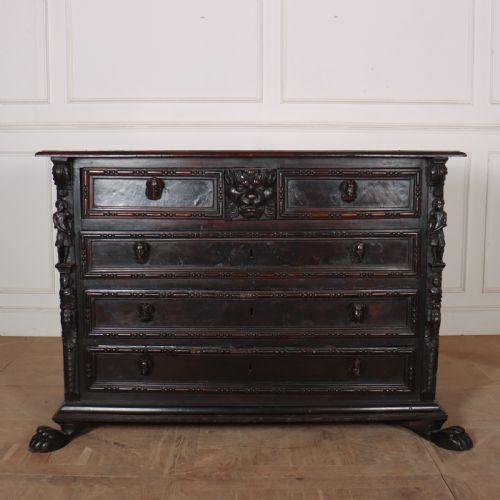
Baroque Walnut Dresser
A baroque walnut dresser brings profound presence to a room, offering rich wood figures and centuries of craft.
Baroque Walnut Dresser
A baroque walnut dresser encompasses substantial storage forms like chests of drawers, commodes, and chests on stand created during influential continental and British periods. The examples found here span from the seventeenth century through the eighteenth century, originating from workshops in Italy, Germany, Britain, and the Netherlands.
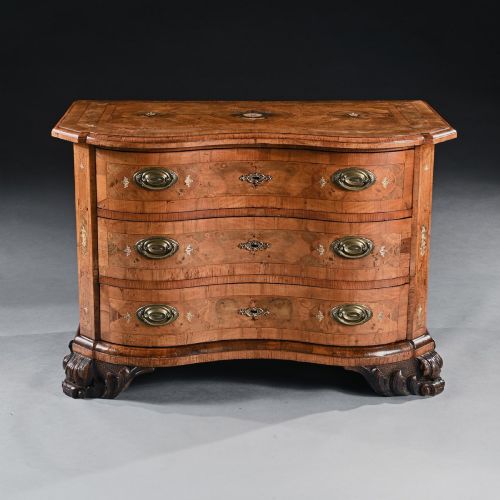
Buyers most frequently encounter grand Italian and German commodes alongside William and Mary chests of drawers, which showcase serpentine contours or geometric drawer arrangements. These pieces function as statement storage items in traditional interiors, combining architectural scale with deeply figured timber surfaces.
The typology embraces both straightforward chest forms and complex designs featuring secret drawers, bombe shapes, or raised stands. Each iteration reflects the regional tastes of baroque craftsmen working primarily in walnut and burr walnut.
Construction and materials
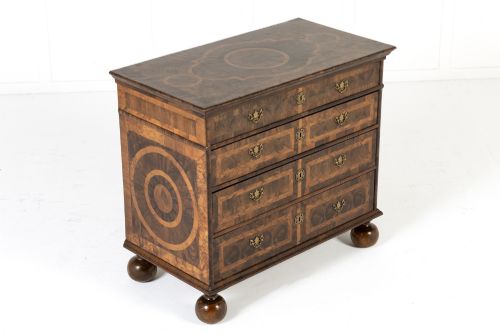
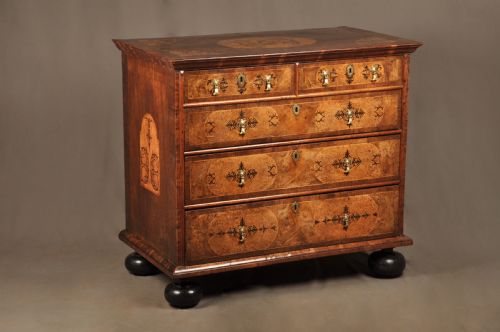
Cabinetmakers constructed these pieces using solid walnut, fruitwood, and oak carcases embellished with delicate veneers and intricate marquetry. Artisans applied oyster veneers in circular patterns or utilised arabesque marquetry to create striking surface designs across drawer fronts and tops.
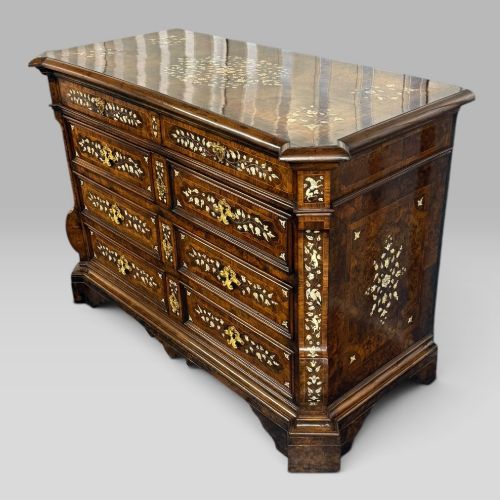
Detailed embellishment often involved bone inlay, pewter stringing, and ivory marquetry set directly into the walnut ground. Brass hardware, including drop handles and escutcheons, completed the construction of these substantial case pieces.
Baroque Walnut Dresser Retail Price Guide 2026
Typical asking prices for baroque walnut dresser among the pieces listed under this phrase on Sellingantiques today, from the lower quarter to the upper quarter. They describe what is for sale here now, not the wider market.
Certain seventeenth-century pieces include cunningly concealed secret drawers designed to outsmart prying eyes.
Evaluating quality and execution
The distinction between standard examples and exceptional pieces rests in the complexity of the timber figure and the precision of the marquetry work. Elaborate serpentine fronts and specialised additions like secret drawers indicate a higher tier of cabinetmaking ambition.
Mastery is further demonstrated through the integration of delicate materials such as bone inlay, pewter, and ivory into the primary walnut surface. The overall harmony of proportion, regional styling, and original hardware configuration elevates certain examples above simpler counterparts.
The Baroque Walnut Dresser Glossary
- Marquetry
- The art of applying decorative pieces of veneer to a structure to form intricate designs or pictures. Craftsmen used various woods alongside bone and pewter to achieve detailed arabesque patterns.
- Oyster Veneer
- Slices of wood cut transversely from small branches to create circular or oval patterns resembling oyster shells. This technique was favoured by William and Mary cabinetmakers.
- Serpentine
- A curved furniture front characterised by a convex centre flanked by concave ends. This undulating shape adds movement and visual interest to heavy walnut case pieces.
- Bombe
- A swollen or outwardly curving shape characteristic of continental baroque furniture forms. It requires advanced woodworking skill to achieve the curved profile while maintaining structural integrity.
Baroque Walnut Dresser: Frequently Asked Questions
What is a baroque walnut dresser?
A baroque walnut dresser refers to historical storage forms including chests of drawers, commodes, and chests on stand dating from the seventeenth and eighteenth centuries. These items are defined by substantial walnut construction, decorative veneers, and sculptural silhouettes.
Such pieces serve as functional storage units that also function as focal decorative objects. Their complex joinery and rich timber figures reflect the advanced craft standards of European workshops.
How do I identify a William and Mary chest?
William and Mary chests typically feature geometric drawer arrangements, oyster veneer patterns, and distinct marquetry decoration. They originate from the late seventeenth or early eighteenth centuries and often include specialised stands.
Examining the secondary woods, such as oak or pine used in the carcase construction, helps confirm the period. The presence of original brass drop handles and escutcheons provides further evidence of age.
Where were these pieces made?
The listings demonstrate origins across Italy, Germany, the Netherlands, and Britain. Each region developed distinct characteristics, such as the serpentine outlines seen on German commodes or the architectural bombe shapes of Italian pieces.
Regional preferences also influenced decorative choices, with German makers frequently employing pewter and ivory inlay, while British craftsmen focused on complex oyster veneering.
How should I care for antique walnut?
Antique walnut requires stable indoor humidity levels and protection from direct sunlight to prevent the timber from drying out or fading. Gentle dusting with a dry cloth maintains the surface without harming historical finishes.
Avoiding harsh chemical polishes preserves the natural patina developed over centuries. Professional conservation advice should be sought for any structural or surface maintenance.