




Baroque Carved Entry Table
A baroque carved entry table brings dramatic Italian and Spanish presence to a hallway, offering heavy timber or gilt surfaces paired with marble and onyx.
Baroque Carved Entry Table
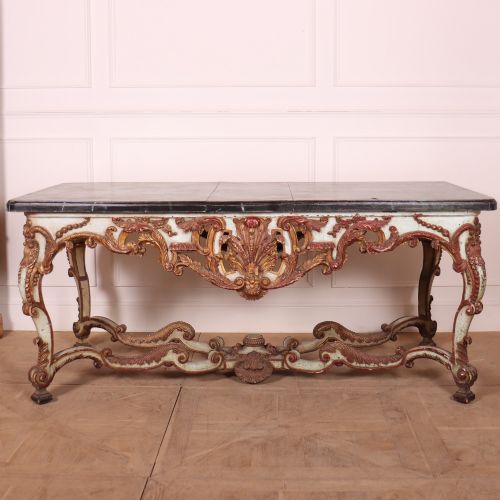
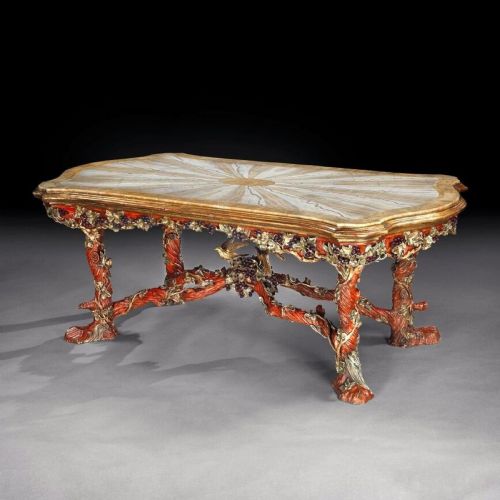
A baroque carved entry table represents console and centre tables derived from seventeenth-century, eighteenth-century, and nineteenth-century traditions. Buyers encounter Italian and Spanish interpretations featuring heavy timber, painted finishes, and giltwood.
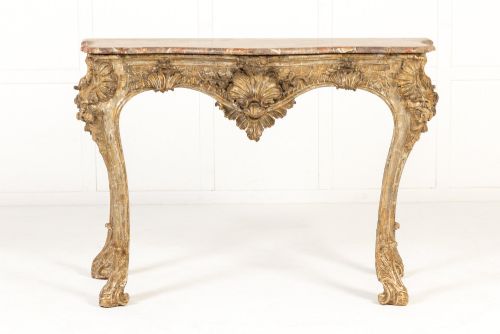
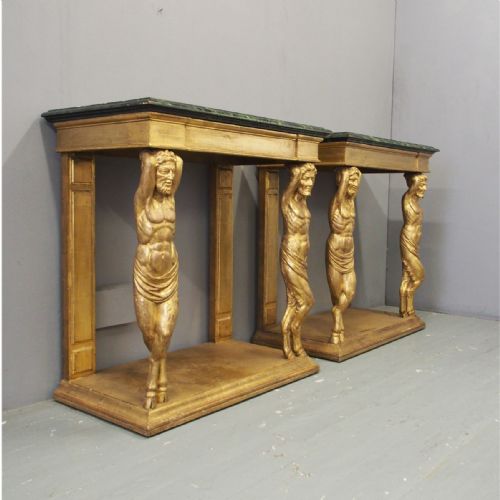
Most examples function as console tables designed to stand against a wall, often topped with marble or onyx. The forms span seventeenth-century oak, eighteenth-century painted and gilt surfaces, and later revival pieces from the nineteenth and early twentieth centuries.
Materials and construction
Carved wood provides the structural framework, utilising walnut, oak, and gessoed timber finished in gilt, silver gilt, or polychrome paint. Iron and metal elements also appear in specific regional variants.
Tops utilise heavy slabs of marble or onyx, resting upon heavily carved bases that incorporate figural motifs such as putti, rams, and maiden heads.
Baroque Carved Entry Table Retail Price Guide 2026
Typical asking prices for baroque carved entry table among the pieces listed under this phrase on Sellingantiques today, from the lower quarter to the upper quarter. They describe what is for sale here now, not the wider market.
Watch for carved rams and maiden heads peering out from beneath the stone.
Assessing quality
Quality rests in the depth and sharpness of the carving on the wooden base, where crisp execution of figures and scrollwork distinguishes superior pieces from softer, later revivals. The choice and thickness of the marble or onyx top further separates standard utility forms from more ambitious workshop productions.
Surface treatments dictate visual success, with original giltwood, polychrome paint, and silver gilt retaining greater character than modern or unsympathetic re-interventions.
Amleto Bertoni
The Baroque Carved Entry Table Glossary
- Console table
- A table supported by wall brackets or legs, designed to stand against a vertical surface. These pieces often feature elaborate front legs while relying on the wall for stability.
- Giltwood
- Timber coated with a thin layer of gold leaf over gesso. This finish creates a luminous surface characteristic of grand European interiors.
- Polychrome paint
- Decoration executed in multiple colours upon wood or gesso. It allows for detailed ornamentation on the structural base.
- Onyx
- A banded variety of chalcedony used for tabletops. Its translucent quality provides a distinct alternative to standard marble.
Baroque Carved Entry Table: Frequently Asked Questions
What is a baroque carved entry table?
A baroque carved entry table is a heavy decorative console or centre table designed for a hallway or reception room. These pieces combine elaborate wooden carving with stone tops.
They reflect European design traditions, particularly from Italy and Spain, spanning several centuries of craftsmanship.
How do I style a baroque entry table?
Place the table flat against a primary hallway wall where its carved base and stone top remain visible. Keep surrounding decor restrained to let the heavy woodwork and marble stand out.
Pair the piece with a complementary mirror or lamp to balance the visual weight of the base.
How do I distinguish eighteenth-century pieces from later revivals?
Examine the timber shrinkage, the wear patterns on the gilt or paint, and the hand-tool marks beneath the top. Eighteenth-century examples show natural ageing in the wood and gesso.
Nineteenth and twentieth-century revivals often display more uniform machine assistance or different structural joints underneath.
Are these tables sturdy enough for daily use?
Most console versions rely on wall fixings or robust leg placement to support heavy marble and onyx slabs. They tolerate standard decorative objects placed upon the surface.
Avoid leaning heavy weight against the edges, as antique joinery and wall brackets require careful handling.