


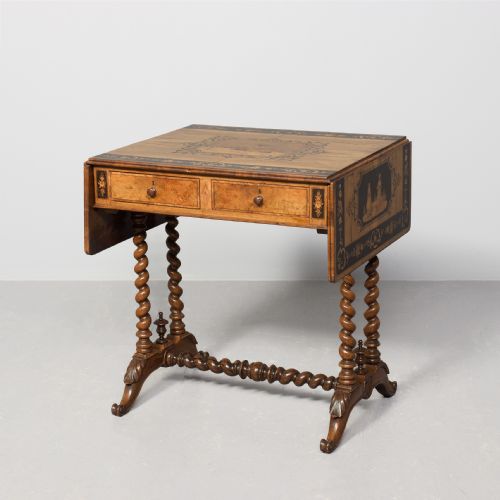


Barley Twist Side Desk
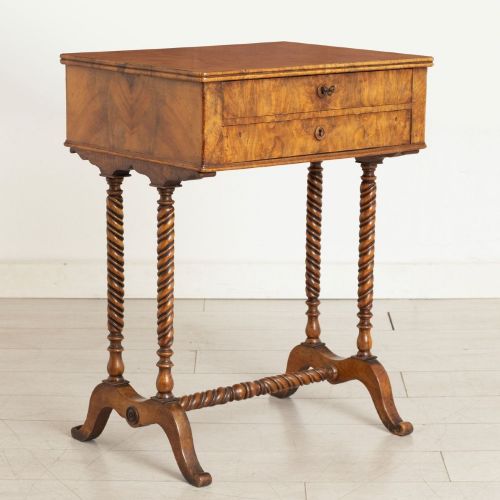
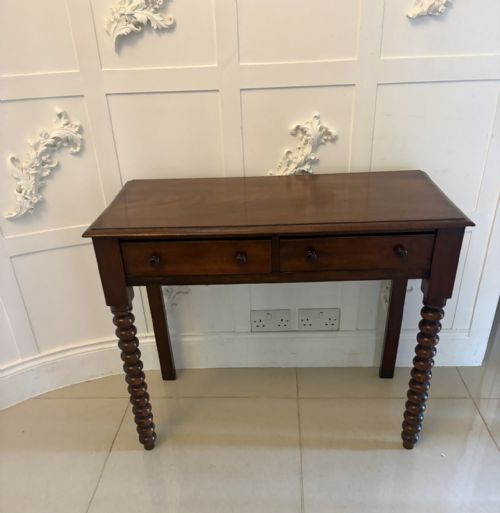
A barley twist side desk brings turned timberwork into a study, combining a compact writing surface with the spiral turnings seen across Victorian and earlier tables.
Barley Twist Side Desk
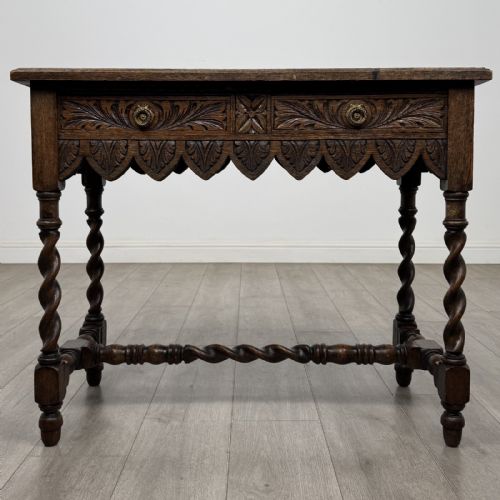
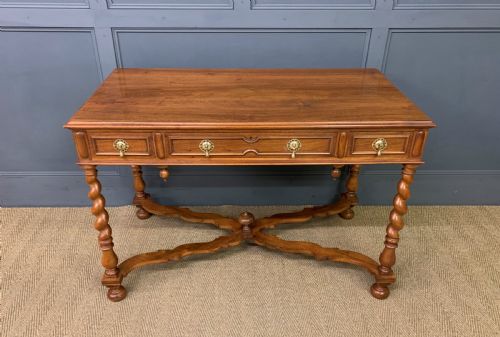
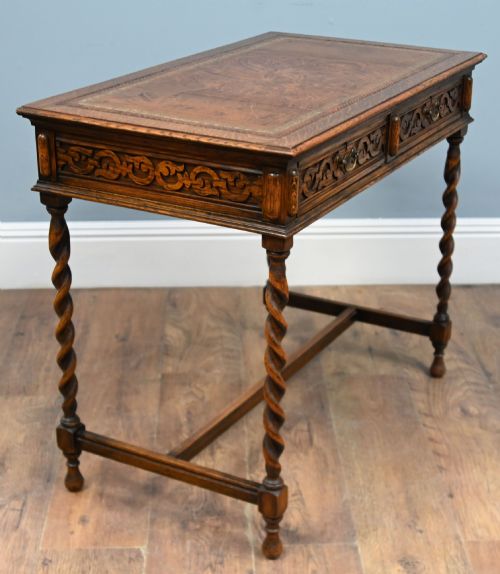
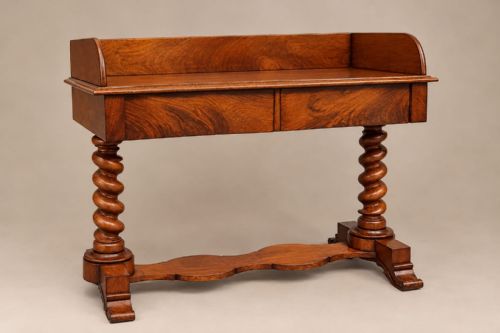
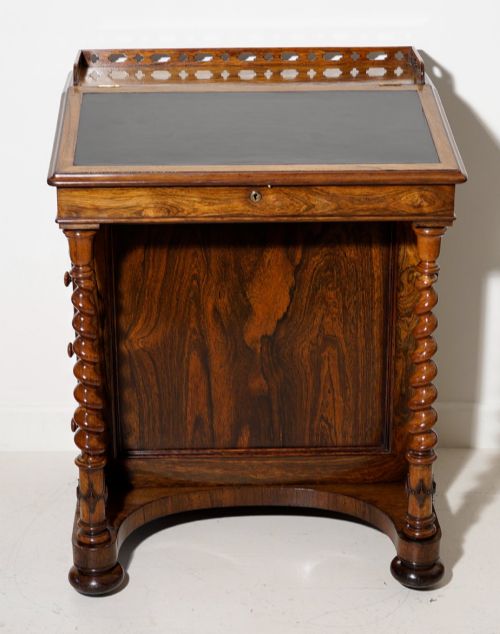
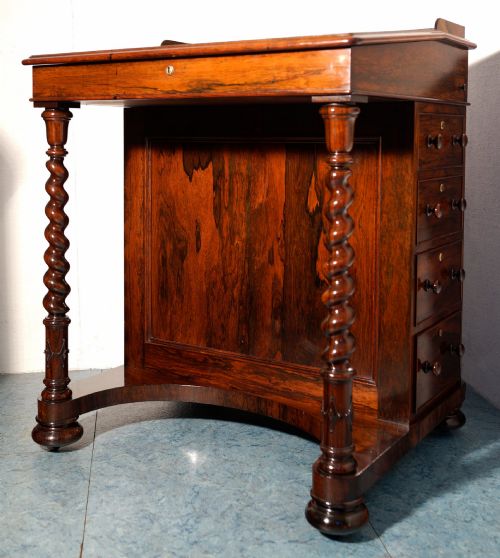
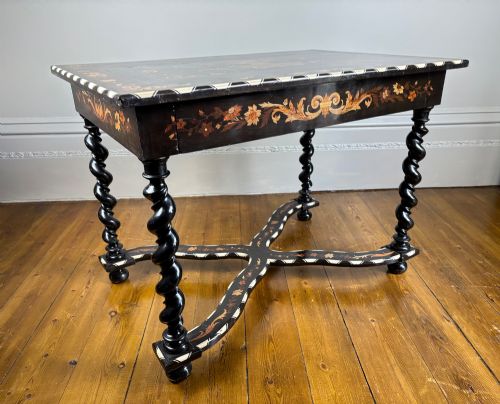
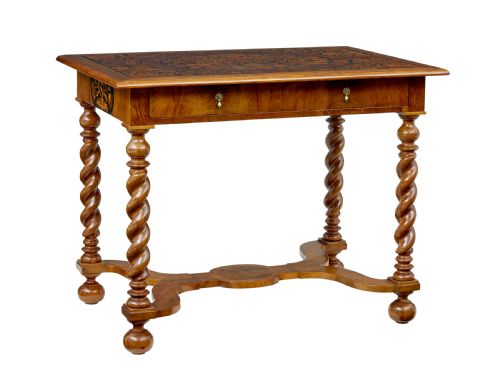
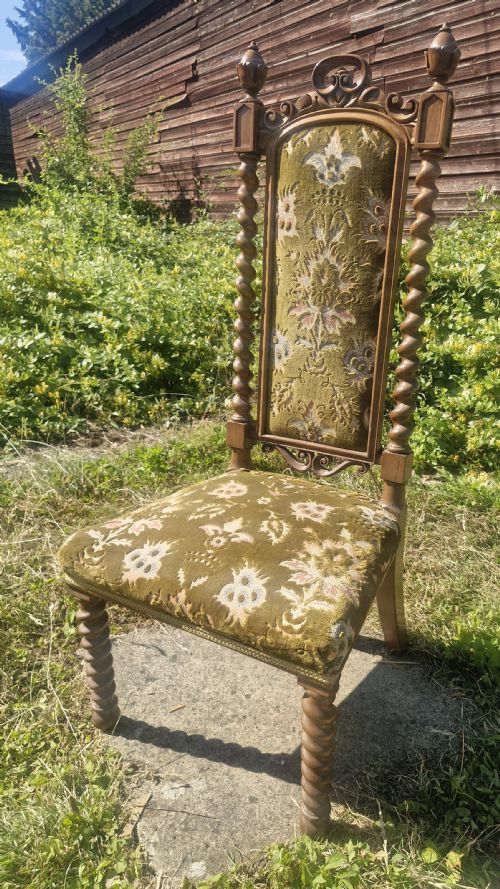
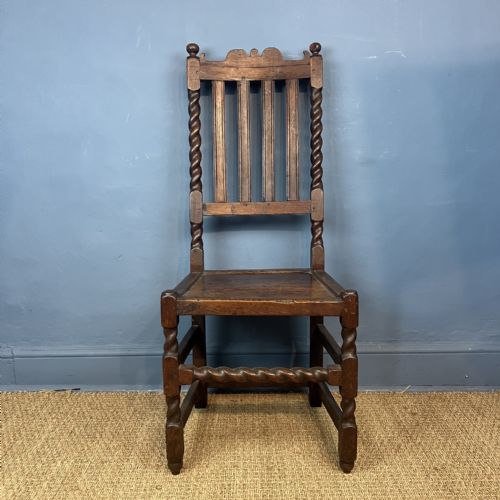
A barley twist side desk combines compact writing surfaces with spiral turned legs, spanning forms from writing tables and side tables to Davenport desks. These pieces draw on seventeenth-century motifs revived during the Victorian era, alongside earlier walnut and oak examples.
The versions met most often on this page include nineteenth-century oak and walnut writing tables alongside rosewood Davenport desks. Makers combined drawers with turned supports, resulting in functional furniture suited to studies and libraries.
Materials and turning methods
Craftsmen shaped dense timbers like oak, walnut, mahogany and rosewood into spiral legs using lathes and hand chisels. These woods provided the structural integrity required to support drawers and writing tops.
Surfaces frequently incorporate veneers, inlay and brass hardware, while some writing surfaces retain leather inserts. Joinery relied on traditional methods to secure the heavy turned legs to the main desk bodies.
Barley Twist Side Desk Retail Price Guide 2026
Typical asking prices for barley twist side desk among the pieces listed under this phrase on Sellingantiques today, from the lower quarter to the upper quarter. They describe what is for sale here now, not the wider market.
Some writing tables incorporate secret compartments alongside standard drawers for private correspondence.
Distinguishing quality in construction
Quality rests in the crispness of the spiral turnings and the selection of timber figures, such as walnut oyster veneers or figured mahogany. Superior pieces maintain tight joints and balanced proportions between the turned legs and the upper writing section.
Secondary woods, drawer linings and the integrity of the original hardware further separate standard production from finer workshop output. Carved detailing on the aprons and drawers adds depth where present.
Edwards & Roberts
The Barley Twist Side Desk Glossary
- Barley twist
- A spiral turning resembling a twisted column, popular in seventeenth-century furniture and revived during the Victorian period.
- Davenport desk
- A compact small desk featuring a sloping writing lid above a pedestal of drawers.
- Vveneer
- A thin layer of decorative wood applied over a secondary timber base to create patterned surfaces.
- Side table
- A small table designed to stand against a wall rather than occupy the centre of a room.
Barley Twist Side Desk: Frequently Asked Questions
What is a barley twist side desk?
A barley twist side desk is a writing table supported by spiral turned legs. These pieces range from compact Victorian writing desks to earlier oak tables.
They offer a practical workspace while incorporating traditional turned woodwork.
How do I date a barley twist desk?
Dating relies on timber choice, construction methods, and secondary woods like oak or mahogany. Victorian revivals often feature heavier machine-assisted turnings compared to seventeenth-century originals.
Hardware styles and drawer dovetails also help place the piece in its correct period.
Where should I place a side desk?
These desks suit studies, hallways, or living spaces where floor space is limited. Their finished backs allow them to stand away from walls if needed.
Pairing them with appropriate seating creates a functional writing area.
What woods were used for these desks?
Common timbers include oak, walnut, mahogany, and rosewood, selected for their strength and grain pattern. Some pieces incorporate decorative veneers or inlay work.
Brass fittings and leather writing inserts frequently accompany these woods.