





Barley Twist Fireside Chair
A barley twist fireside chair offers the distinctive spiralled timberwork that grounds a room, bringing period character directly to the hearth.
Barley Twist Fireside Chair
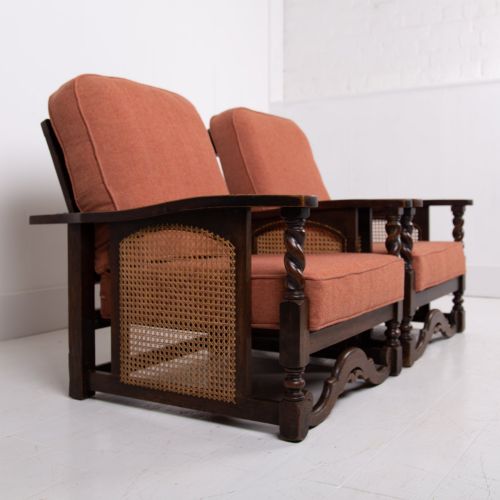
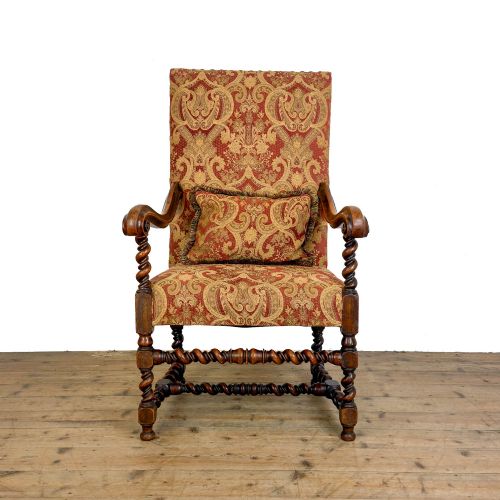
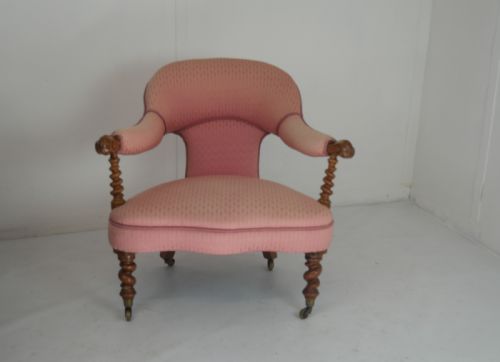
A barley twist fireside chair brings tactile turned woodwork to the hearth, combining structural timber frames with upholstered seats and backs for comfort by the fire. You encounter these seating pieces in formats ranging from low nursing chairs to substantial open armchairs, reflecting the variety produced across the Victorian era and into the early twentieth century.
The selection here draws primarily from nineteenth-century examples alongside items from around nineteen ten, taking in revival styles such as Jacobean and Carolean influences. These variations demonstrate how cabinetmakers reinterpreted seventeenth-century turning traditions during the Victorian period, adapting them for domestic comfort.
Armchairs and nursing chairs dominate the forms available, often featuring padded upholstery paired with exposed wooden frames. This structural balance ensures the turned members remain visible while providing the support expected from a functional fireside seat.
How they were made
Framing relies predominantly on hardwoods such as oak, walnut, and mahogany, chosen for their strength and ability to hold crisp, spiralled profiles carved or turned along the uprights and stretchers. These timbers provide the rigid skeleton required to support frequent use while displaying rich grain patterns.
Upholstery materials range from traditional textiles and velvet to modern replacement fabrics and button-back padding, supported in some instances by cane work. Artisans combined these soft furnishings with brass detailing and robust wooden joinery to create durable seating designed for daily domestic life.
Barley Twist Fireside Chair Retail Price Guide 2026
Typical asking prices for barley twist fireside chair among the pieces listed under this phrase on Sellingantiques today, from the lower quarter to the upper quarter. They describe what is for sale here now, not the wider market.
Materials recorded across current listings include oak, walnut, mahogany, brass, cane, and various fabric textiles.
What varies in quality
The distinction between standard and superior examples lies in the depth and precision of the carved timber work, particularly along the spiralled members and any decorative elements like lion head terminals. Finer pieces display crisp definition in the turning and cohesive integration of stylistic revivals, such as Victorian Gothic or Carolean details.
Proportion and material selection further define the upper tier, where substantial frames in figured walnut or quarter-sawn oak are matched with balanced upholstery lines. The relationship between the structural woodwork and the soft furnishings reveals the original maker's intent, separating decorative occasional seats from robust domestic furniture.
The Barley Twist Fireside Chair Glossary
- Barley twist
- A form of turning resembling a spiralling rope or sugar twist, popular in seventeenth-century furniture and revived extensively during the Victorian period. It adds dynamic movement to the uprights and stretchers of seating frames.
- Nursing chair
- A low-seated upholstered chair designed originally for nursery use or sitting comfortably near a hearth. These pieces typically feature supportive padded backs and compact frames.
- Jacobean Revival
- A nineteenth-century stylistic movement imitating the heavy, geometric furniture forms of the early seventeenth century. It frequently incorporates dark oak and prominent turning.
- Carolean Revival
- A decorative style referencing the restoration period of the late seventeenth century, characterised by rich carving and scrolled woodwork. This aesthetic often manifests in walnut armchairs with elaborate crest rails.
- Button-back
- An upholstery technique where buttons are pulled deep into the padding to create a diamond pattern. This method provides structured support and a tailored appearance to the backrest.
Barley Twist Fireside Chair: Frequently Asked Questions
What periods do these chairs come from?
The listings span the nineteenth century and extend into the early twentieth century, encompassing Victorian production and revival movements.
Craftsmen during these eras drew on earlier seventeenth-century turning traditions, resulting in pieces that blend historical references with nineteenth-century comfort.
How were barley twist chairs used?
These chairs served as functional seating around the domestic hearth, in bedrooms, and in reception rooms.
Their sturdy wooden frames and upholstered backs provided comfortable support for daily relaxation in period interiors.
What woods are typically used?
Framing timbers include oak, walnut, and mahogany, selected for their structural durability and suitability for intricate turning.
These hardwoods were often polished to highlight their natural grain beneath the applied upholstery and decorative details.
How do I identify revival styles?
Revival pieces are recognised by specific historical motifs applied to nineteenth-century forms, such as Jacobean turning or Carolean carving.
Examining the construction methods alongside the decorative vocabulary helps distinguish these later interpretations from genuine seventeenth-century work.