


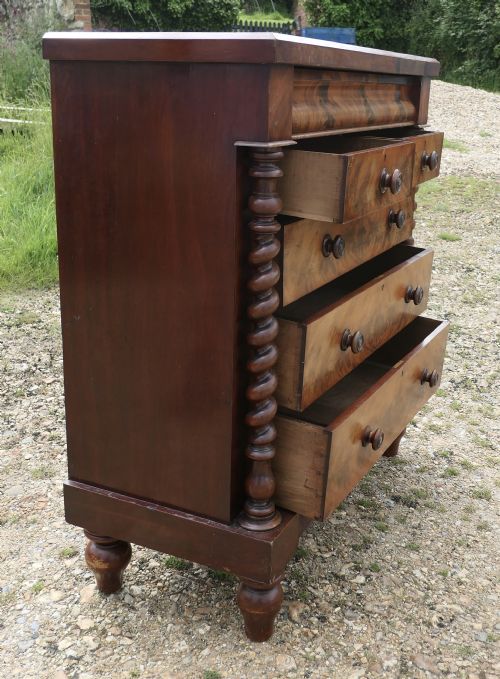


Barley Twist Chest Drawers
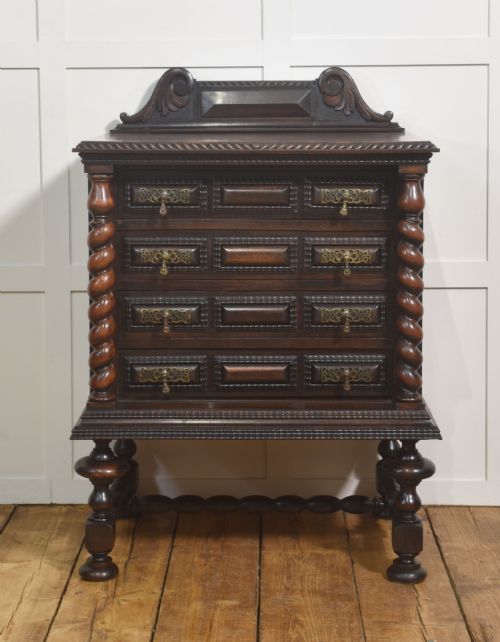
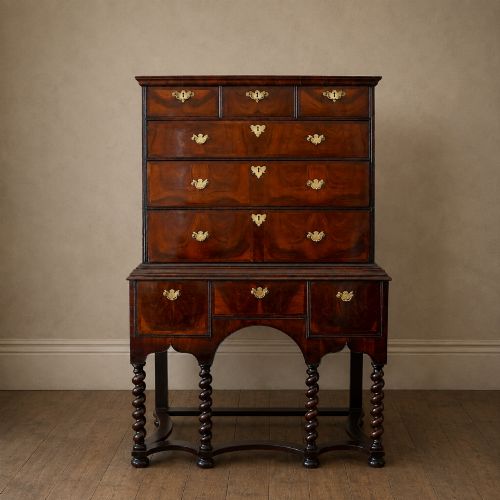
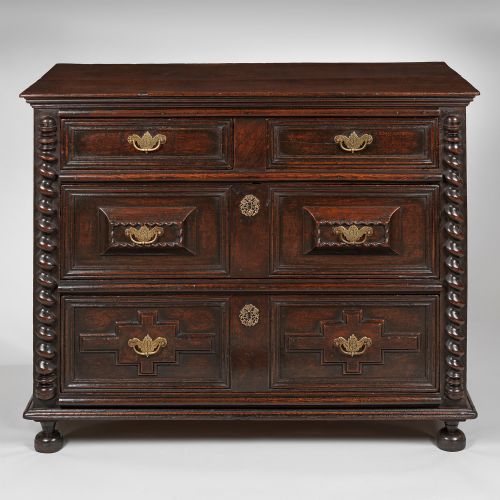
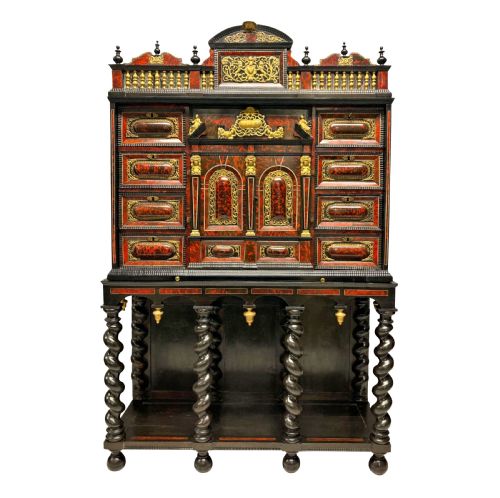
These barley twist chest drawers combine practical storage with turned wooden spirals that catch the eye in any room.
Barley Twist Chest Drawers
A barley twist chest drawers brings together sturdy storage carcases and distinctive spiral turned woodwork across various periods. Buyers searching for a barley twist chest drawers will encounter pieces ranging from seventeenth century origins through to twentieth century revivals.
The form spans straightforward chests of drawers, taller chests on stands, and larger linen presses or dressing tables. Oak and walnut dominate the selection, often accompanied by burr walnut, mahogany, and rosewood.
Revival pieces from the Edwardian era and the nineteen twenties sit alongside authentic seventeenth and eighteenth century examples. This mix provides varied proportions and timber tones suited to different interiors.
Materials and construction methods
Cabinet makers utilised solid timbers including oak, walnut, and mahogany, frequently applying figured veneers like burr walnut or laburnam oyster to primary surfaces. These woods were shaped and joined to create robust drawer carcases and supporting stands.
The characteristic spiral columns were turned by hand on a lathe or carved, requiring considerable skill to maintain uniform curves. Brass handles, escutcheons, and iron hardware completed the construction of these storage pieces.
Even a towering linen press needs somewhere to put its socks.
Assessing craftsmanship and execution
Quality rests in the crispness of the timber turning and the selection of figured veneers on the drawer fronts and top surfaces. Finer examples display meticulous attention to jointing and proportion across the carcase and stand.
The integration of the spiral columns into the architectural design of the chest or stand dictates the visual harmony of the piece. Superior craftsmanship shows in the preservation of original mounts and stable timber movement over centuries.
The Barley Twist Chest Drawers Glossary
- Barley twist
- A spiral turning resembling a twisted rope, carved or lathe-turned onto furniture legs and columns. This decorative feature defines the aesthetic of these specific chests and cabinets.
- Burr walnut
- Timber taken from walnut tree growths that produces intricate, swirling grain patterns. Cabinet makers prized this material for high-status drawer fronts and top panels.
- Linen press
- A tall storage piece containing sliding trays or shelves enclosed by doors above a set of drawers. These items were designed to store household linens flat.
- Ebonised wood
- Timber treated with a dark finish to imitate expensive ebony. This technique provided sharp contrast against lighter woods and mounts.
Barley Twist Chest Drawers: Frequently Asked Questions
What periods do these chests come from?
The selection spans from the seventeenth century through the Georgian and Victorian eras up to the nineteen twenties.
Early pieces sit alongside later revivals, offering different interpretations of the turned column design.
How are chests on stands different from standard chests?
A chest on stand separates the main drawer carcase onto a distinct lower frame with legs and stretchers.
This elevated form creates a lighter visual presence compared to a heavy floor-standing chest of drawers.
Which timbers are most common?
Oak and walnut appear frequently across both early examples and later revival pieces from the twentieth century.
Mahogany, rosewood, and elm also feature in nineteenth century interpretations of the form.
Where should I place a barley twist chest?
These storage pieces suit bedrooms, hallways, or living spaces where the turned columns can add architectural detail.
Their proportions allow them to function as focal points or supplementary storage against plain walls.