
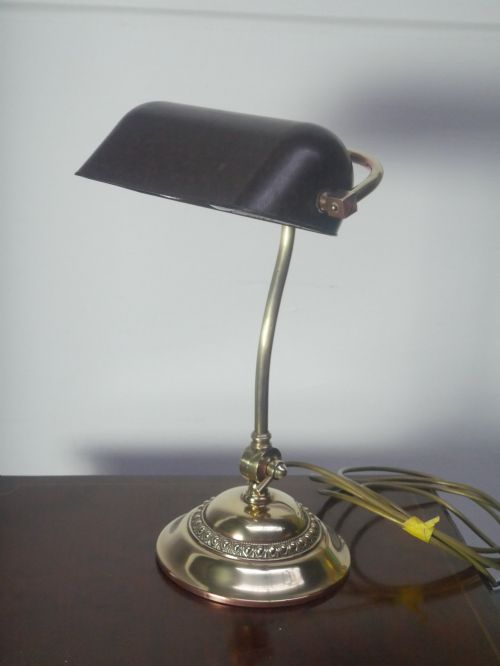


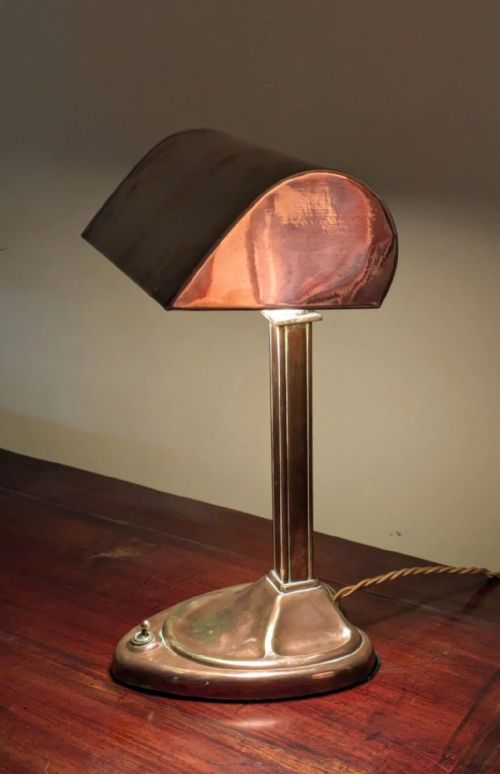


Bankers Desk Light
A bankers desk light brings focused illumination and functional style to a workspace, drawing on the practical designs of the nineteenth and early twentieth centuries.
Bankers Desk Light
When you search for a bankers desk light, you encounter task lighting designed for offices, libraries, and administrative desks from various periods. The pieces appearing here span the nineteenth century through the 1930s, encompassing styles from Edwardian and Art Deco to Art Nouveau and Bauhaus. You are most likely to meet adjustable brass designs paired with glass or metal shades.
Beyond standard desk lamps, the selection includes related forms such as table lamps, notary lamps, bouillotte lamps, and even desk chairs. These objects originate from British, French, and other international workshops, reflecting the diverse industrial output of their respective eras. Each variation serves the fundamental purpose of directing light precisely where needed.
The materials and aesthetic treatments vary widely, ranging from polished brass and bronze to copper, painted toleware, and bakelite. Some pieces lean towards ornate Jugendstil or Arts and Crafts detailing, while others adopt the cleaner lines of the Machine Age. This variety allows a buyer to find a desk light that complements specific period interiors or industrial workspaces.
How they were made
These lamps rely heavily on brass, bronze, and copper for their structural frames and bases, often shaped through casting, spinning, or repoussé techniques. Metal components frequently feature patinated or gilt finishes that develop character over time. Joints and flexible arms allow for articulation, utilising mechanical screws and hinges to direct the beam.
Shades and diffusers incorporate glass, frosted glass, opaline, or painted toleware to soften and direct the illumination. Electrical wiring was often integrated later into pieces originally built for oil or gas, while switches incorporate early plastics like bakelite. This combination of sturdy metals and delicate glass creates both weight and balance.
You can acquire a reception station greeter with an integrated light, ensuring your visitors are illuminated upon arrival.
What varies in quality
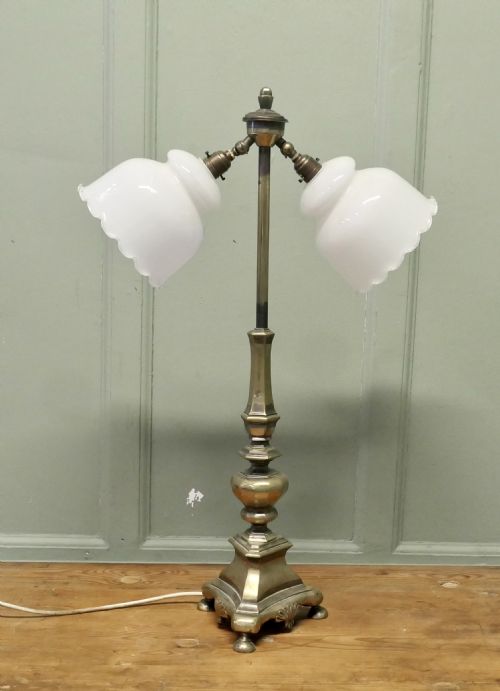
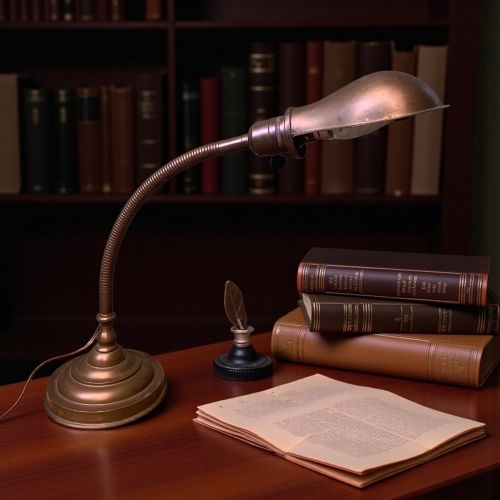
Quality in these desk lights rests on the robustness of the metal casting and the precision of the adjustable joints. Superior examples maintain smooth articulation across their swan necks or twin angled arms without loosening over time. The choice of materials, from heavy gilt bronze to standard brass, dictates the substance and presence of the lamp on a desk.
The integrity of original components, such as specialised shades, switches, and mounting hardware, distinguishes better specimens from altered ones. Finishes also play a role, with carefully preserved patination or high-grade toleware paint demonstrating superior preservation. Superior execution is evident in the harmony between mechanical function and decorative detail.
The Bankers Desk Light Glossary
- Art Deco
- A design style spanning the 1920s and 1930s characterised by streamlined geometries and modern industrial materials. It moves away from floral ornamentation towards clean lines.
- Toleware
- Painted or enamelled metalware, frequently executed on sheet steel or tin. It appears on lamp shades and bodies in various colours.
- Opaline
- A milky, semi-translucent glass used extensively for lamp shades to diffuse light evenly. It softens harsh glares in task lighting.
- Repoussé
- A metalworking technique where the metal is hammered from the reverse side to form a raised design in relief. It adds texture to brass and bronze bases.
- Bouillotte
- A traditional French table lamp design featuring a central shaft, a central shade, and multiple candle or bulb arms. These often incorporate a metal saucer base.
Bankers Desk Light: Frequently Asked Questions
What is a bankers desk light?
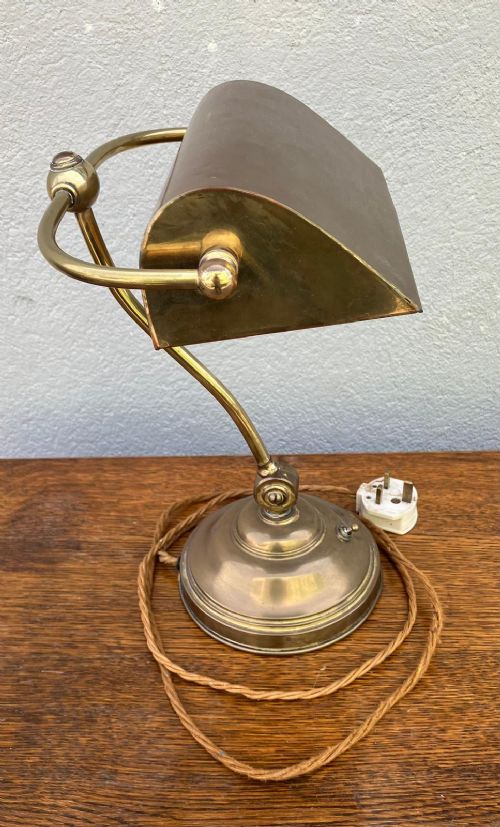
A bankers desk light is a task lamp designed for focused illumination on office desks, reading tables, and counters. They are built for utility, combining adjustable arms and specialised shades to direct light onto paperwork.
Most examples date from the late nineteenth century through the 1930s, utilising brass, bronze, and glass. Their enduring design makes them popular for both traditional and industrial workspaces.
How do I identify an Art Deco desk lamp?
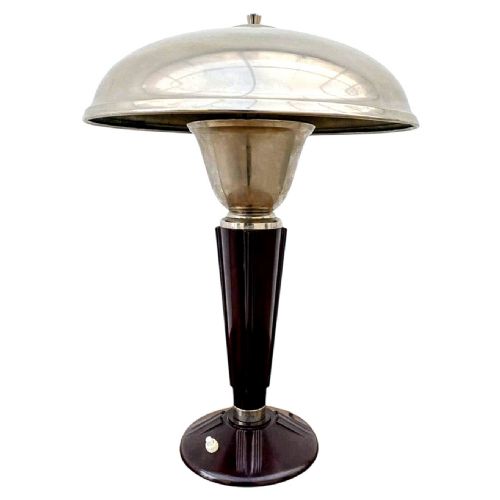
Art Deco desk lamps, emerging around the 1920s and 1930s, feature geometric forms, stepped bases, and modern materials like chrome and bakelite. They reflect the Machine Age aesthetic with clean lines and minimal ornamentation.
Unlike the flowing organic curves of earlier Art Nouveau pieces, Art Deco lighting embraces symmetry and industrial efficiency.
Were these lamps originally electric?
Many early pieces from the nineteenth century were originally configured for oil or gas lighting before being converted to electricity later. Conversion methods varied, sometimes retaining original burners or fonts adapted with wiring.
Later models from the Edwardian period and the 1920s were manufactured specifically for electrical components, often featuring bakelite switches and adjustable brass sockets.
How do I care for a brass desk lamp?
Caring for a vintage brass lamp involves dusting regularly with a soft, dry cloth to protect the metal finish and any patination. Avoid harsh chemical polishes that can strip the aged surface character.
Ensure that vintage wiring is inspected by a qualified professional before regular use, particularly on articulated or adjustable arms that move frequently.