


Baguette Diamond Cluster Ring
A baguette diamond cluster ring combines geometric step-cut stones with a central focus, offering a refined silhouette that bridges decades of design.
Baguette Diamond Cluster Ring
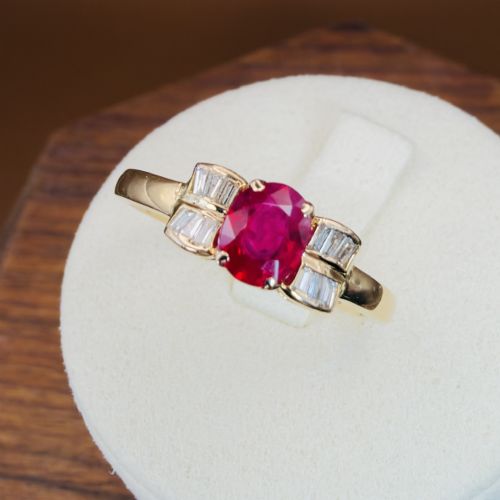
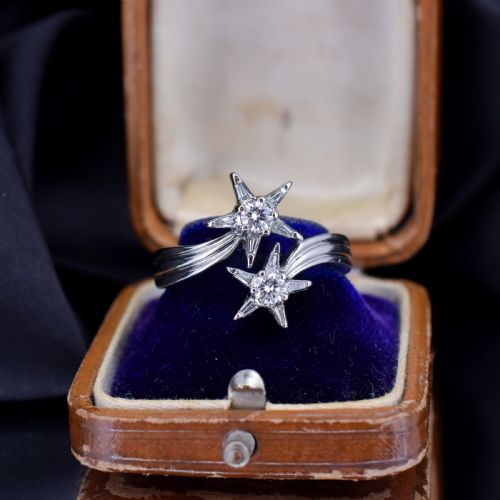
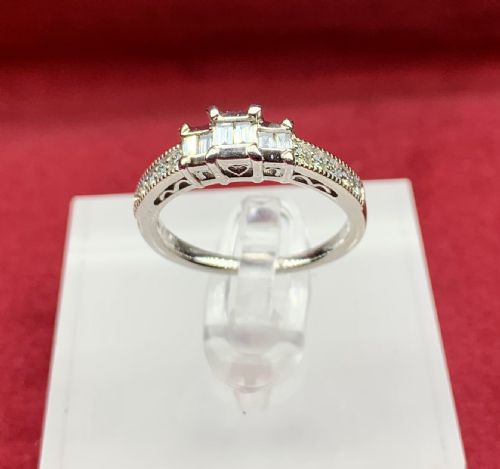
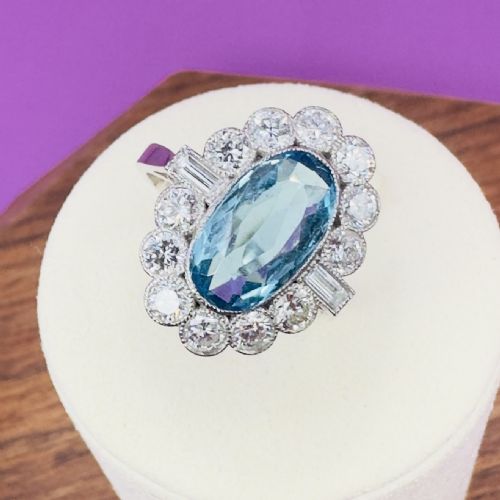
A baguette diamond cluster ring places step-cut rectangular diamonds around a central stone or stone cluster, creating a distinct architectural profile. These pieces appear frequently in styles spanning the Art Deco period through the mid-century era, alongside later revivals.
The central elements in these clusters incorporate diamonds, sapphires, emeralds, aquamarines, and rubies, set against mounting metals like platinum and 18ct white or yellow gold. Buyers commonly encounter ring forms defined as standard clusters, cocktail rings, or ballerina settings.
Origins stretch from the 1920s and 1930s original Art Deco period into the 1940s Retro period and the 1950s, with Victorian and later interpretations also represented. The silhouette relies on the contrast between linear baguette cuts and round or oval centre stones.
How baguette diamond cluster rings were made
Metals such as platinum and 18ct white gold provide the structural framework for the majority of these rings, offering the necessary strength to secure multiple smaller stones in tight geometric arrangements. Yellow gold also appears, particularly in specific mid-century or Victorian iterations.
Stone cutting methods combine step-cut baguettes, which yield long straight facets, with brilliant-cut, old-cut, or oval-cut centre gems. These are secured using channel or prong settings designed to accentuate the linear clarity of the outer stones.
Baguette Diamond Cluster Ring Retail Price Guide 2026
Typical asking prices for baguette diamond cluster ring among the pieces listed under this phrase on Sellingantiques today, from the lower quarter to the upper quarter. They describe what is for sale here now, not the wider market.
Baguette diamonds take their name from the French word for a loaf of bread, translated to a long, slender loaf.
What varies in quality
The precision of stone matching and setting defines the upper tier of these pieces, where baguette stones align with exact uniformity to create uninterrupted linear edges. Lower tiers show minor discrepancies in stone alignment and metal finishing beneath the gallery.
The integration between the central gemstone and the surrounding baguette diamonds dictates visual harmony, with superior examples utilising high-clarity step-cuts that complement the focal gem without overpowering its colour or saturation.
Boucheron
The Baguette Diamond Cluster Ring Glossary
- Baguette cut
- A rectangular diamond cut characterised by step facets and straight or tapered edges. This cut emphasises linear clarity over high brilliance.
- Cluster ring
- A ring design featuring a central stone encircled by a group of smaller stones. This arrangement maximises overall visual presence on the hand.
- Ballerina ring
- A cluster setting where surrounding baguette or tapered diamonds fan out like a dancer's tutu. This style gained prominence during the mid-century period.
- Platinum
- A dense, durable white metal utilised extensively in antique and vintage mountings. It allows for fine, secure claw and channel work.
- Cocktail ring
- A large, prominent ring intended for evening wear, often incorporating substantial central gems and complex diamond surrounds.
Baguette Diamond Cluster Ring: Frequently Asked Questions
What periods do these rings come from?
The pieces originate primarily from the Art Deco era of the 1920s and 1930s, the Retro period of the 1940s, and the 1950s mid-century era. Victorian examples and later twentieth-century interpretations also appear.
Design characteristics shift across these decades, moving from strict geometric symmetry toward more sculptural or sweeping cluster arrangements.
How are baguette diamonds arranged?
Baguette diamonds are typically set in rows or tiers surrounding a larger central gemstone. Their rectangular, step-cut geometry creates a contrasting border that frames the focal stone.
This linear layout defines the architectural look associated with mid-century and Art Deco cluster rings.
What metals are used in the mountings?
Platinum is the predominant metal found in these ring mountings, particularly among pieces from the Art Deco period. Eighteen-carat white gold and yellow gold are also common.
The choice of metal often supports the structural demands of holding multiple step-cut stones in tight formation.
What stones are paired with diamonds?
Central stones frequently include sapphires, emeralds, aquamarines, rubies, and opals alongside diamonds. These coloured gems provide high contrast against the surrounding white baguette diamonds.
Both treated and certified natural stones feature across the inventory from various mid-century and antique origins.