


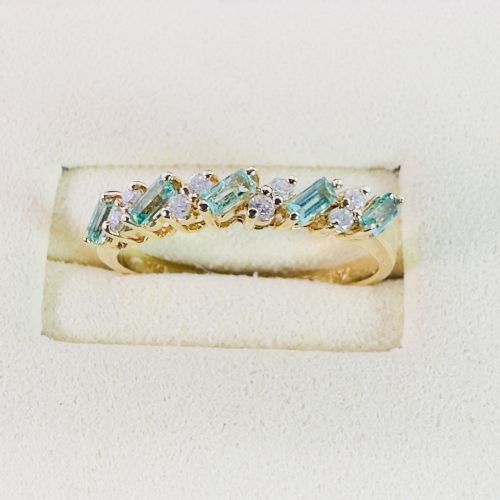


Baguette Cut Diamond Ring
A baguette cut diamond ring brings sharp, geometric lines and understated elegance to the finger.
Baguette Cut Diamond Ring
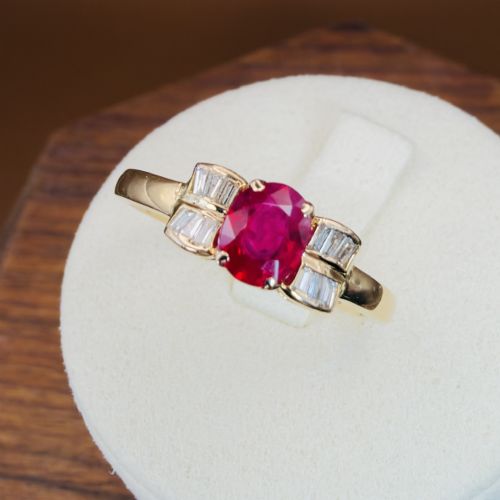
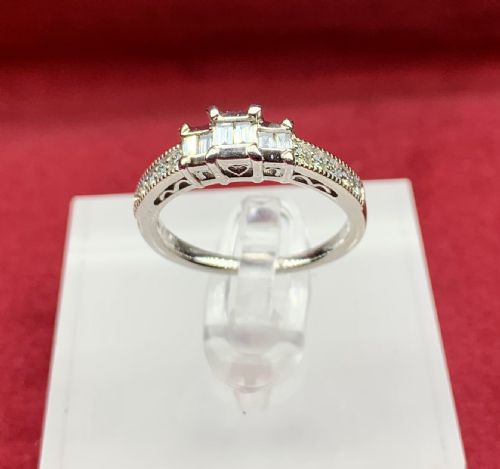
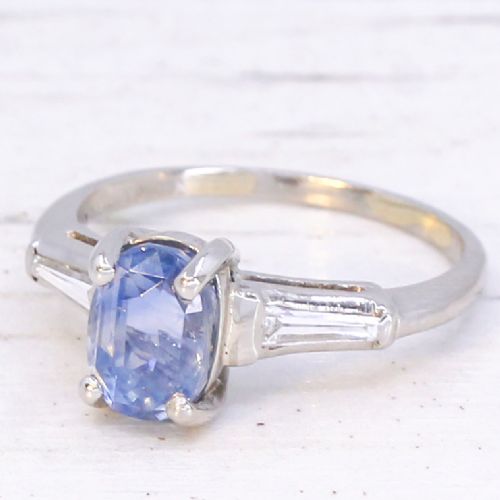
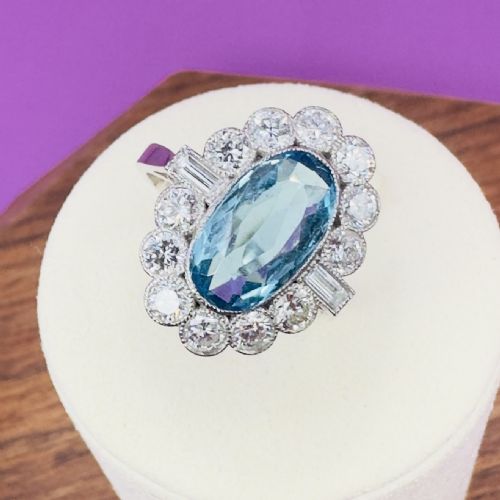
Makers paired these linear diamonds with platinum or white gold to enhance the icy, streamlined aesthetic typical of the period. Alongside pure diamond pieces, many examples incorporate calibre-cut sapphires, emeralds, or rubies to frame the central stones. Buyers encounter everything from minimalist twentieth-century solitaires to elaborate cluster formations.
The phrase encompasses multiple decades of design evolution, shifting from the strict symmetry of nineteen-twenties Art Deco to the expressive curvature of nineteen-fifties ballerina rings. Victorian boat rings also emerge occasionally, demonstrating earlier uses of stepped stones. Each era brings distinct mounting techniques that alter how the baguette diamonds interact with surrounding gems.
How they were made
Platinum and eighteen-carat white gold served as the primary metals for securing these step-cut stones, offering the necessary tensile strength for precise channel and bezel settings. Yellow gold also appears in specific mid-century and Victorian pieces, providing a warm contrast to the cool brilliance of the diamonds. Jewellers utilised hand-forged prongs and flush tracks to hold the elongated baguette facets securely in alignment.
Master artisans cut the stones with parallel facets that demand exceptional stone clarity, as inclusions remain easily visible through the open tables. Step-cutting techniques required meticulous hand-polishing to achieve mirror-like reflections along the girdle. This precise geometry allowed craftsmen to build seamless geometric patterns into panel rings and multi-stone clusters without obscuring neighbouring gems.
Baguette Cut Diamond Ring Retail Price Guide 2026
Typical asking prices for baguette cut diamond ring among the pieces listed under this phrase on Sellingantiques today, from the lower quarter to the upper quarter. They describe what is for sale here now, not the wider market.
Listings feature platinum predominantly in nineteen-twenties Art Deco settings, while eighteen-carat yellow and white gold appear frequently across nineteen-fifties and sixties pieces.
What varies in quality
Quality separates pieces through the precision of the stone geometry and the tightness of the metalwork surrounding each step-cut facet. Superior examples display perfectly matched baguette diamonds with uniform dimensions, clean corner terminations, and unclouded interiors. Lesser pieces often utilise stones with mismatched lengths or uneven step alignment that disrupts the linear rhythm of the design.
The architectural integrity of the mounting dictates the overall craftsmanship, particularly in how securely the channel walls protect the vulnerable corners of the baguettes. Expertly constructed platinum settings maintain rigid support over decades of wear, whereas inferior mountings show loose prongs and worn metal channels. The clarity and saturation of accompanying coloured gemstones, such as natural emeralds or Kashmir sapphires, further elevate the tier of the ring.
The Baguette Cut Diamond Ring Glossary
- Baguette
- A small, rectangular diamond or gemstone cut with step facets and straight or tapered edges. This cut originated during the art deco period to provide clean, linear accents in fine jewellery.
- Step-cut
- A diamond faceting style featuring long, parallel rectangular facets resembling stairs. This cut emphasises crystal clarity and depth rather than fiery brilliance.
- Ballerina ring
- A mid-century cocktail ring style featuring a central stone surrounded by a flared halo of tapered baguettes or radiating brilliant cuts. The arrangement resembles a dancer's tutu.
- Calibre-cut
- Small gemstones precisely cut and fitted together to form a continuous geometric border around a central setting. These stones are frequently custom-shaped for antique mountings.
- Trilogy ring
- A three-stone ring symbolising the past, present, and future, often combining baguette shoulders with a larger centre diamond or emerald.
Baguette Cut Diamond Ring: Frequently Asked Questions
Are baguette cut diamonds very sparkly?
Baguette cut diamonds produce a sophisticated flash of light known as a hall-of-mirrors effect rather than the intense rainbow fire of brilliant cuts. Their step facets showcase exceptional stone clarity and geometric precision over direct brilliance.
This understated optical quality makes them ideal for buyers who prefer architectural elegance and refined sparkle over overwhelming radiance.
How do I care for an antique platinum ring?
Antique platinum mountings require gentle cleaning with warm water, mild soap, and a soft brush to remove daily oils from beneath the step-cut stones. Platinum develops a soft patina over time, which many collectors preserve as a mark of genuine age.
Periodic inspection by a specialist ensures the channel walls and delicate prongs holding the baguette diamonds remain secure.
What era are most baguette diamond rings from?
The vast majority of these rings originate from the Art Deco period of the nineteen-twenties and thirties, alongside mid-century creations from the nineteen-fifties and sixties. The straight lines and geometric symmetry of baguettes matched the modernist architectural movements of those decades.
Earlier Victorian examples exist but remain much scarcer in the historical record.
Can these rings be resized easily?
Resizing depends heavily on the specific band construction and whether baguette stones extend entirely around the shank. Rings featuring full eternity settings cannot be altered without disrupting the continuous pattern of stones.
Solid metal shanks found on solitaires and cluster rings allow jewellers to adjust the size with minimal interference to the head.