



Autumn Woodland Landscape Artwork
Autumn woodland landscape artwork captures seasonal trees and rivers through oils and watercolours spanning the Victorian era to the mid-twentieth century.
Autumn Woodland Landscape Artwork
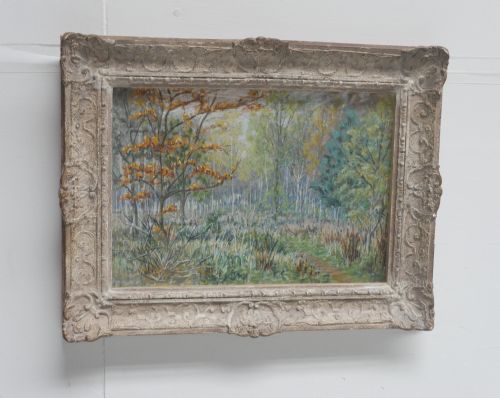
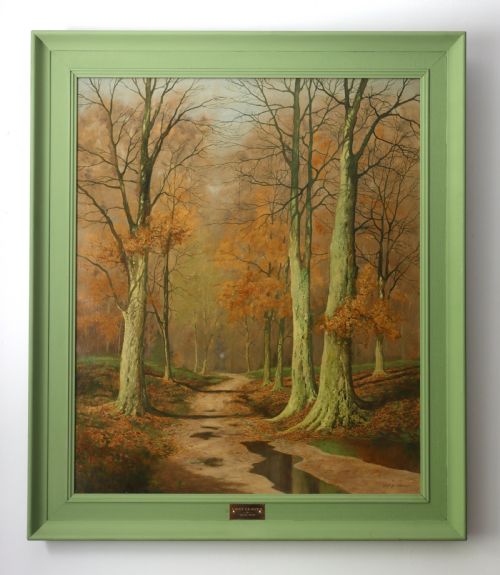
An autumn woodland landscape artwork search brings up paintings focusing on seasonal foliage, rivers, and countryside scenes. These pieces capture woodland settings during transitional months, particularly through the use of naturalistic colour palettes.
You are most likely to encounter oil paintings on canvas and watercolours on paper. The selection ranges from Victorian naturalism to British impressionism and traditional realism.
The objects span multiple decades from the nineteenth century through to post-war twentieth century creations. Framed works often feature gilded wood or simple wooden surrounds that complement the painted surface.
How these artworks were made
Makers utilised traditional mediums including oil paint applied to canvas and watercolour pigments on paper. Some works employ pastel techniques on paper to achieve softer textures in the foliage and sky.
Framing materials typically consist of wood, frequently gilded to enhance the visual depth of the composition. Protective glass is standard for watercolours and pastel works on paper to preserve the delicate pigments.
The listings span from the nineteenth century through to nineteen sixty, utilising oil, watercolour, and pastel on canvas, paper, and wood.
What distinguishes the quality
The handling of light and seasonal colour separates standard decorative pieces from accomplished works of fine art. Strong brushwork and confident draughtsmanship define the more compelling compositions.
Condition of the medium and the presence of original framing contribute to the integrity of the piece. Works bearing signatures from recognised painters hold greater historical interest for collectors.
Arthur Herbert Rigg·Owen Bowen·William Mellor·Walter Follen Bishop·Edmund George Warren·Charles James Adams·Ernest Higgins Rigg·J McIntyre·Everett W. Mellor
The Autumn Woodland Landscape Artwork Glossary
- Oil on Canvas
- Pigment mixed with drying oil applied to a stretched fabric surface. This medium allows for rich texture and deep colour layering.
- Watercolour on Paper
- Pigments suspended in a water-based solution applied to paper supports. It creates translucent washes that capture atmospheric light effectively.
- British Impressionism
- A painting style focusing on light and everyday subjects created by British artists. It often employs visible brushstrokes and en plein air techniques.
- Pastel
- A medium consisting of powdered pigment and a binder rolled into sticks. It produces velvety surfaces requiring protection beneath glass.
Autumn Woodland Landscape Artwork: Frequently Asked Questions
How do I care for a watercolour landscape?
Keep watercolours away from direct sunlight to prevent the pigments from fading over time. Ensure the glazing remains intact to protect the paper from moisture and dust.
Display the artwork on interior walls with stable humidity and temperature levels. Avoid hanging pieces in damp environments like kitchens or unheated spaces.
Are these paintings original works?
The selection comprises original hand-painted works executed directly by the artists. Each piece represents a unique creation rather than a mass-produced print.
Signatures or inscriptions on the canvas, paper, or frame often verify the authorship of the piece. Documentation of the specific period further establishes its authenticity.
What framing is typical for these artworks?
Many oil paintings are housed in gilded wood frames that reflect nineteenth and early twentieth-century presentation styles. These frames often show period appropriate wear and decorative moulding.
Works on paper generally feature wood frames combined with protective glass. Mount boards are used internally to separate the paper surface from the glass.
How do I distinguish Victorian from later pieces?
Victorian naturalism and fine art pieces typically display meticulous detail and rich, dark varnishes. The subject matter often reflects nineteenth-century romantic ideals of the countryside.
Later post-war and twentieth-century works frequently adopt looser brushwork and brighter palettes. The materials used for stretchers and backing boards also indicate the era of production.