








Authentic Heriz Rug
An authentic antique heriz rug brings robust Persian weave and bold geometric design into a room, offering hardwearing historical character.
Authentic Heriz Rug
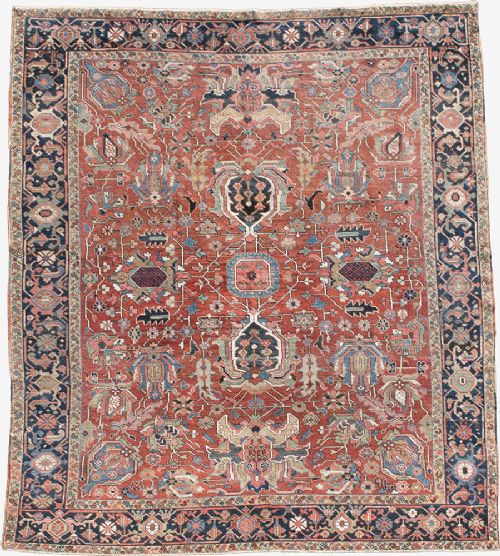
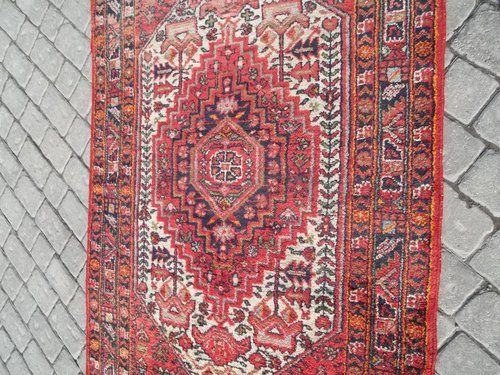
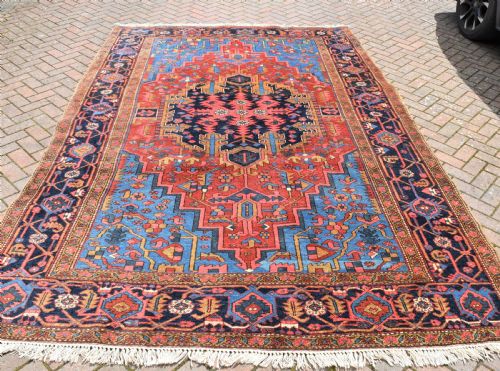
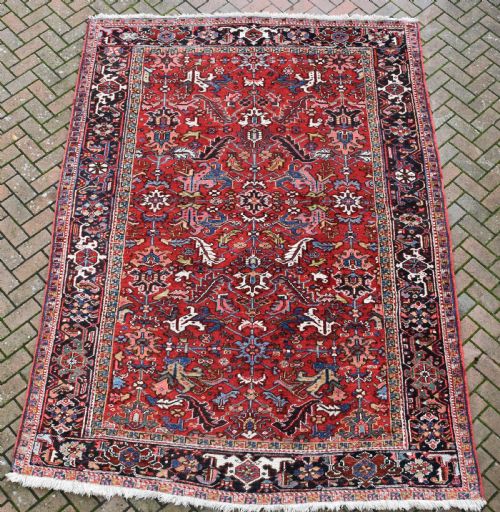
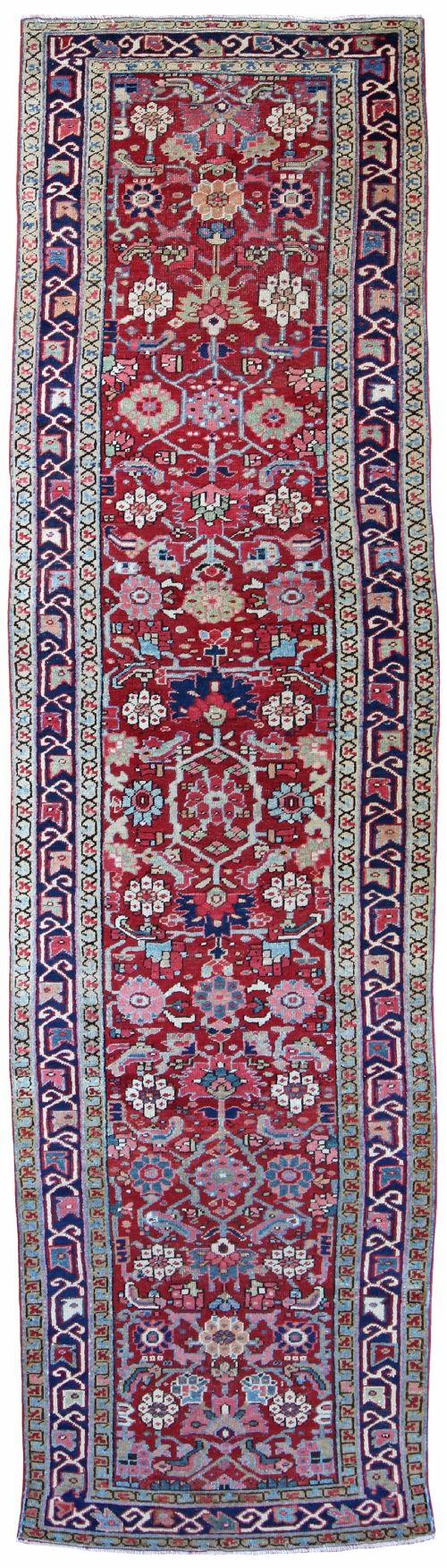
When you search for an authentic antique heriz rug, you encounter floor coverings woven in North-West Persia across the late nineteenth and early twentieth centuries. These pieces encompass formats ranging from compact area pieces and small carpets to expansive roomsize dimensions and hallway runners.
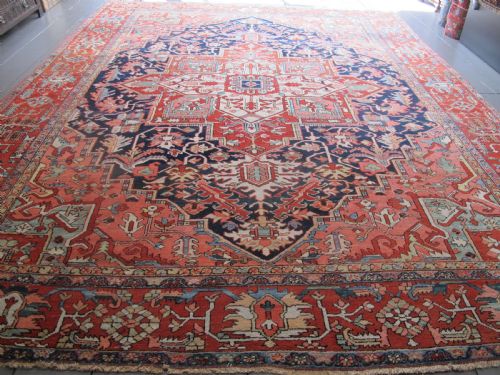
The specimens you are most likely to meet on this page date predominantly from around 1890 through to 1930. They present traditional Persian styles characterised by distinctive geometric medallion layouts and sturdy village production formats.
How they were made
The construction relies on durable wool pile knotted onto sturdy cotton foundations. This pairing provides the structural resilience necessary for heavy domestic use while maintaining clear geometric definition across the field.
Weavers in the Heriz region utilised resilient local materials that absorbed rich dyestuffs effectively. The resulting textiles withstand generations of footfall without losing their characteristic structural integrity.
Authentic Heriz Rug Retail Price Guide 2026
Typical asking prices for authentic heriz rug among the pieces listed under this phrase on Sellingantiques today, from the lower quarter to the upper quarter. They describe what is for sale here now, not the wider market.
Listings span production dates from 1890 to 1930, utilising wool and cotton across rugs, carpets, and runners.
What varies in quality
Quality rests in the precision of the geometric drawing and the crispness of the wool pile. Finer knotting allows intricate medallion details to read clearly against the surrounding field.
Proportion and scale also dictate distinction within the range. Larger roomsize carpets with balanced borders command attention through their commanding architectural presence.
The Authentic Heriz Rug Glossary
- Heriz
- A region in North-West Persia renowned for producing durable carpets with bold geometric medallions. These textiles draw on village traditions rather than urban workshop designs.
- Runner
- A long, narrow carpet format designed specifically for hallways and corridors. This shape guides movement through domestic spaces.
- Pile
- The upright yarn loops that form the usable surface of a rug. In these pieces, the wool pile provides both comfort underfoot and protection for the foundation.
- Foundation
- The underlying structure of warp and weft threads that supports the knotted wool. Cotton is standard in these Persian weaves for its stability.
- Medallion
- A large central decorative motif set within the field of the carpet. Heriz examples typically feature prominent geometric variations of this central ornament.
Authentic Heriz Rug: Frequently Asked Questions
Where were these rugs made?
These pieces originate from the Heriz region located in North-West Persia. The local village weavers developed a distinct aesthetic centred on geometric motifs.
Production flourished across the late nineteenth and early twentieth centuries, creating a tradition distinct from urban Persian workshops.
How do I care for my rug?
Protect the wool pile by placing the textile in areas with moderate foot traffic and avoiding direct, harsh sunlight. Regular gentle vacuuming without a rotating brush roll keeps dust from settling into the foundation.
Rotate the piece periodically to ensure even wear over the decades of domestic life.
What sizes are available?
The available formats range widely from small area rugs and compact square dimensions to substantial roomsize carpets. Hallway runners provide narrow lengths suited to corridors.
Larger formats anchor main living spaces with their expansive geometric fields.