






Austrian Terracotta Statue
An austrian terracotta statue brings remarkable presence to a room through expressive modelling and rich surface detail.

Austrian Terracotta Statue
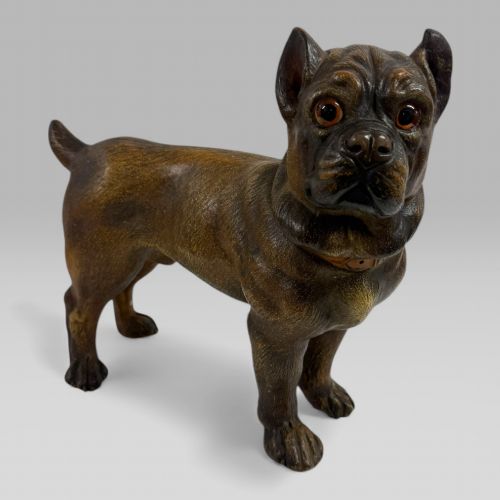
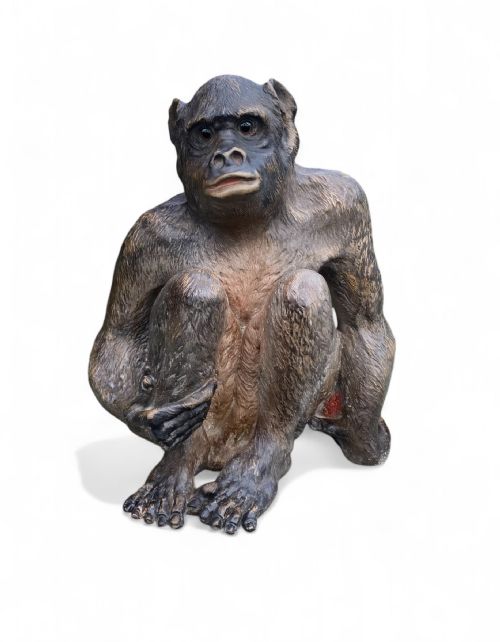
When you search for an austrian terracotta statue, you encounter sculptural works that capture human figures, animals, and classical subjects with striking realism. These pieces range from life-size dog figures to classical Roman busts and romantic character studies.
The objects appearing on this page draw on Victorian, Art Nouveau, and Classical Revival styles from the late nineteenth and early twentieth centuries. Makers created both small figurines and substantial sculptures that served as decorative centrepieces in period interiors.
Materials and construction methods
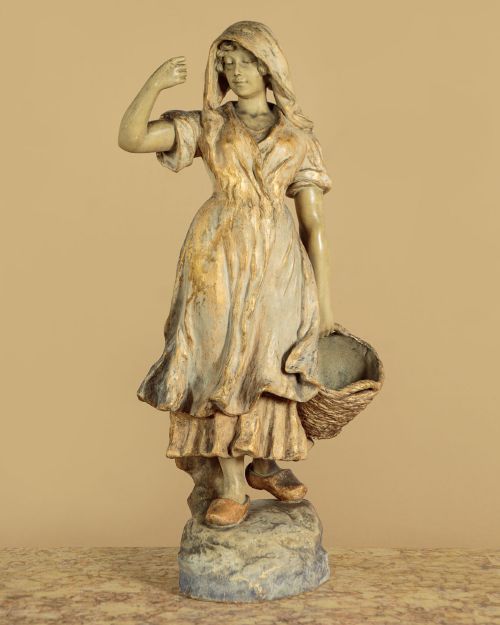
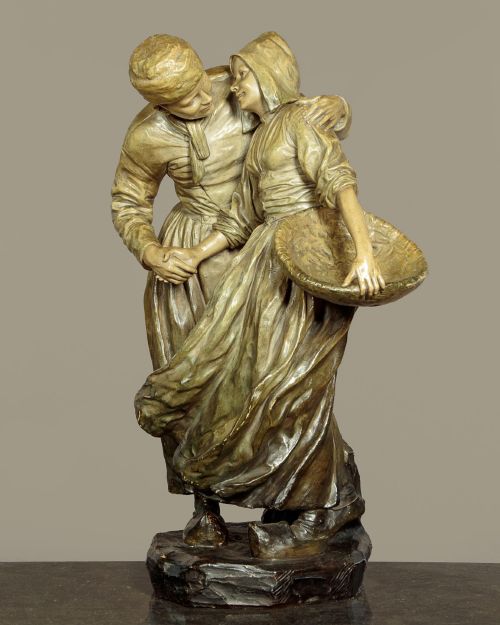
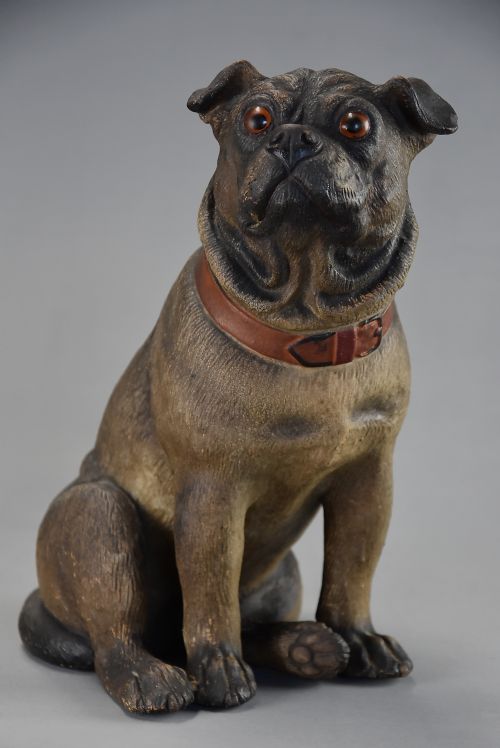
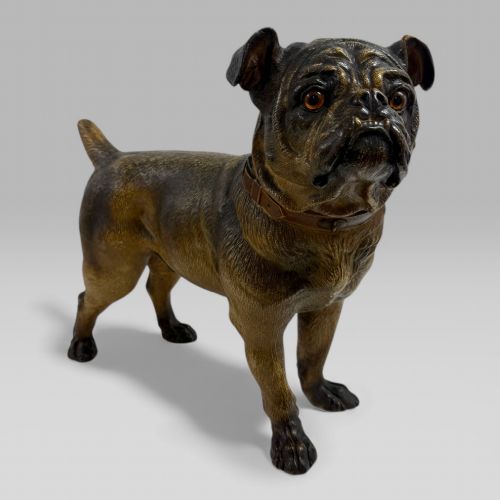
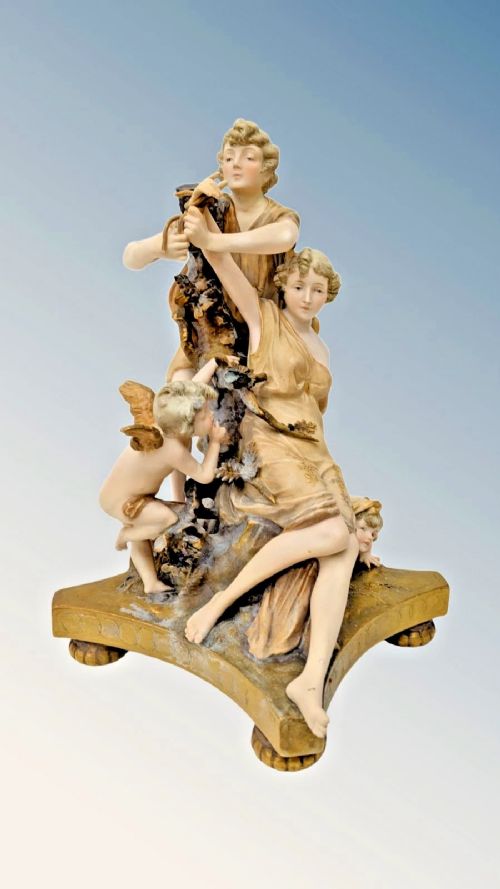
Workshops utilised terracotta and earthenware, shaping the clay through slip casting or pressing into moulds before firing. This technique allowed makers to achieve intricate forms, from the folds of a maiden's drapery to the wrinkles of a pug dog.
Surface finishes include polychrome paint, bronze slip, and applied pigments that enhanced the texture and depth of the figures. Painters carefully applied these colours by hand to highlight facial expressions and costume details.
Materials documented across the inventory include earthenware, polychrome paint, and applied pigments alongside traditional terracotta.
Distinctions in craftsmanship
The application of paint and patination also determines the visual success of a sculpture. Skilful hand-colouring adds subtle tonal variations that elevate the piece, whereas flat or heavy-handed pigment application obscures the underlying detail.
Goldscheider·Friedrich Goldscheider·Ernst Wallace·Bernard Bloch·Ernst Whaliss
The Austrian Terracotta Statue Glossary
- Terracotta
- A porous fired clay used for sculptural and decorative objects. It provides a warm reddish-brown base that painters often decorated with pigments or metallic finishes.
- Slip cast
- A manufacturing method where liquid clay slip is poured into a plaster mould. This technique enabled producers to replicate complex sculptural forms consistently.
- Polychrome paint
- Multiple colours applied to the surface of a sculpture. This decorative treatment brought realism to figures by imitating natural skin tones and fabric hues.
- Art Nouveau
- An international design movement characterised by flowing lines and organic motifs. Figures from this period often depict maidens with long hair and sweeping garments.
- Animalier
- A genre dedicated to the realistic portrayal of animals. Sculptors working in this style captured domestic pets and wildlife with close attention to anatomy.
Austrian Terracotta Statue: Frequently Asked Questions
How do I clean an antique terracotta sculpture?
Dust the surface gently with a soft, dry brush to prevent dirt accumulation without disturbing the painted finish.
Avoid using water or liquid cleaning agents, as nineteenth-century pigments and porous earthenware can absorb moisture and suffer damage.
Where should I display a life-size animal figure?
These substantial pieces work well placed directly on the floor in a hallway or study, much as they were positioned in period homes.
Ensure the location remains stable and away from heavy foot traffic to protect the extended forms and glazed or painted surfaces.
How do I identify an Art Nouveau style piece?
Look for characteristic whiplash curves, naturalistic floral elements, and figures styled with flowing hair and drapery.
These design motifs emerged strongly towards the end of the nineteenth century and define the visual language of many Austrian terracotta works.
What does cold painted mean on these figures?
Cold painting refers to pigments applied to a sculpture after the final kiln firing rather than fused under a glaze. This method allowed for a wide spectrum of matte colours on terracotta and bronze-finished surfaces.
Because the paint is unfired, it requires careful handling to preserve its original application over time.