



Austrian Metal Animal
These austrian metal animal figures are delightful miniature sculptures brought to life through intricate cold painting.
Austrian Metal Animal
The versions you meet most frequently on this page date from the Edwardian era and around nineteen hundred, alongside late nineteenth century examples. Makers produced these figures as decorative objects, and occasionally as functional items such as inkwells and pin cushions.
The style spans traditional animalier representations to Austrian Art Nouveau and Vienna bronze traditions. Many pieces are small enough to sit in the palm of the hand while retaining remarkable character and anatomical observation.
How they were made
Artisans cast these figures primarily in bronze, sometimes employing patination alongside metallic surfaces. The foundational metal sculpture provided a sturdy base for the decorative layers applied afterwards.
Makers applied enamel paints to unheated or cold bronze rather than firing the colours into a kiln. This cold-painted enamel technique demanded immense steady-handed skill to achieve naturalistic feather, fur, and skin textures across diminutive surfaces.
Austrian Metal Animal Retail Price Guide 2026
Typical asking prices for austrian metal animal among the pieces listed under this phrase on Sellingantiques today, from the lower quarter to the upper quarter. They describe what is for sale here now, not the wider market.
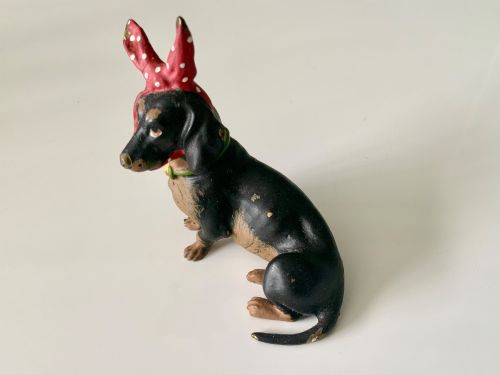
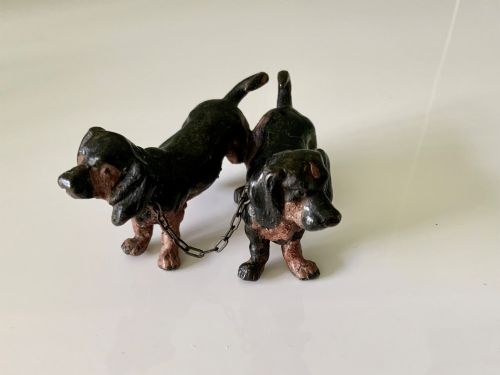
A tiny frog, a golden pheasant, and a dachshund sit waiting to populate your desk.
What varies in quality
The finesse of the modelling separates standard castings from exceptional works, visible in the natural posture and anatomical detail of the animal. Finer sculptures capture the distinct character and spirit of the creature rather than appearing stiff or generic.
The preservation and delicacy of the cold-painted enamel finish define the upper tier of these pieces. Original enamel work executed with subtle shading and precise brushwork elevates a miniature far beyond simpler, uniformly painted examples.
FRANZE BERGMAN BRONZE
The Austrian Metal Animal Glossary
- Cold-painted enamel
- A method where enamel paint is applied directly to cold bronze without kiln firing. This delicate surface requires careful handling to preserve the original colours.
- Vienna bronze
- A nineteenth and early twentieth century specialty of Austrian foundries known for small, naturalistic animal figures. These bronzes received worldwide renown for their humorous or lifelike poses.
- Geschützt
- A German term meaning protected or registered, often stamped on metalwork to denote proprietary design. Finding this stamp indicates a piece produced under official industrial protection of the era.
- Animalier
- A nineteenth century artistic movement focused on the realistic portrayal of animals. Sculptors in this tradition studied anatomy closely to render creatures in motion or repose.
- Pin cushion
- A functional sewing accessory where a padded section sits atop a decorative metal mount. In these collections, the cushion integrates with an animal sculpture.
Austrian Metal Animal: Frequently Asked Questions
What are austrian metal animal figures?
These pieces are small bronze sculptures representing domestic and wild creatures, finished with detailed enamel painting by Viennese and Austrian workshops.
Created primarily around the turn of the twentieth century, they served as decorative mantel ornaments, desk accessories, and novelty items for collectors.
How were they used originally?
Owners placed these miniature figures on desks, cabinets, and drawing room tables simply to admire their charm and lifelike detail. Certain examples combined decoration with utility, housing inkwells for correspondence or padded surfaces for pins.
Their small scale allowed them to be gathered in groups, creating miniature menageries within Edwardian and Victorian interiors.
How do I care for cold painted bronze?
Keep these fragile figures away from direct sunlight and high humidity to protect the unbaked enamel surface from fading or flaking. Dust them extremely gently with a soft, dry brush without using any liquids or cleaning polishes.
Because the paint sits on top of the metal rather than being fused by heat, physical abrasion must be avoided entirely.
How do I identify Vienna bronzes?
Look for heavy cast bronze forms depicting animals with expressive, sometimes humorous postures, finished in distinctive multi-coloured enamel. Many pieces from this tradition display maker marks, foundry stamps, or registration words like Geschützt.
The combination of miniature scale, naturalistic modelling, and cold-painted colour defines the classic output of these workshops.