




Asian Wood Armchairs
These asian wood armchairs bring centuries of craftsmanship and distinctive seating forms into modern rooms.
Asian Wood Armchairs
Asian wood armchairs encompass a striking array of traditional seating forms, spanning the eighteenth, nineteenth and early twentieth centuries. When exploring these listings, buyers encounter distinct regional expressions ranging from traditional Chinese designs to Anglo-Indian and Burmese variations.
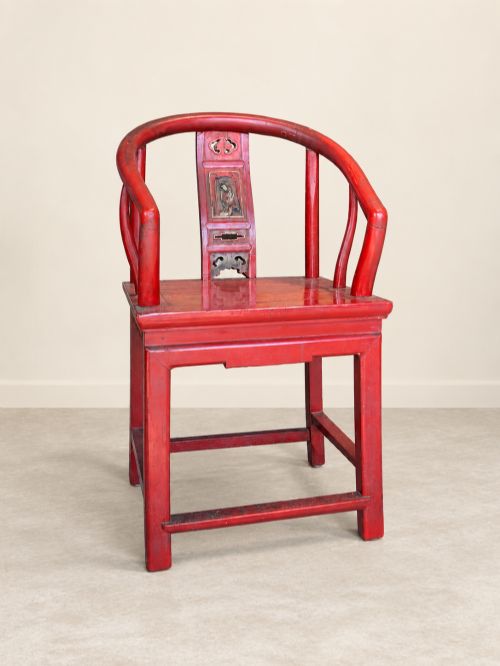
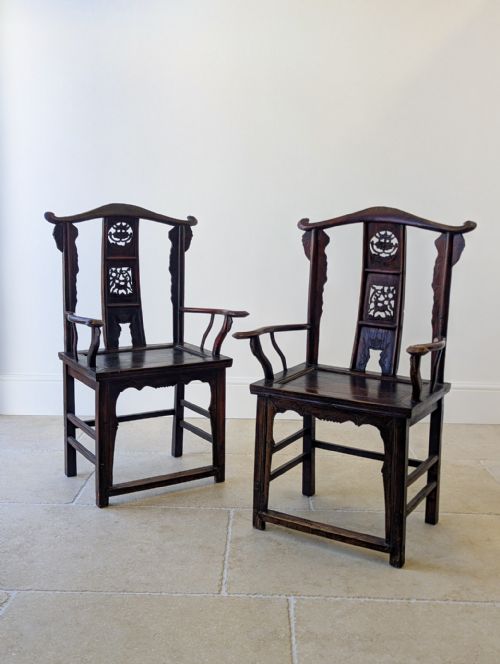
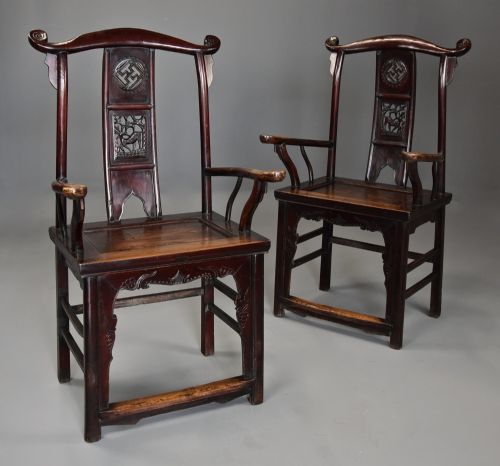
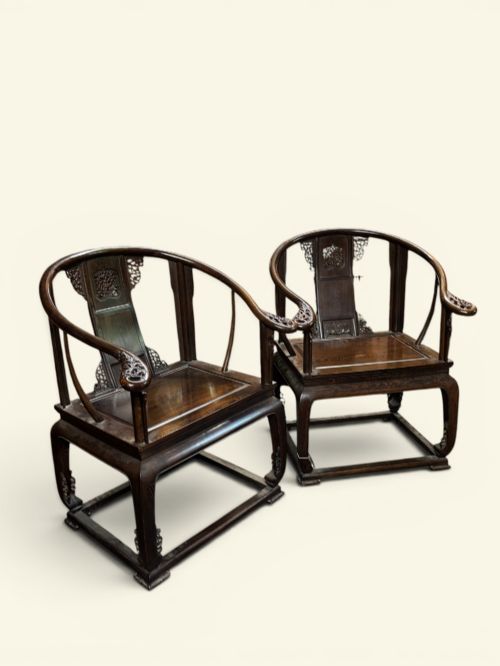
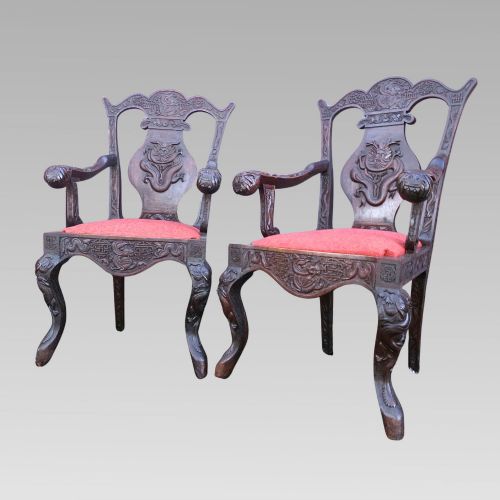
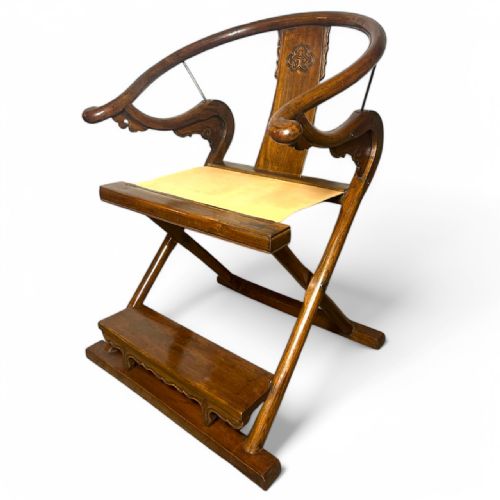
The selections on this page feature notable traditional forms, including yoke-back chairs, horseshoe-back designs, folding frames and grand throne chairs. Many pieces arrive as matched pairs, offering symmetry for reception rooms and living spaces.
Originating predominantly from historic periods such as the Qing Dynasty and the Victorian era, these items showcase the enduring appeal of classical Asian cabinetmaking. Elm, rosewood and dense hardwoods define the primary structural materials encountered across the inventory.
Construction and Materials
Cabinetmakers utilised dense timbers such as hardwood, rosewood, hongmu and elm to build rigid, durable frames capable of supporting intricate carved details. Selected pieces incorporate brass inlays or retain original red lacquer finishes to accent the natural grain.
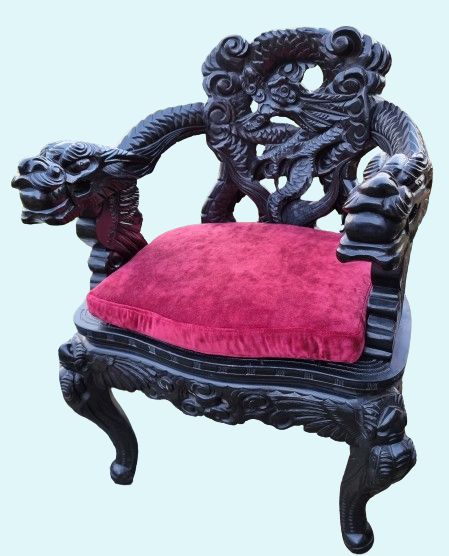
Joinery methods relied on precise interlocking wooden joints rather than modern metal fixings, allowing the timber frames to remain stable over generations. Skilled artisans carved elaborate motifs, including dragon designs, directly into the heavy structural woods.
Stargazers chairs offer a curious alternative to standard seating, designed for relaxed outdoor or indoor reclining.
Assessing Quality and Character
Quality rests in the crispness of the wood carving, the integrity of the traditional joinery and the depth of the timber's natural patina. Superior examples maintain structural solidity while displaying authentic surface wear accumulated over decades or centuries.
The presence of original decorative elements, such as red lacquer surfaces or brass inlay work, elevates a piece's visual interest and historical integrity. Proportion, balance and the careful selection of figured hardwood further separate exceptional chairs from standard workshop productions.
The Asian Wood Armchairs Glossary
- Yoke-back
- A chair design featuring a top rail shaped like an ox yoke, curving gracefully to support the sitter's upper back. This traditional form remains a cornerstone of classical Chinese seating.
- Horseshoe-back
- A continuous curved arm and back rail that forms a semi-circular embrace for the occupant. This flowing profile demands advanced woodworking skill to steam-bend and join.
- Hongmu
- A dense, dark tropical hardwood valued by traditional Asian cabinetmakers for its strength and rich natural colour. Items constructed from this material often exhibit substantial weight and refined grain patterns.
- Qing Dynasty
- The final imperial dynasty of China, spanning from the seventeenth to the early twentieth century. Many decorative arts and seating forms associated with this period emphasise carved ornamentation and authoritative scale.
- Patina
- The deep, lustrous surface sheen developed on wood and lacquer through age, handling and natural oxidation. A desirable patina signals genuine antiquity and careful preservation.
Asian Wood Armchairs: Frequently Asked Questions
What is a yoke-back chair?
A yoke-back chair is a traditional seating form distinguished by a curved top rail that resembles the wooden yoke used for working oxen.
This design often incorporates a central splat down the back for structural support and lumbar comfort.
Where should I place an antique throne chair?
Antique throne chairs make striking focal points in spacious living rooms, studies or entrance halls due to their commanding height and elaborate carvings.
Pairing them with neutral modern furnishings allows the dense hardwood and traditional craftsmanship to stand out properly.
How do I care for lacquered wood?
Lacquered wooden surfaces require gentle cleaning with a soft, dry cloth and protection from direct sunlight and excessive humidity.
Avoiding harsh chemical polishes preserves the original finish and prevents damage to the delicate underlying layers.