
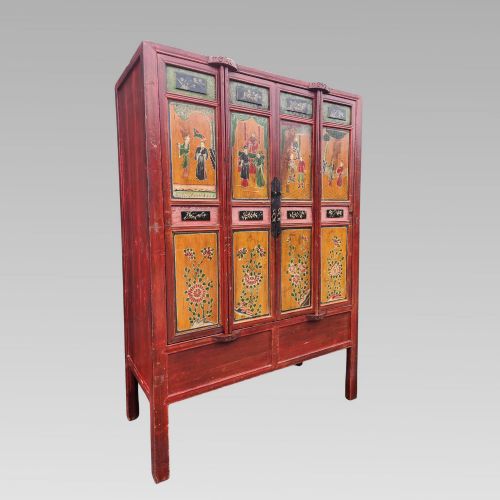


Asian Wedding Cabinet
An asian wedding cabinet brings rich colour and striking presence into a modern room, offering generous storage with historical depth.
Asian Wedding Cabinet
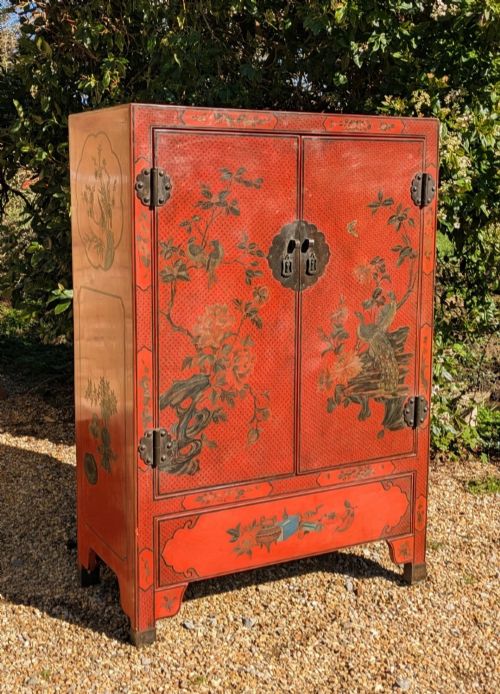
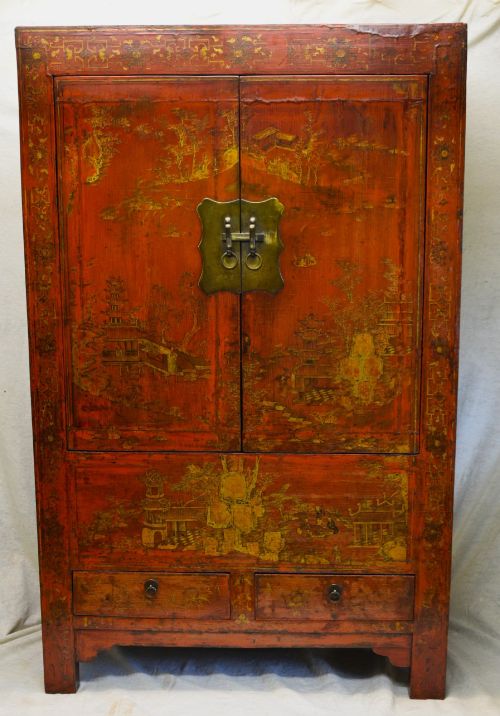
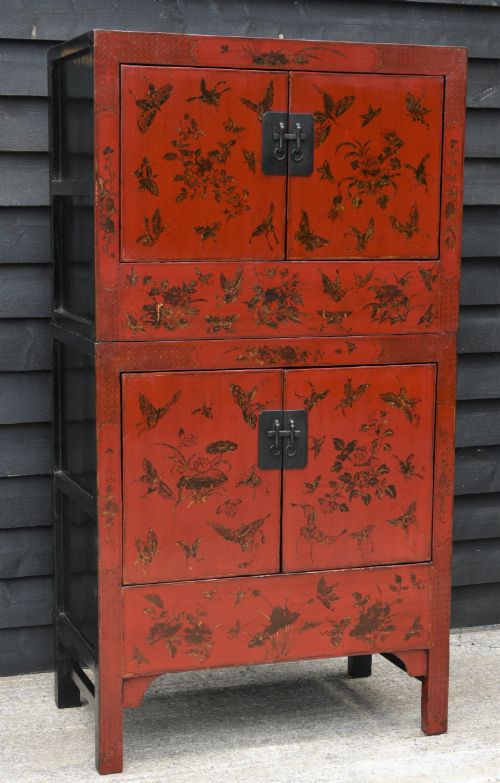
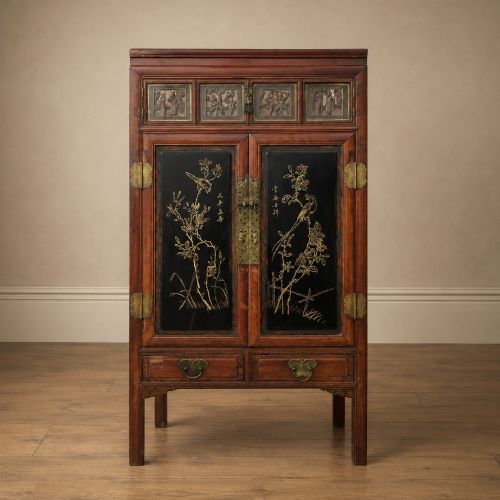
An asian wedding cabinet stands as a substantial storage piece traditionally given to couples as part of marriage dowries in China. These items range from large cupboards and armoires to side cabinets, reflecting traditional Chinese forms.
The pieces appearing here date from the 19th century, including examples from around 1880, 1890, and the Qing dynasty. Buyers encounter traditional Chinese styles alongside Chinoiserie interpretations, often originating from regions such as Shanxi or Fujian.
Most examples present a vertical orientation with double doors designed to conceal shelving or compartments. Their primary function was holding textiles and valuables, yet today they serve equally well as focal points in contemporary interiors.
How they were made
Makers constructed these cabinets primarily using softwood or carved hardwood, applying successive layers of red and black lacquer to the wooden base. Artisans frequently integrated gold leaf decoration to highlight intricate surface designs.
Metal components played a structural and decorative role, with blacksmiths forging brass and iron hinges, lock plates, and door pulls. Carving techniques added dimensional relief to panels, while inlay work further enhanced selected black lacquer surfaces.
Listings feature 19th-century pieces, including items from 1880 and 1900, alongside Qing dynasty styles.
What varies in quality
The refinement of the surface decoration largely dictates the quality of an asian wedding cabinet. Pieces featuring deep, crisp wood carving and well-preserved layers of red or black lacquer display a higher degree of artisan skill.
The integrity of the original metalwork, including forged brass hinges and iron hardware, contributes significantly to the overall merit of the piece. Surviving gilding and intact structural joinery separate standard storage furniture from superior examples.
The Asian Wedding Cabinet Glossary
- Qing Dynasty
- The final imperial dynasty of China, lasting from 1644 until 1912. Many surviving wedding cabinets date from the later decades of this period.
- Lacquer
- A durable resin finish applied in multiple coats to wood surfaces. Traditional Asian lacquer often utilises red or black pigments.
- Chinoiserie
- European artistic style reflecting Chinese motifs and decorative techniques. This aesthetic appears on various antique storage cabinets.
- Gilding
- The application of gold leaf or powder onto wood or metal surfaces. This technique highlights carved details on ceremonial furniture.
- Armoire
- A tall wardrobe or cupboard with doors enclosing shelving. These large storage units form a major category of wedding furniture.
Asian Wedding Cabinet: Frequently Asked Questions
What is an asian wedding cabinet?
An asian wedding cabinet is a traditional storage piece traditionally given to newlyweds in China to hold clothing and valuables. These wooden cupboards often feature striking red or black lacquer finishes.
Today, buyers use them as statement storage pieces in living rooms, hallways, or bedrooms. Their generous interior capacity makes them practical for modern organising needs.
How old are these cabinets?
The examples available on this page date primarily from the 19th century, with specific pieces originating around 1880, 1890, and the Qing dynasty. They represent traditional craftsmanship from over a century ago.
Because they originate from the late Qing period and regional workshops in China, they carry genuine historical patina. Their age is evident in the wear of the lacquer and the style of the hardware.
What materials were used?
Makers built these cabinets using softwood or hardwood as a structural base, which was then coated in layers of lacquer. Brass and iron hardware provided functional hinges and locks.
Many pieces also incorporate gold leaf to accentuate carved wooden panels and borders. The combination of lacquered wood and metal creates a distinct tactile and visual texture.
How do I style one at home?
An asian wedding cabinet works well as a standalone focal point against neutral walls, where its red or black lacquer can stand out. It provides concealed storage for tableware, linens, or media equipment.
Allowing the piece adequate space lets the traditional carvings and metal hardware catch the eye. Pairing it with simple, modern furnishings highlights its historical character.