






Asian Wall Carving
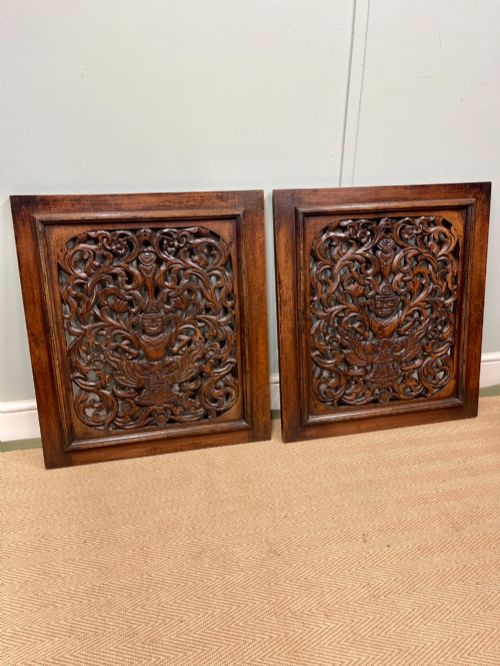
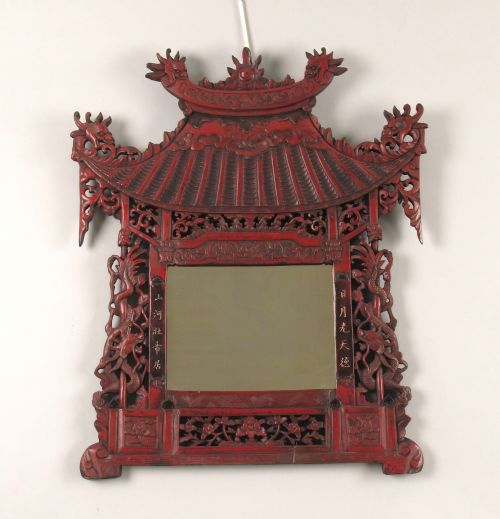
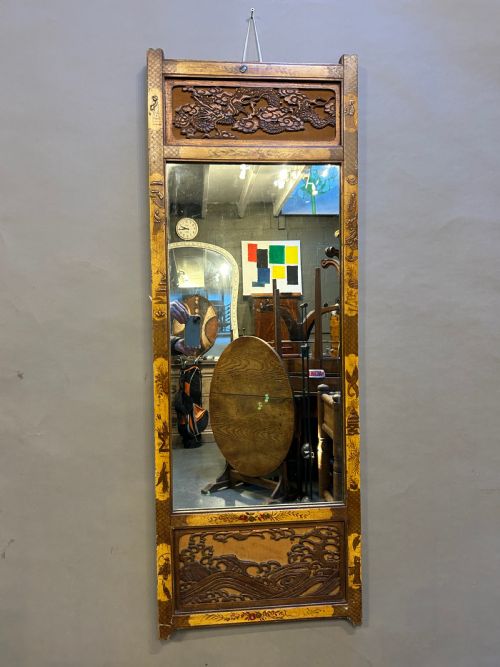
These pieces of asian wall carving bring architectural depth and intricate handwork to an interior.
Asian Wall Carving
An asian wall carving encompasses everything from temple panels and architectural fragments to framed plaques, mirrors, and hanging displays originating from regions across Asia.
Buyers will encounter items spanning the eighteenth, nineteenth, and early twentieth centuries, with nineteenth-century Chinese wooden panels and Japanese lacquer works appearing frequently in this category.
Forms range from structural elements such as carved doors and screens to decorative wall art, mirrors, and gongs that function as focal points in a room.
Materials and construction
Wood serves as the primary structural medium, utilising dense timbers like teak and various hardwoods that withstand deep chisel work and intricate relief carving.
Surface decoration frequently incorporates red lacquer, gold leaf, and delicate inlay work using mother-of-pearl and abalone to depict birds, foliage, and figurative scenes.
Certain pieces integrate glass, brass, and iron elements, combining joinery and carving techniques developed across Chinese, Japanese, Burmese, and Balinese traditions.
Asian Wall Carving Retail Price Guide 2026
Typical asking prices for asian wall carving among the pieces listed under this phrase on Sellingantiques today, from the lower quarter to the upper quarter. They describe what is for sale here now, not the wider market.
The selection spans periods from the eighteenth century through the 1930s.
Assessing quality
Depth and precision of the chisel work distinguish superior carvings, where figures and foliage possess crisp dimension rather than shallow, uniform stamping.
The preservation of original surface finishes, such as intact layers of red lacquer, gold leaf, and secure inlay work, marks the distinction between well-maintained historic examples and heavily restored pieces.
The Asian Wall Carving Glossary
- Lacquer
- A durable finish applied in multiple layers to wood and polished to a smooth gloss. Historic Asian pieces often utilise natural tree saps tinted with pigments like cinnabar red.
- Chinoiserie
- European artistic style reflecting Chinese motifs and decorative techniques. This aesthetic influenced mirrors and panels produced for Western export markets.
- Cloisonne
- Enamelwork technique where thin metal wires form compartments on a base to hold coloured paste. Firing fuses the glass paste to create detailed pictorial designs.
- Edo Period
- Japanese historical era spanning from the early seventeenth to the mid-nineteenth century. Artefacts from the late portion of this era demonstrate refined craftsmanship in metal and lacquer.
Asian Wall Carving: Frequently Asked Questions
How do I hang a heavy carved panel?
Heavy wooden panels and architectural doors require substantial wall anchors and proper load-bearing brackets screwed directly into studs. Professional installation ensures the weight is distributed evenly across the frame.
Lighter plaques and mirrors may utilise heavy-duty mirror plates or French cleats attached to the upper and lower framing members for stability.
How should I clean antique lacquer?
Dust lacquered surfaces gently with a soft, dry microfibre cloth to remove particulate matter without scratching the delicate finish. Avoid chemical polishes, harsh solvents, and excessive moisture.
Maintain stable indoor humidity levels to prevent the underlying wood from expanding or contracting, which can cause the lacquer layer to crack or flake.
What is the difference between Chinese and Japanese panels?
Chinese carved panels often feature deep relief work depicting narrative scenes, dragons, and floral motifs within dense frameworks of hardwood or red lacquer. These pieces prioritize sculptural depth and symbolic iconography.
Japanese panels and plaques frequently emphasise refined surface decoration, utilising lacquer, meticulous inlay, or cloisonne enamel to create balanced compositions of birds and natural scenery.
Can antique doors be used as wall art?
Architectural elements such as temple panels, storehouse doors, and cart doors are frequently mounted directly to walls as striking decorative focal points. Their substantial scale provides an architectural presence in large spaces.
Securing these pieces requires assessing the weight of the timber and employing appropriate structural fixings to support the heavy hardwood safely.