

Asian Textile Art
Asian textile art gathers embroidered hangings, woven panels, and tribal weavings carrying the heritage of Central Asian, Chinese, and Balinese makers.
Asian Textile Art
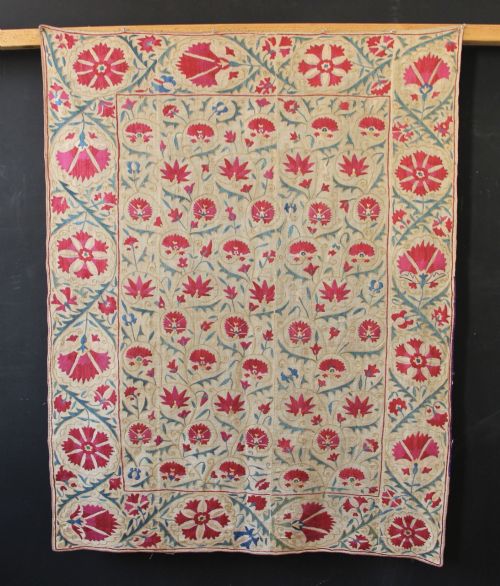
Asian textile art encompasses diverse functional and decorative pieces created across Central Asia, China, and Bali. Buyers encounter everything from dowry embroideries and dowry wall hangings to silk ikat panels and painted textile scrolls.
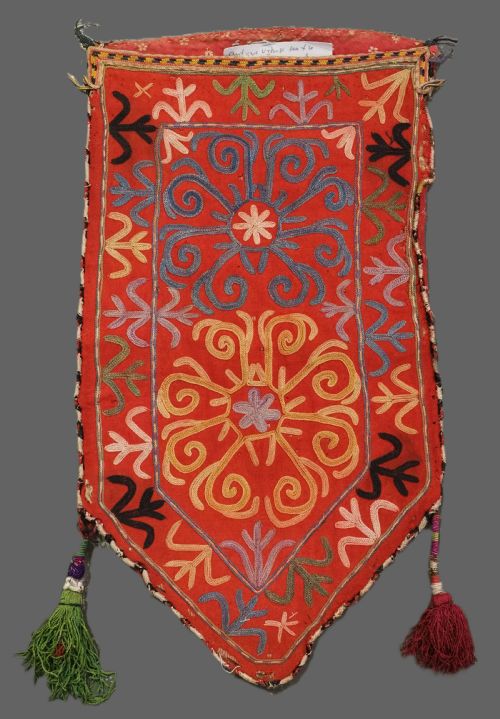
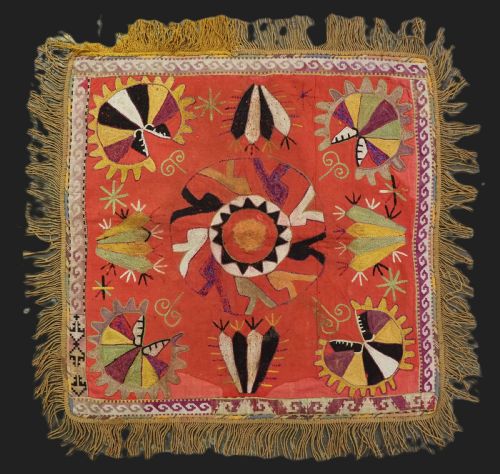
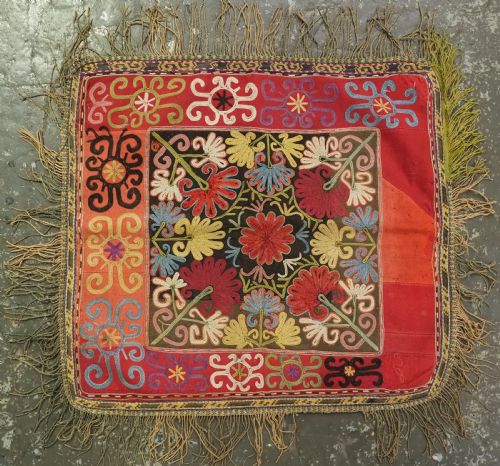
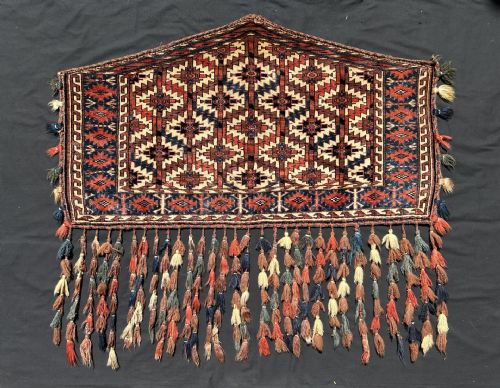
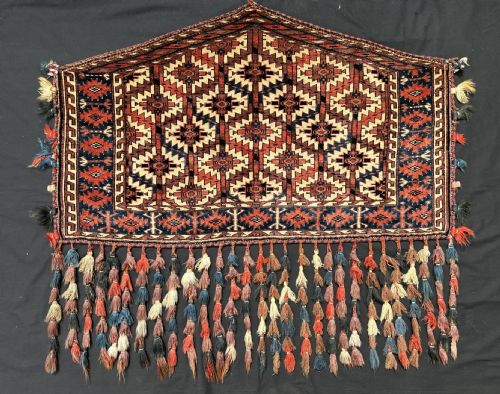
Tribal weavings from Turkmen and Uzbek groups form a significant portion of the selection. Items such as asmalyks, torbas, and ilgiches display traditional nomadic motifs intended for domestic or ceremonial use.
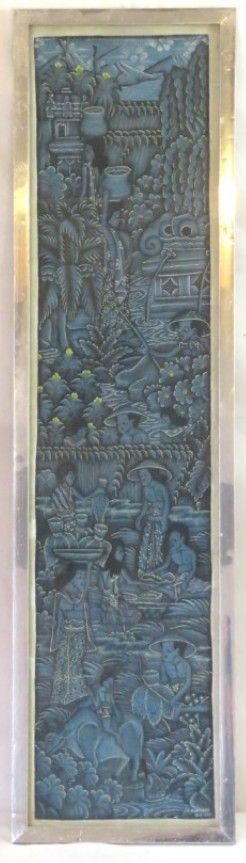
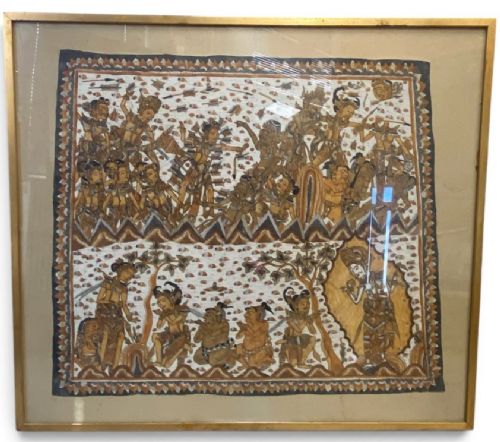
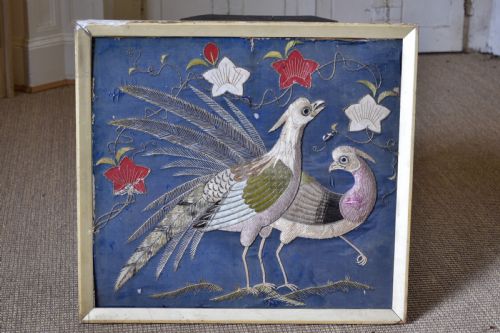
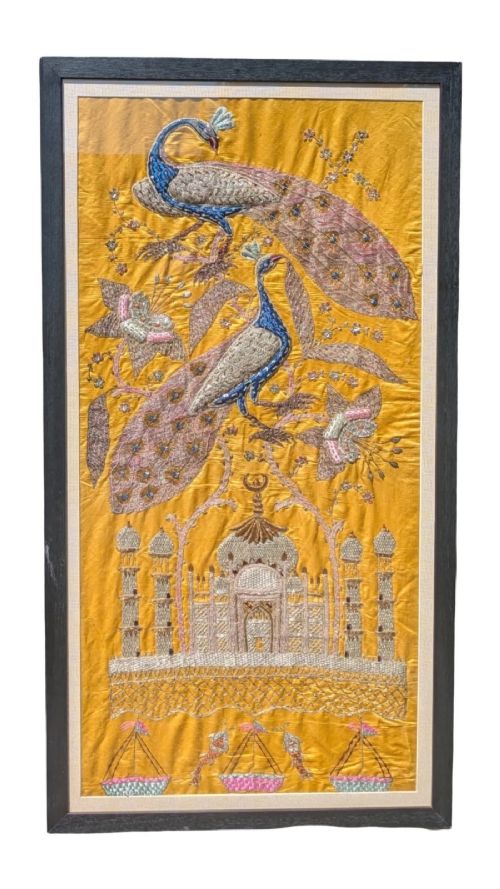
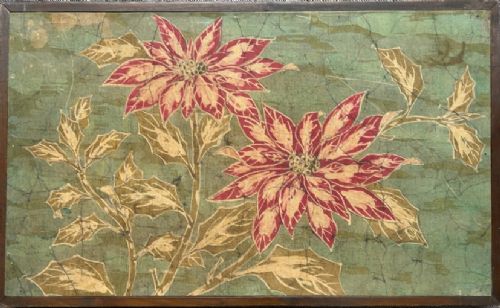
Painted works and embroideries from Balinese and Chinese makers add figurative variety to the category. Pieces range from framed batik floral panels to detailed silk embroideries depicting deities, dragons, and floral scenes.
How they were made
Makers utilised natural materials including silk, cotton, wool, and felt as the foundation for their textiles. Natural dyes provide the underlying palette, while metallic thread and silk highlights add texture and contrast to embroidered surfaces.
Techniques span hand-sewn embroidery, warp-faced ikat weaving, and applied batik work on fabric. Embroidered pieces often employ dense stitchwork on heavy cotton or silk backings, while painted works utilise water-based pigments directly on textile grounds.
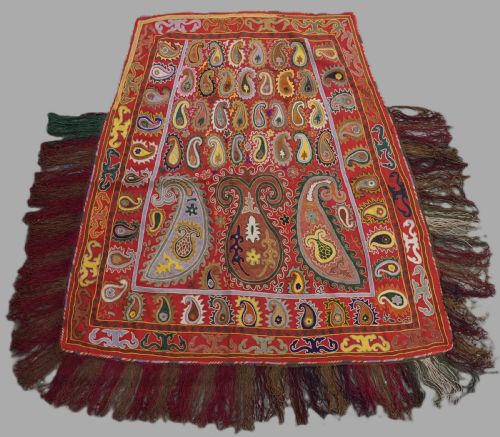
Several embroidered horse and saddle covers remind us that nineteenth-century nomadic textiles frequently travelled on four legs.
What varies in quality
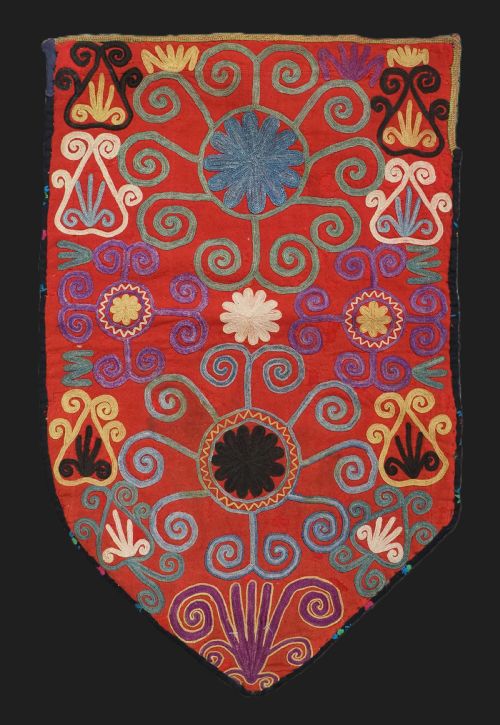
The sophistication of the design and the density of the needlework distinguish finer examples from standard decorative pieces. Suzanis and tribal bag faces with complex, finely executed motifs demonstrate superior workshop execution.
The preservation of natural dyes and the integrity of the original backing material determine the overall condition of older textiles. Intact metallic threads and vibrant, unfaded dye colours elevate the standing of mid-nineteenth and early twentieth-century works.
The Asian Textile Art Glossary
- Suzani
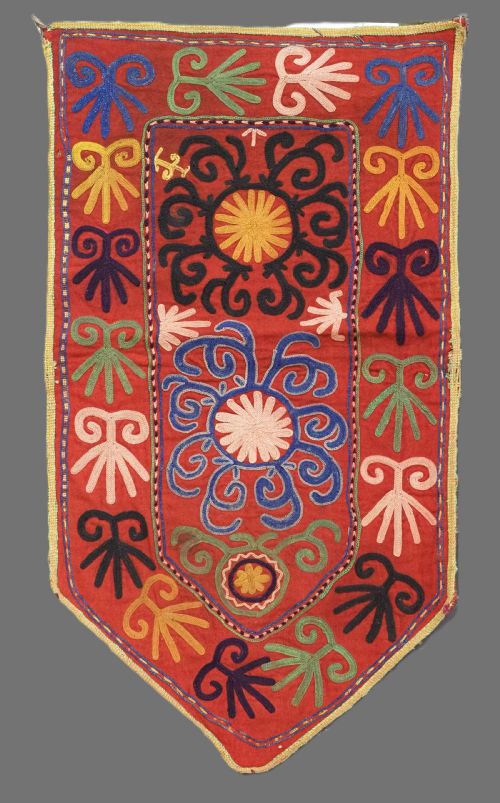
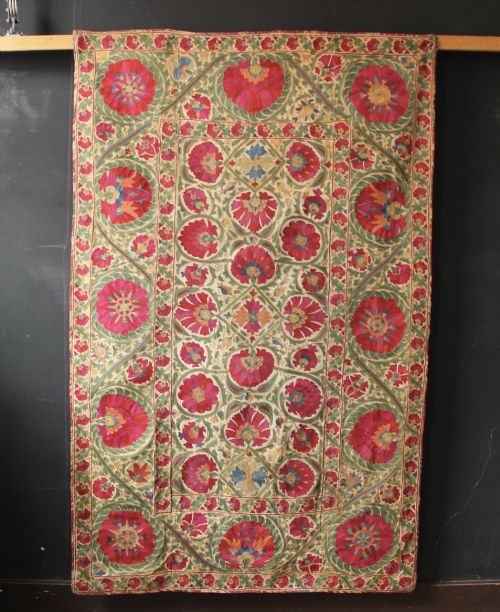
- An embroidered tribal hanging originating from Uzbekistan, traditionally stitched in silk on a cotton foundation. These large panels served as dowry items and decorative wall coverings.
- Ikat
- A dyeing and weaving technique where threads are tie-dyed before being woven into fabric to create characteristic feathered pattern edges. Adras fabrics combine silk and cotton in this manner.
- Asmalyk
- A pentagonal trapping produced by Yomut Turkmen tribes, historically mounted on the flanks of bridal camels during wedding processions. They display geometric tribal gul motifs.
- Torba
- A small utilitarian bag woven or embroidered by Turkmen groups for storage inside a yurt. These flatfaced or pile pieces feature distinct regional clan patterns.
- Ilgich
- A hanging embroidery piece created by the Lakai tribe of Uzbekistan, often functioning as a dowry textile. They utilise spirited, asymmetrical embroidery designs.
- Batik
- A resist-dyeing method applied to cloth, utilised in Balinese textile art to produce patterned wall panels and pictorial scenes. Wax prevents dye from reaching specific areas of the fabric.
Asian Textile Art: Frequently Asked Questions
What is an asmalyk used for?
Asmalyks were created by Turkmen tribes to decorate the flanks of camels during traditional wedding ceremonies. These pentagonal trappings formed an essential part of a bride's dowry.
After the wedding, families often repurposed these textiles as wall hangings inside the dwelling. Their intricate geometric patterns signified tribal identity and protective symbolism.
How do I hang a textile safely?
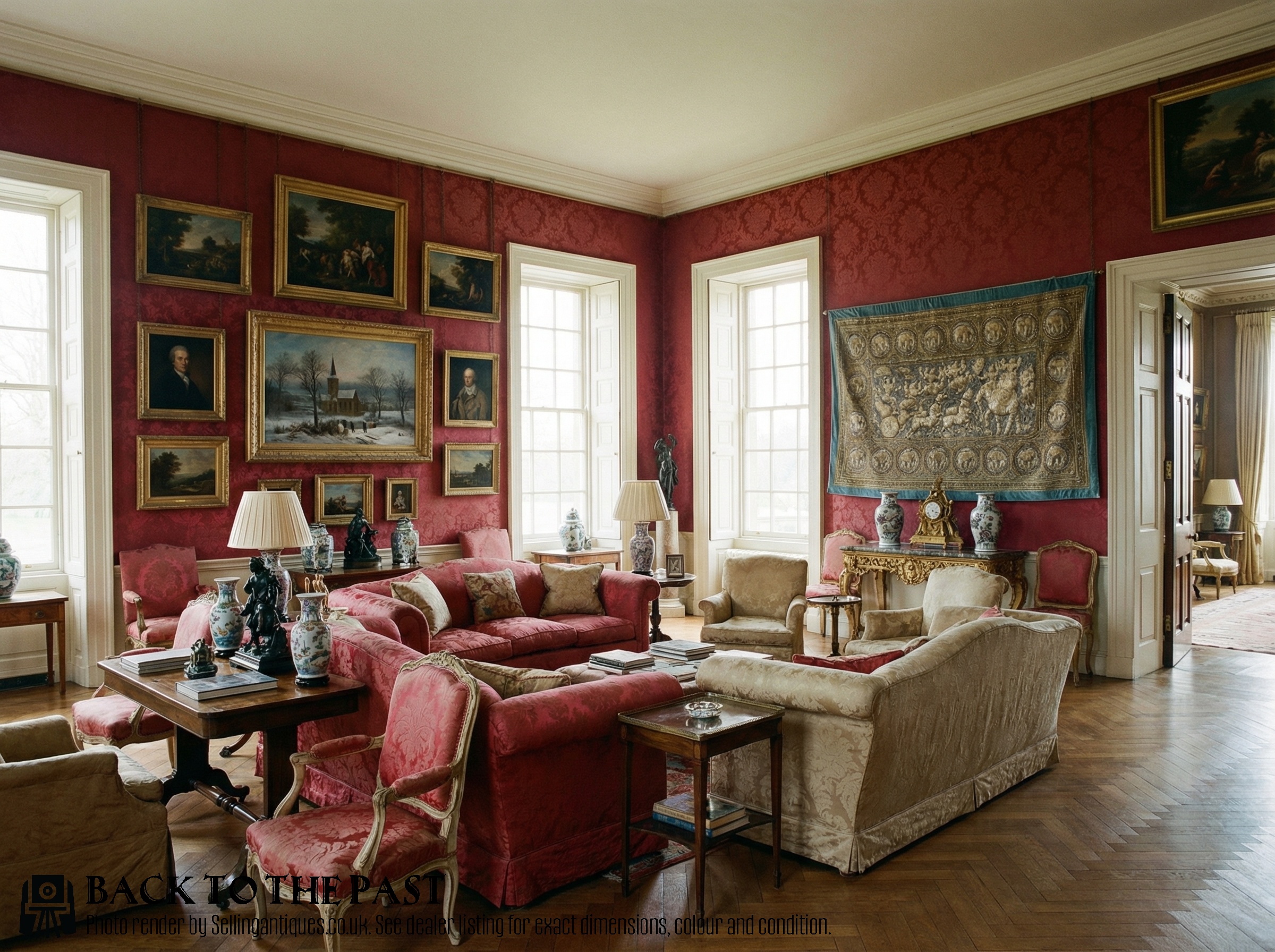
Mounting heavy embroideries or delicate ikat panels requires distributing the weight evenly across the entire top edge. Conservation-grade Velcro or a custom fabric sleeve stitched along the back prevents distortion.
Keep mounted textiles away from direct sunlight to protect natural dyes from fading. Rotating pieces periodically also prevents uneven environmental exposure.
What is a suzani?
Suzanis are large, decorative embroidered panels made primarily in Uzbekistan during the nineteenth and early twentieth centuries. Young women stitched these elaborate floral cloths as part of their dowry over many years.
Completed panels served to wrap household belongings, cover beds, or adorn walls. Their vibrant silk threads on cotton backgrounds showcase distinct regional botanical motifs.
How do I identify tribal Turkmen pieces?
Turkmen pieces such as torbas, asmalyks, and tent bags display repetitive geometric guls that identify specific sub-tribes like the Yomut or Ersari. These motifs were passed down through generations within weaving families.
Palette choices also help determine origin, with deep madder reds dominating many nineteenth-century works. Wool and silk highlights provide additional clues regarding the weaving date and tribal workshop.