






Asian Shelf Unit
An asian shelf unit brings architectural display and intricate craftsmanship into a room, offering structured space for precious objects.
Asian Shelf Unit
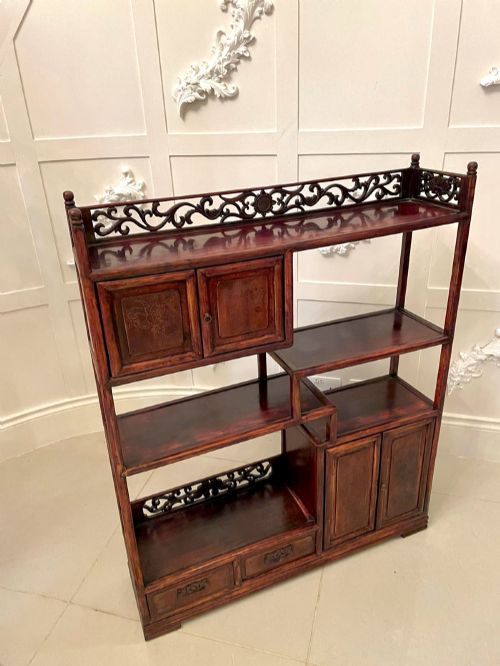
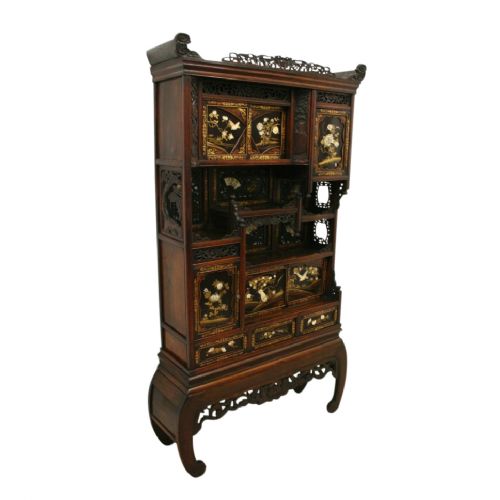
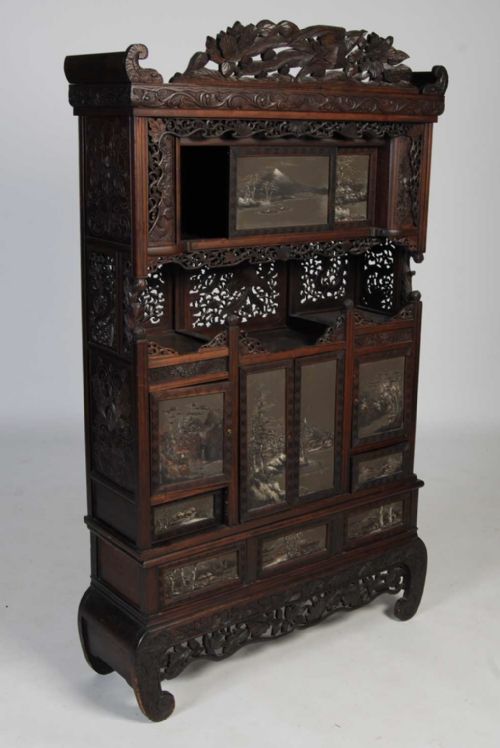
When you search for an asian shelf unit, you are looking at intricate display cabinets, dwarf side-cabinets, and tiered whatnot shelves originating from China and Japan. These pieces provide varied compartments and open ledges designed specifically for exhibiting small ornaments and porcelain.
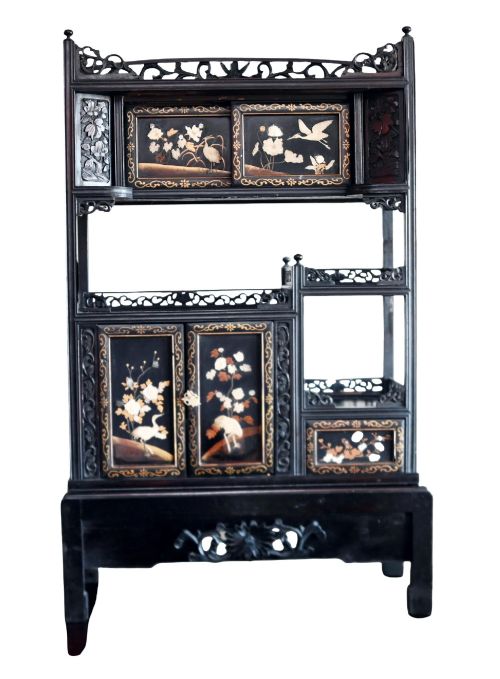
The versions you are most likely to meet on this page span the nineteenth century and the early twentieth century, encompassing Qing Dynasty and Meiji Period aesthetics. They take the form of freestanding cabinets, display shelves, and shodana cabinets on stands.
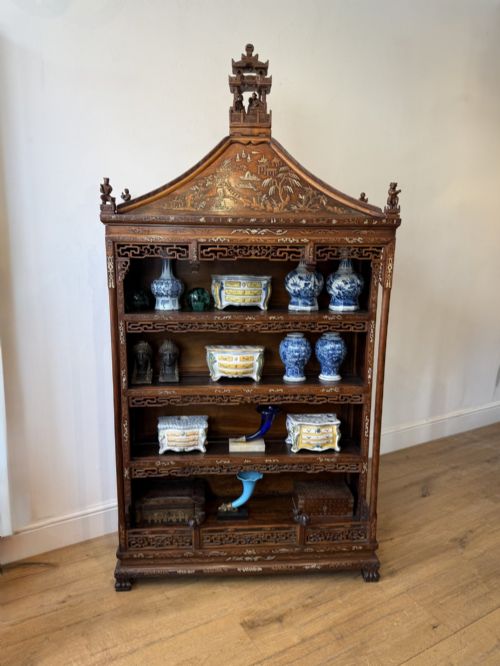
Originating from distinct Asian export and domestic traditions, these items range from pagoda display cabinets to ebonised bookcase cabinets. Each piece reflects the specific decorative arts of its period, balancing open display with enclosed storage.
Materials and construction methods
Cabinet makers utilised dense hardwoods and ebonised timber as the primary structural foundations for these display pieces. These sturdy woods allowed for deep, profuse carving and complex joinery without losing structural integrity.
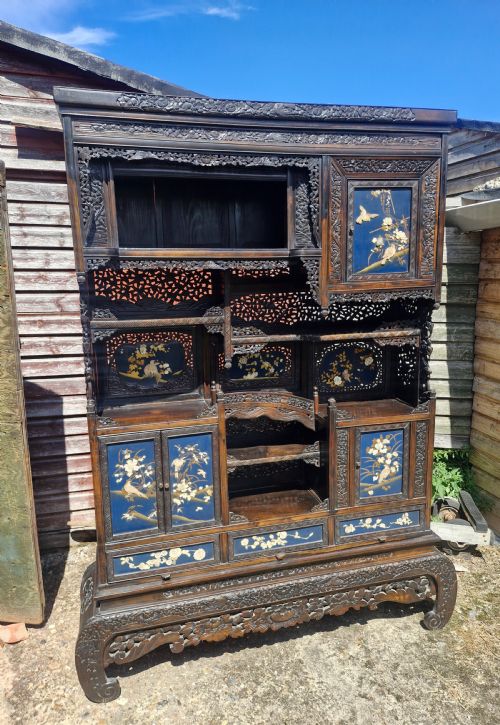
Surface ornamentation involved intricate inlay techniques using mother of pearl, bone, and brass details set directly into the wood. Lacquer finishes were also applied to create smooth, glossy surfaces that complemented the inlaid motifs.
Asian Shelf Unit Retail Price Guide 2026
Typical asking prices for asian shelf unit among the pieces listed under this phrase on Sellingantiques today, from the lower quarter to the upper quarter. They describe what is for sale here now, not the wider market.
Several miniature pagodas built into these cabinets wait quietly to house your very smallest porcelain frogs.
Assessing quality and craftsmanship
The distinction between standard examples and the finest pieces rests upon the depth and precision of the carving. Profusely carved surfaces with sharp, clean detailing indicate superior handwork by skilled artisans.
Quality also shows in the integration of decorative inlays and the stability of the joinery across multi-tiered shelves and cabinet doors. Refined proportion and the careful placement of mother of pearl or bone inlay separate exceptional examples from simpler items.
The Asian Shelf Unit Glossary
- Shodana
- A Japanese tiered display cabinet featuring asymmetrical shelving and small cupboards designed for ornamental objects. These cabinets often stand on integrated legs or separate stands.
- Qing Dynasty
- The final imperial dynasty of China, lasting from the seventeenth to the early twentieth century. Pieces from this era often feature heavy hardwood construction and intricate carving.
- Meiji Period
- An era in Japanese history spanning the late nineteenth and early twentieth centuries, known for detailed decorative arts and export pieces. Work from this time frequently incorporates bone inlay and lacquer.
- Ebonised
- Wood treated with a finish to give it the dark, polished appearance of ebony. This technique was popular for highlighting inlaid mother of pearl and bone details.
- Chinoiserie
- European artistic style reflecting Chinese aesthetic influences. Pieces of this nature adopt Asian decorative motifs within Western furniture forms.
Asian Shelf Unit: Frequently Asked Questions
What is an asian shelf unit used for?
These units serve primarily as display furniture for ceramics, small sculptures, and decorative objects. The combination of open shelves and enclosed cabinets allows owners to both exhibit and store treasured items.
Historically, they functioned as sophisticated storage in parlours and drawing rooms. Today, they bring structured display space and distinct period character to contemporary interiors.
How do I distinguish Chinese from Japanese cabinets?
Chinese pieces from the nineteenth century often feature dense hardwood, symmetrical framing, and deep carving depicting traditional motifs. They frequently take the form of bookcase cabinets or architectural display pieces.
Japanese examples, particularly shodana cabinets from the Meiji period, typically showcase asymmetrical shelving arrangements. They frequently incorporate delicate bone inlay and varied compartment doors.
Where should I place a display cabinet?
Position these cabinets against solid interior walls away from direct sunlight to protect delicate wood finishes and inlay materials. Placing them in a reception room or study allows the intricate carving and shelving to be fully appreciated.
Ensure the floor surface is level so that taller freestanding pieces remain stable. Ambient room lighting helps highlight the contrasting tones of ebonised wood and mother of pearl.
How do I care for hardwood and inlay?
Dust the carved surfaces and shelves regularly with a soft, dry cloth to prevent particulate buildup in the recessed details. Avoid using harsh chemical polishes that can damage antique lacquer or loosen bone and mother of pearl inlays.
Maintain stable room humidity to prevent the hardwood from warping or splitting over time. Gentle cleaning preserves the natural patina and structural integrity of the piece.