



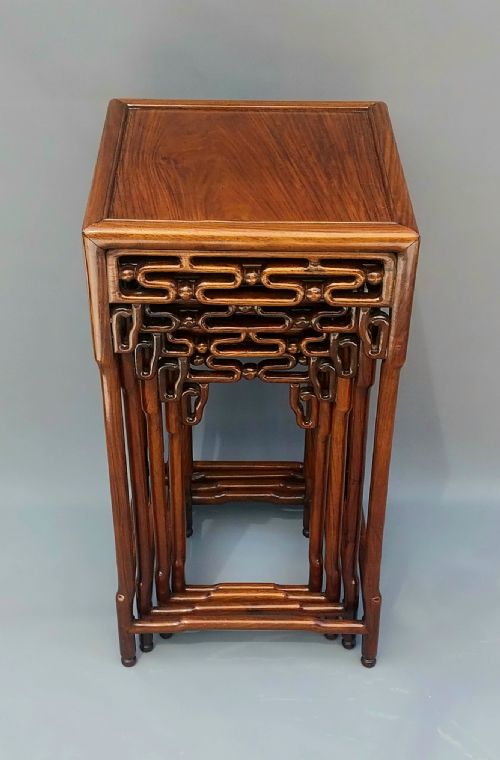


Asian Rosewood Furniture
These pieces of asian rosewood furniture combine dense tropical hardwoods with intricate carving to anchor a room.
Asian Rosewood Furniture
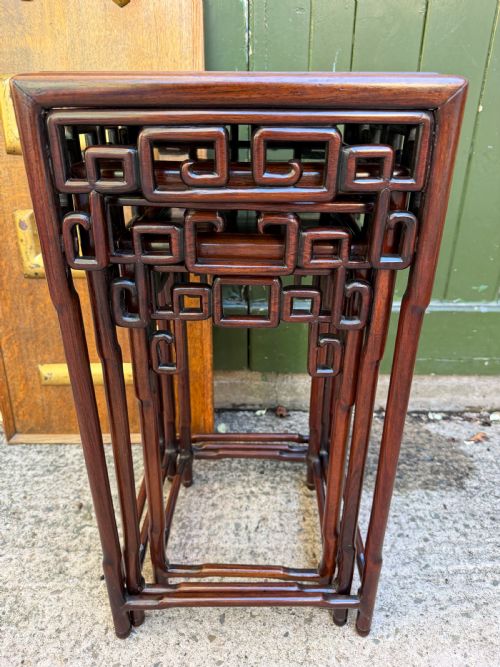
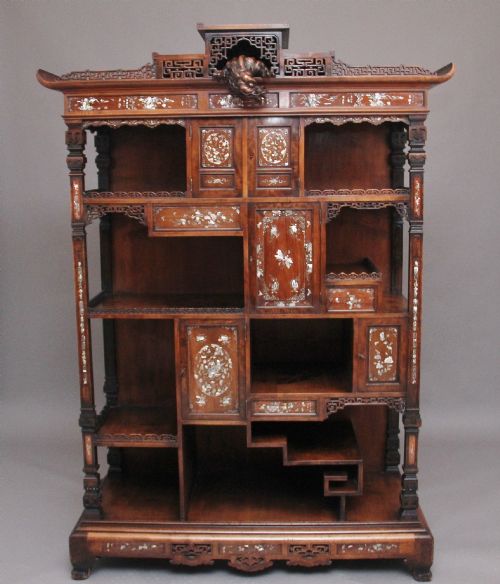
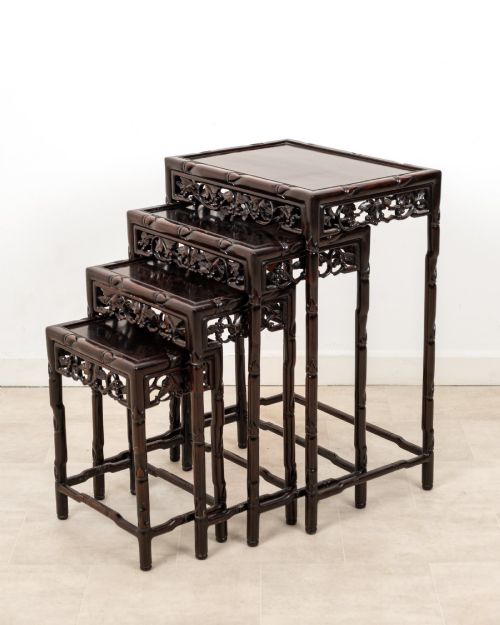
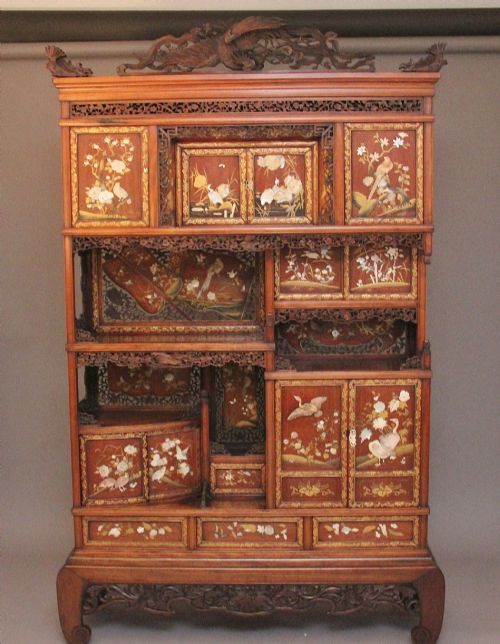
When searching for asian rosewood furniture, buyers encounter items dating from the nineteenth century into the early twentieth century, spanning periods like the Qing Dynasty and the Meiji period. Forms include nests of tables, plant stands, side tables, coffee tables, and display cabinets created in Chinese and Japanese traditions.
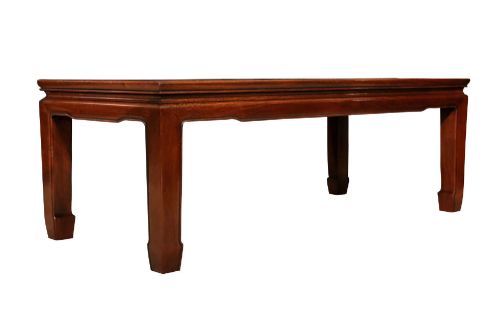
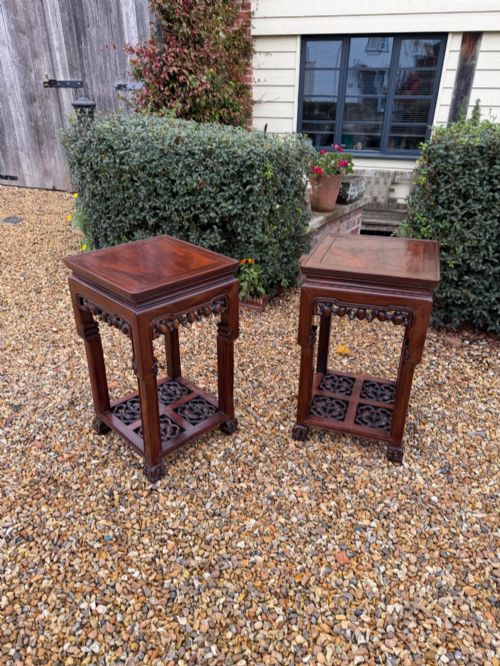
The most common examples on this page are low side tables, jardiniere stands, and nested table sets featuring inset marble or porcelain panels. These functional objects served traditional interiors as display surfaces for plants, vases, and scholarly items.
Originating largely from Chinese export workshops and Japanese Meiji production, these pieces reflect distinct regional aesthetics from traditional carved motifs to decorative display cabinets known as shodanas.
How they were made
The construction relies heavily on dense exotic timbers including hongmu, huali wood, padouk, and general hardwood, chosen for structural stability and deep natural grain. Cabinetmakers and carvers worked these heavy materials without modern power tools, relying on traditional joinery to accommodate wood movement.
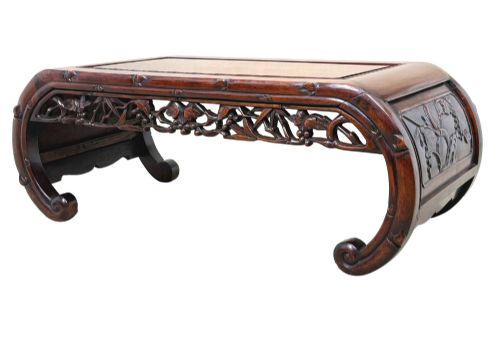
Many surfaces incorporate contrasting insets of marble or mother-of-pearl, alongside applied lacquer and glazed panels for display cabinets. Carved details are executed directly into the solid timber frame rather than applied as separate ornamentation.
Asian Rosewood Furniture Retail Price Guide 2026
Typical asking prices for asian rosewood furniture among the pieces listed under this phrase on Sellingantiques today, from the lower quarter to the upper quarter. They describe what is for sale here now, not the wider market.
Several low tables were originally designed for sleeping platforms, meaning generations of scholars drank tea practically at floor level.
What varies in quality
The distinction between standard examples and finer pieces lies in the depth and crispness of the hand carving, where superior items display undercut detailing and well-defined floral or geometric motifs. Timber selection also dictates grade, with heavier, more richly figured hongmu and huali commanding greater regard than generic mixed hardwoods.
Integration of secondary materials such as marble or porcelain panels influences overall execution, with higher quality work ensuring flush, secure fits into the surrounding wooden frames without excessive gap-filling.
The Asian Rosewood Furniture Glossary
- Hongmu
- A traditional Chinese term translating to red wood, used for dense and heavy tropical hardwoods. It often describes dense timber furniture from the Qing Dynasty.
- Huali wood
- A specific category of fragrant hardwood valued by Chinese cabinetmakers for its rich grain patterns. It appears frequently on Qing Dynasty tables and seating.
- Kang table
- A low platform table traditionally used on heated brick sleeping platforms in northern China. These items now function well as low coffee tables.
- Shodana
- A traditional Japanese display cabinet featuring asymmetrical shelving and sliding doors. These pieces emerged strongly during the Meiji period.
- Torchere
- A tall stand designed originally to hold a torch or candle, later adapted for lamps and urns. These slender stands are common in nineteenth-century Oriental collections.
Asian Rosewood Furniture: Frequently Asked Questions
How do I use a nest of tables?
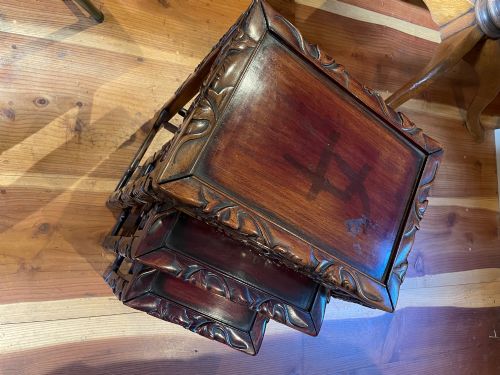
Nesting tables provide flexible surface area that can be expanded across a room when entertaining guests. They slide together into a single compact footprint when floor space is required.
In daily life, these sets work well beside seating areas to hold drinks or books without dominating the room layout.
Where should I place a jardiniere stand?
Jardiniere stands suit corners, empty wall spaces, or window areas where natural light highlights the carved timber details. Their narrow footprint allows them to elevate plants, vases, or small sculptures without blocking foot traffic.
Ensure the stand rests on level flooring, as heavy hardwood construction makes stability paramount on uneven historic surfaces.
What is a kang table used for?
Kang tables originated as low surfaces for writing, tea drinking, or dining while seated on mats or platforms. Today, their low profile makes them ideal for contemporary coffee table usage.
They pair well with low modern upholstery to create balanced proportions in a living space.
How do I care for antique hardwood furniture?
Maintain these pieces by dusting regularly with a soft, dry cloth and avoiding silicone-based polishes. Keep them away from direct heat sources and strong sunlight to prevent the timber and internal joints from drying out.
Occasional application of natural wax helps nourish the dense grain of hongmu and huali surfaces over time.