



Asian Porcelain Vase Lamps
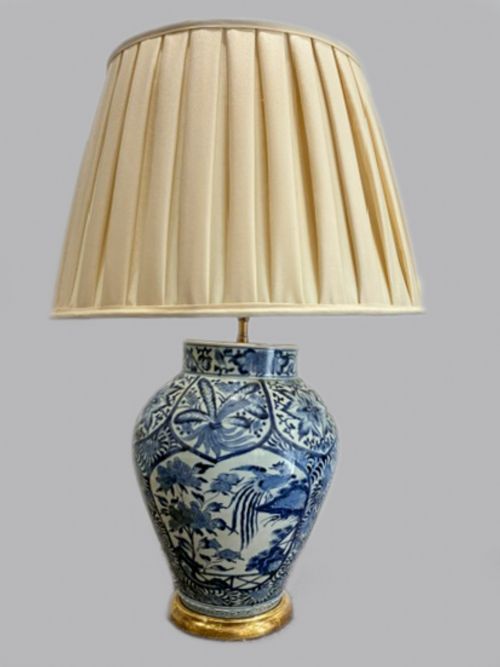
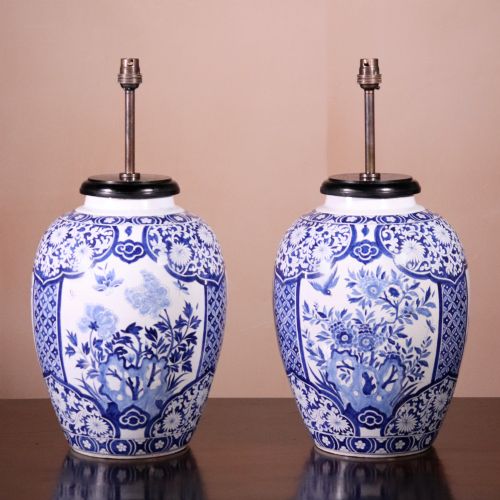
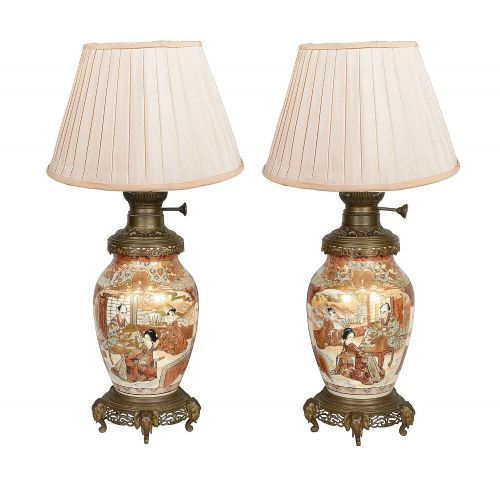
These asian porcelain vase lamps combine centuries-old ceramic vessels with functional lighting, bringing colour and height to a room.
Asian Porcelain Vase Lamps
Asian porcelain vase lamps transform antique and decorative vessels into functional table lighting for interiors. The selection centres heavily on 19th-century pieces, alongside examples from the 17th, 18th and early 20th centuries.
Buyers encounter distinct regional traditions, notably Japanese Satsuma, Kutani, Imari, Arita and Edo wares, paired with Chinese Celadon, blue and white, Famille Rose, and Cantonese styles.
The primary forms on this page include converted vases, jars and spill vases fitted as table lamps, often found in pairs.
Materials and construction
The primary bodies utilise porcelain, earthenware and ceramic, decorated with enamel paint and sometimes mounted in brass. Lamps often incorporate wooden bases or components alongside silk and fabric lampshades.
Vases from Japanese and Chinese kilns were subsequently converted into lamps, integrating electrical or mounting hardware while retaining the original ceramic body.
Listings feature porcelain, earthenware, brass, wood and silk across periods spanning the seventeenth to the twentieth century.
Quality variations
Quality rests in the precision of the hand-painted ceramic decoration, the depth of the porcelain glaze, such as celadon or powder blue, and the integrity of the original vessel before conversion. Pairs exhibit greater consistency when the matching vases share identical dimensions and hand-painted motifs.
The standard of mounting work and the selection of complementary materials like brass and wood determine how successfully the antique vessel functions as a lamp.
The Asian Porcelain Vase Lamps Glossary
- Satsuma
- A type of Japanese earthenware featuring a ivory-coloured cracked glaze decorated with enamel and gilt. It originates from the Satsuma province.
- Imari
- A style of Japanese porcelain featuring a palette of underglaze blue, iron red, and gilt. Pieces often display intricate floral and geometric panels.
- Celadon
- A type of ceramic glaze denoting a pale green grey hue resembling jade. It appears on Chinese and Japanese vessels.
- Kutani
- Japanese coloured porcelain characterised by bold enamel designs. These wares frequently incorporate greens, blues, purples, and reds.
- Baluster
- A vase shape with a rounded body that tapers towards a narrow neck and widens at the base. This form provides stability for table lamps.
Asian Porcelain Vase Lamps: Frequently Asked Questions
How are antique vases converted into lamps?
Vases are fitted with internal wiring or external mounts without damaging the primary ceramic structure. Metal and wooden components secure the electrical fittings to the top and base.
This adaptation allows fragile historical vessels to function as practical household table lamps while remaining intact.
Are these lamps sold as pairs?
Many listings feature matching pairs of vases converted together for symmetrical placement on side tables or mantelpieces. Individual lamps also appear across the selection.
Matching pairs share similar height, glaze colours, and hand-painted decorative motifs.
How do I identify Satsuma ware?
Satsuma ceramics display a characteristic fine crackle glaze beneath intricate enamel and gilt artwork. The body consists of earthenware rather than hard-paste porcelain.
Depictions often include figures, flowers, and traditional Japanese motifs executed in raised enamels.
What is Chinese export porcelain?
Chinese export porcelain refers to ceramics manufactured in China specifically for overseas markets in Europe and the West. These pieces frequently blend traditional Eastern forms with Western functional requirements.
The decorative schemes often reflect patterns popular among international buyers during the Qing dynasty.