





Asian Lidded Vessels
Asian lidded vessels combine utility and intricate craftsmanship across bronze, cloisonne enamel, and ceramic forms spanning centuries.
Asian Lidded Vessels
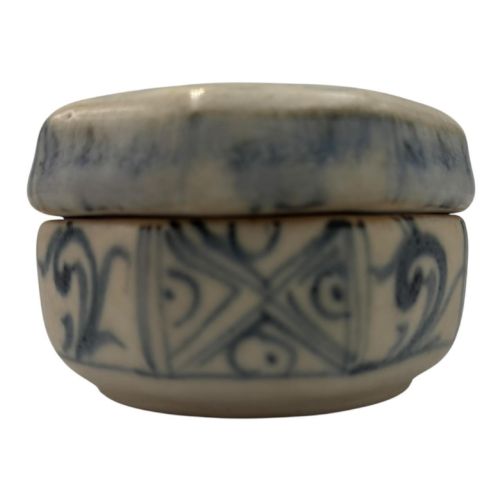
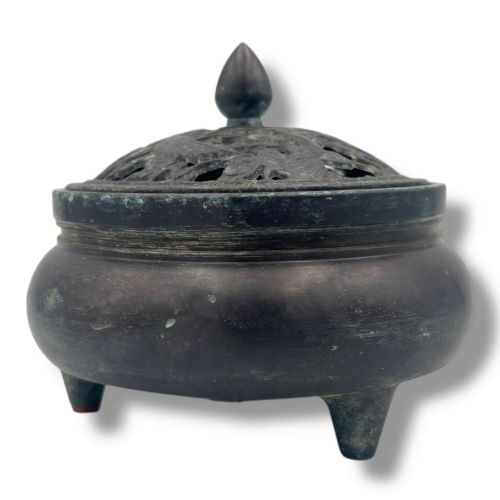
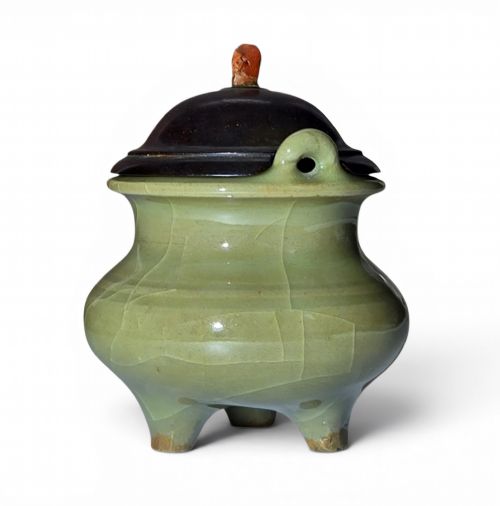
When searching for Asian lidded vessels, collectors encounter a diverse group of objects designed to contain incense, tea, or dry goods. These items range from Japanese cloisonne enamel ginger jars and pedigree bronze tripod censers to Vietnamese blue and white covered boxes and Chinese porcelain kamcheng jars.
The pieces appearing on this page originate from traditional Asian workshops, spanning periods from the late Ming and Le dynasties through the Edo and Meiji eras into the twentieth century. Forms take shape as incense burners, decorative jars, pedestal bowls, and small covered boxes fashioned for utilitarian or decorative display.
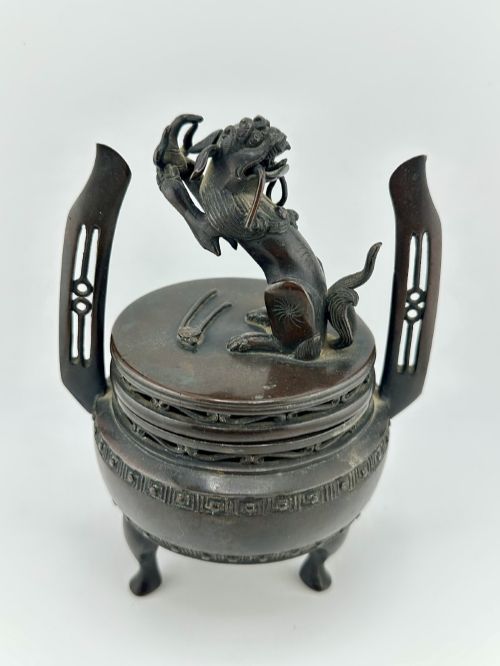
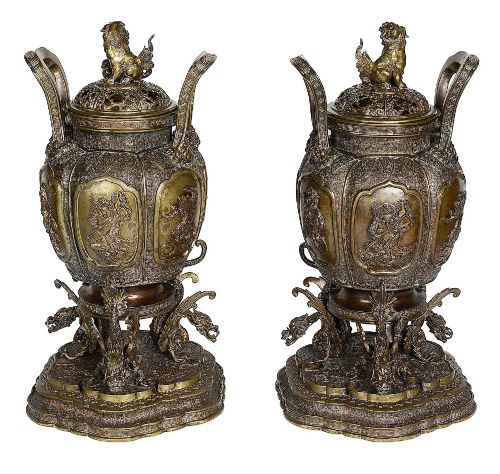
Buyers are most likely to meet Japanese cloisonne enamel ginger jars alongside Chinese bronze tripod censers fitted with qilin or dragon phoenix finials. Earthenware and stoneware vessels from various Asian traditions also appear, demonstrating distinct regional shaping and decorative motifs.
Materials and construction techniques
Metals such as bronze, brass, and copper form the backbone of many cast vessels, often incorporating silver accents or detailed surface carvings. Bronze tripod censers rely on traditional lost-wax casting methods to achieve structural stability and complex figural covers.
Cloisonne enamel pieces utilise thin wire soldered to a metal base to partition colourful enamel pastes before firing and polishing. Earthenware and stoneware containers depend on high-firing ceramic techniques, complemented by underglaze blue and white painting or intricate hand-carved bamboo surfaces.
Asian Lidded Vessels Retail Price Guide 2026
Typical asking prices for asian lidded vessels among the pieces listed under this phrase on Sellingantiques today, from the lower quarter to the upper quarter. They describe what is for sale here now, not the wider market.
Some lidded censers feature mythical qilin finials keeping watch over tiny wisps of ascending smoke.
Evaluating craftsmanship and condition
The finest examples display precision in metal wirework, flawless enamel fusion, or deeply carved wood and bamboo detailing without surface distortion. Superior cast bronze censers retain crisp relief work on dragon and phoenix motifs alongside well-fitted covers that sit flush with the body.
Lesser pieces often reveal irregular enamel pitting, uneven patination on brass and bronze, or replacement covers that lack period harmony. The fidelity of baseline signatures, such as specific studio marks or reign designations, further separates standard decorative items from masterworks.
Kotobuki do·Shozan
The Asian Lidded Vessels Glossary
- Censer
- A vessel designed for burning incense, frequently featuring a pierced cover to release fragrant smoke. These objects often stand on three legs.
- Cloisonne
- A decorative enamel technique where metal wires create small compartments that are filled with coloured glass paste and fired. This method produces intricate geometric or pictorial designs.
- Ginger Jar
- A high-shouldered ceramic or metal storage jar with a fitted lid, historically utilised for spices or preservation. Japanese and Chinese examples frequently feature floral or avian motifs.
- Kamcheng
- A type of covered ceramic jar traditionally used in Southeast Asian households for food storage. These containers are often decorated in blue and white or polychrome enamels.
Asian Lidded Vessels: Frequently Asked Questions
What were Asian lidded vessels used for?
These vessels served diverse domestic and ritual purposes across Asian households, from burning fragrant incense in temples and studies to storing precious dry goods, tea, or personal items.
Many forms were created specifically for ceremonial presentation or scholarly contemplation, while others functioned as ornamental storage containers in elite interiors.
How do I distinguish Chinese from Japanese pieces?
Chinese vessels frequently employ cast bronze, carved bamboo, or traditional porcelain with motifs like dragons, qilin figures, and imperial reign marks. Japanese items often showcase distinct regional styles such as Satsuma earthenware or precise Meiji period cloisonne enamel work.
Examining the underlying metal composition, glaze characteristics, and decorative vocabulary helps clarify the specific cultural origin of each item.
How should I display lidded vessels at home?
Position these objects on stable flat surfaces away from direct sunlight to protect delicate enamel colours, patinated bronze, and organic materials like bamboo or zitan wood. Keeping lids paired correctly with their original bodies maintains the visual balance intended by the maker.
Allowing sufficient space around each piece highlights the intricate surface details, whether viewed on a dedicated shelf or within a glazed cabinet.
How do I identify the period of a lidded vessel?
Dating relies on observing manufacturing materials, stylistic conventions, and any accompanying reign marks or studio signatures stamped into the base. Edo and Meiji period Japanese works often display distinct wirework standards and colour palettes compared to earlier Qing dynasty bronzes.
Comparing construction techniques with established historical examples provides a reliable framework for estimating the age of unmarked pieces.