


Asian Hand Painted Sideboard
These asian hand painted sideboard examples bring rich colour and intricate traditional motifs into a room, offering both bold visual presence and practical storage.
Asian Hand Painted Sideboard
An asian hand painted sideboard covers storage cabinets, cupboards, and sideboards originating from the nineteenth and early twentieth centuries. Buyers searching for this phrase find pieces finished with detailed pictorial scenes and traditional ornamentation.
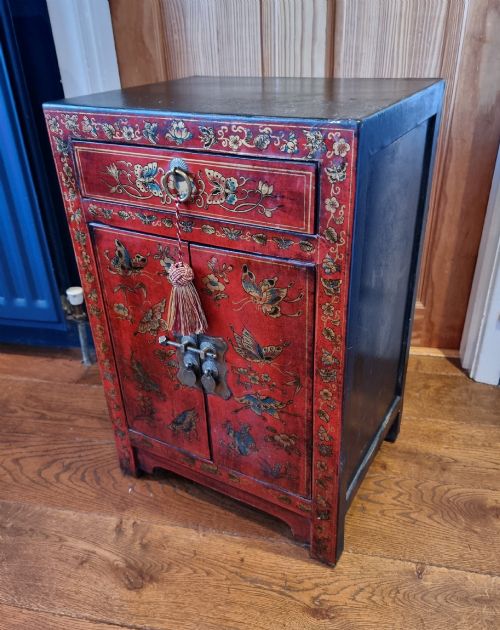
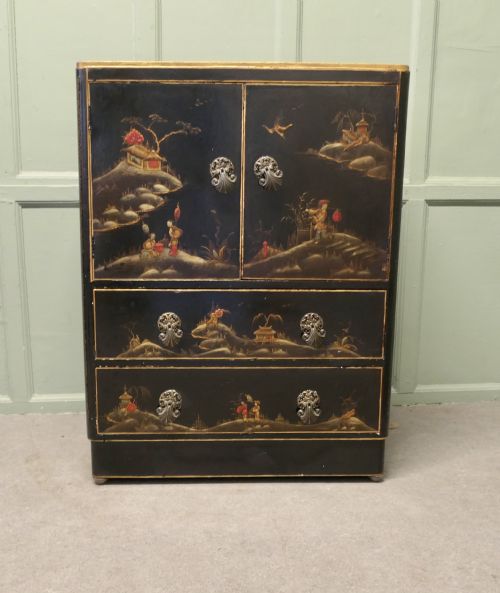
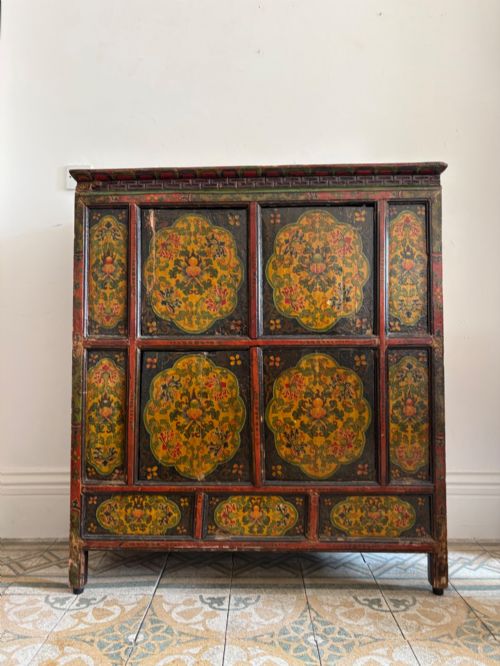
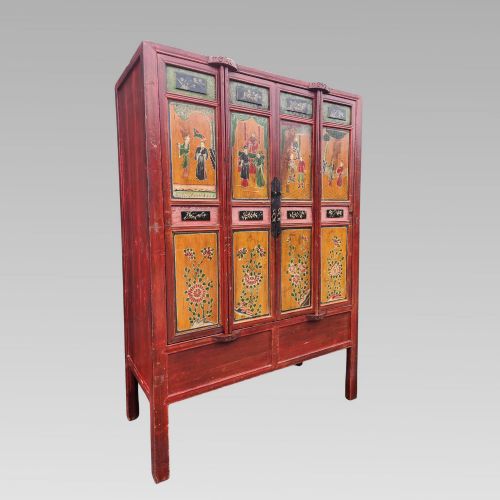
The selection on this page leans heavily towards Chinese and Tibetan cabinets, alongside Chinoiserie interpretations. Forms range from simple low sideboards to tall marriage cabinets and pieces on carved stands.
Most examples date from the nineteenth century or the early decades of the twentieth century. They provide enclosed storage while serving as striking focal points in a dining room or living space.
How they were made
Construction relies primarily on wood, including pine and lacquered wood substrates built to endure daily use. Cabinet bodies are assembled using traditional joinery before receiving layers of surface preparation.
Surface decoration makes extensive use of lacquer and mineral pigment, often applied over wood to create deep, reflective finishes. Detail work incorporates gilt highlights and brass hardware such as hinges and mounting plates.
Listings feature woods such as pine and lacquered wood, accented with brass and mineral pigment.
What varies in quality
The finesse of the hand-painted decoration separates standard pieces from superior examples. Finely executed floral motifs, figurative scenes, and balanced composition indicate a higher grade of craftsmanship.
The preservation of the original lacquer and pigment layers dictates the visual impact of the piece. Intact brass mountings and stable structural joinery also distinguish the finer items in this category.
The Asian Hand Painted Sideboard Glossary
- Chinoiserie
- European interpretation and imitation of Chinese and East Asian artistic traditions, popular in decorative arts and furniture design.
- Lacquer
- A durable resin finish applied in multiple layers to wood surfaces, providing a smooth, glossy protective coating that accepts pigments well.
- Mineral pigment
- Natural earth and mineral-based colouring agents used to create rich, long-lasting hues in traditional painting.
- Gilt
- A thin layer of gold or gold-coloured material applied to surface details, highlights, and hardware to add contrast and brightness.
- Marriage cabinet
- A traditional large Chinese storage cupboard often given as a wedding gift, featuring prominent brass hardware and symbolic decoration.
Asian Hand Painted Sideboard: Frequently Asked Questions
Where should I place a sideboard?
These cabinets work well in dining rooms for storing tableware or in living spaces as a decorative focal point. Their colourful painted surfaces stand out best against neutral walls.
Ensure the room has stable humidity levels to protect the wood and lacquer finishes over time.
How do I clean lacquered furniture?
Dust the surface regularly with a soft, dry cloth to prevent dirt accumulation. Avoid harsh chemical cleaners or abrasive sponges that can damage the pigment and lacquer.
For stubborn marks, use a barely damp cloth and dry the area immediately afterwards.
How can I tell the age of a cabinet?
Age is indicated by the construction methods, the type of wood used, and the natural ageing of the lacquer and pigments. Nineteenth-century pieces often show hand-forged hardware and traditional joinery.
Wear patterns on the surface and the depth of the finish also provide clues to the period of origin.
What is the difference between Chinoiserie and Chinese antique?
Chinese antiques are items made within China for domestic or export markets during specific dynastic or historical periods. Chinoiserie refers to European styles inspired by Chinese design aesthetics.
Both categories feature painted motifs and lacquered surfaces but stem from different cultural traditions.