





Asian Figure Vases
These asian figure vases bring together detailed depictions of scholars, immortals and sages across porcelain, earthenware and cloisonne enamel.
Asian Figure Vases
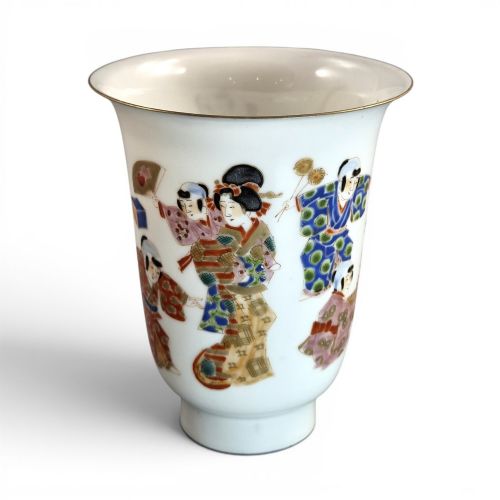
Asian figure vases encompass vessels decorated with human subjects such as scholars, elders, women and children, sages, immortals, and karako figures.
The selections span distinct periods including the 18th century, 19th century, Victorian era, and the Meiji through Taisho and Showa periods.
Forms vary from standard baluster and cylindrical vases to table lamps, lidded vessels, jar vases, and bottle vases with flaring necks.
Materials and construction
Potters and artisans utilised porcelain, earthenware, and eggshell porcelain as the primary foundations for these vessels.
Decoration incorporates hand-painted pigments, enamel, gold leaf, and blue and white glaze, alongside applied figural elements.
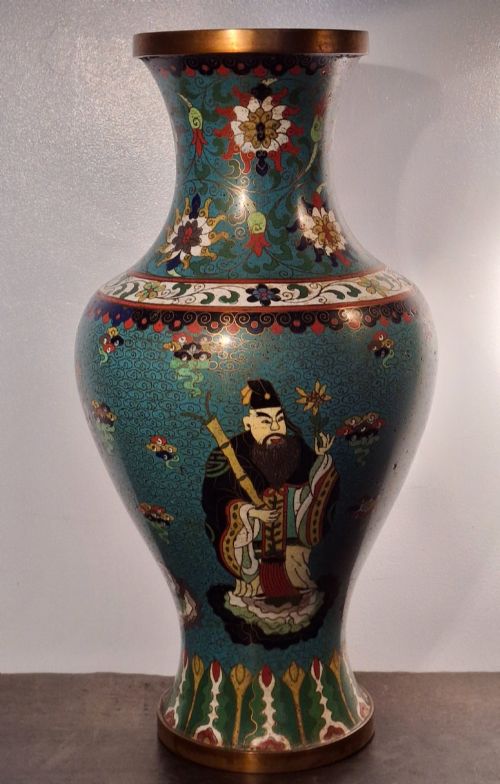
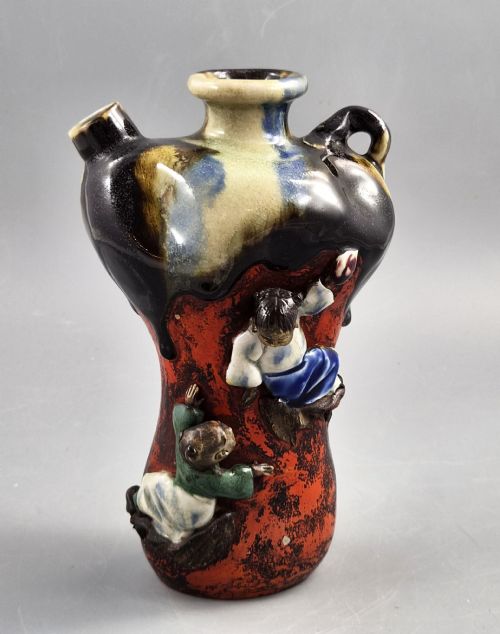
Specialised techniques include cloisonne enamel work on metal bodies and the distinct textured glazes seen on Sumida Gawa pottery.
Asian Figure Vases Retail Price Guide 2026
Typical asking prices for asian figure vases among the pieces listed under this phrase on Sellingantiques today, from the lower quarter to the upper quarter. They describe what is for sale here now, not the wider market.
Materials span porcelain, earthenware, cloisonne enamel, brass, and wood.
Assessing the range
Distinctions in quality rest upon the precision of the hand-painted detail in the figures and the complexity of the surrounding motifs such as dragons and rakan.
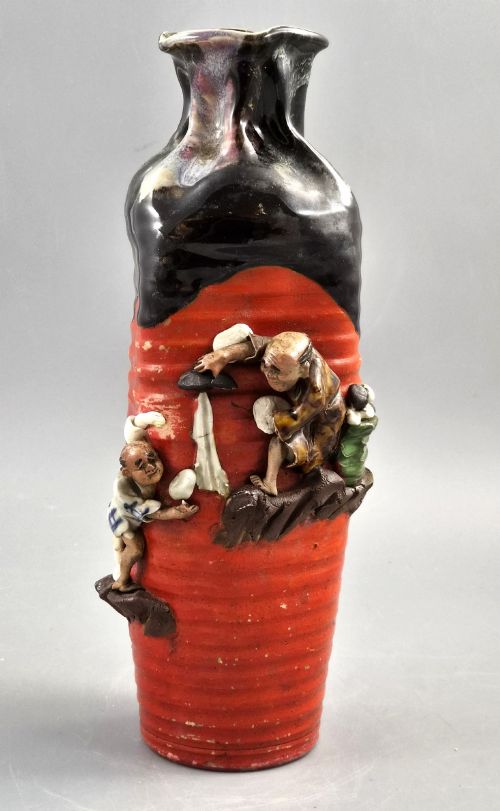
The finesse of applied sculptural figures, whether climbing characters or seated sages, shapes the character of the piece.
The integrity of the original glaze, enamel work, and gilding preserves the visual impact across Satsuma, Kutani, and Chinese wares.
Inoue Ryosai·Gao Hengsheng
The Asian Figure Vases Glossary
- Satsuma
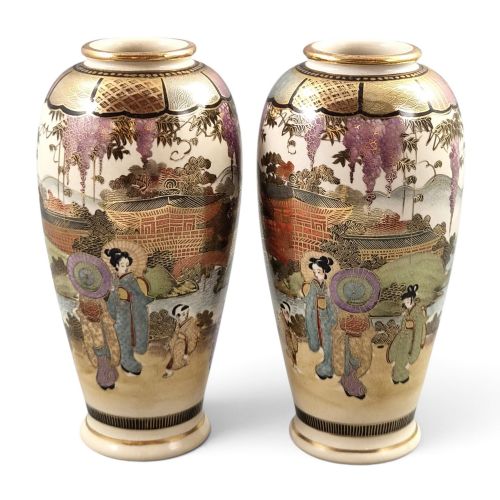
- Earthenware pottery originating from the Satsuma Province in Japan, traditionally featuring a finely crackled ivory glaze and detailed overglaze enamel painting.
- Kutani
- Japanese porcelain noted for its vibrant colour palettes, often dominated by greens, blues, purples, and gold.
- Cloisonne
- Metalwork technique where compartments are created using wire and filled with enamel paste before firing.
- Sumida Gawa
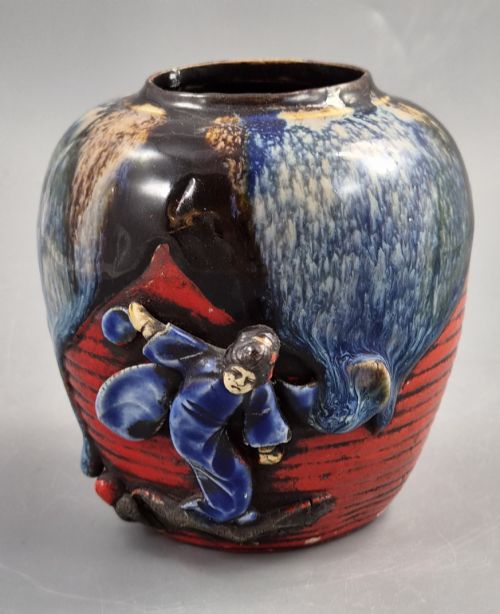
- A style of Japanese pottery distinguished by heavy, flowing flambé glazes and high-relief applied figures modelled directly onto the body.
- Imari
- Japanese export porcelain decorated in underglaze blue and overglaze iron red, gold, and black.
- Karako
- Depictions of Chinese children at play, frequently utilised as a decorative motif in East Asian ceramics.
Asian Figure Vases: Frequently Asked Questions
What are asian figure vases?
These pieces are ceramic or metal vessels featuring painted or applied human figures, including scholars, immortals, and sages, originating primarily from Japanese and Chinese traditions.
They serve as decorative works that showcase traditional craft techniques across various historical periods.
How were asian figure vases used?
Historically, these vessels functioned as interior ornaments within homes, temples, and reception rooms to display refined taste and narrative artistry.
Some examples have been adapted into table lamps while retaining their original ceramic bodies.
How do I identify Satsuma ware?
Satsuma pieces generally display a characteristic creamy earthenware body covered in a network of fine crackles beneath intricate enamel and gilt painting.
Subjects frequently include dense groupings of historical figures, immortals, and attendants.
What is Sumida Gawa pottery?
Sumida Gawa pottery stands out through its rough, textured glazes and distinct sculptural figures that climb or sit upon the exterior of the jar or vase.
These pieces often emerge from the Meiji and Taisho periods and bear the marks of specific Tokyo workshops.
How should I display them at home?
Place these vases on stable surfaces where adequate lighting highlights the hand-painted enamel details, gold leaf, and applied figural elements.
Keep them away from direct sunlight and heavy traffic areas to protect delicate glazes and raised surfaces.