






Asian Export Cabinet
An asian export cabinet brings together intricate craftsmanship from East Asia and traditional European forms, offering practical storage alongside distinctive decoration.
Asian Export Cabinet
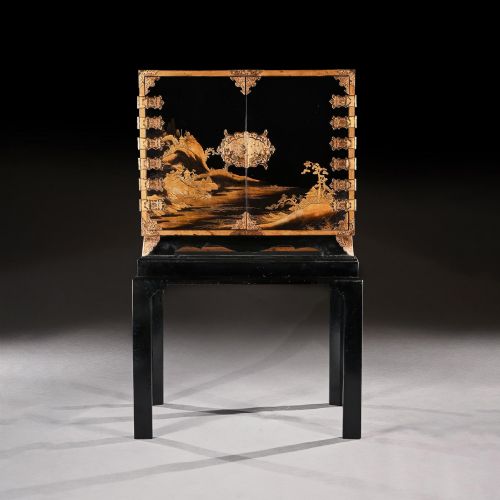
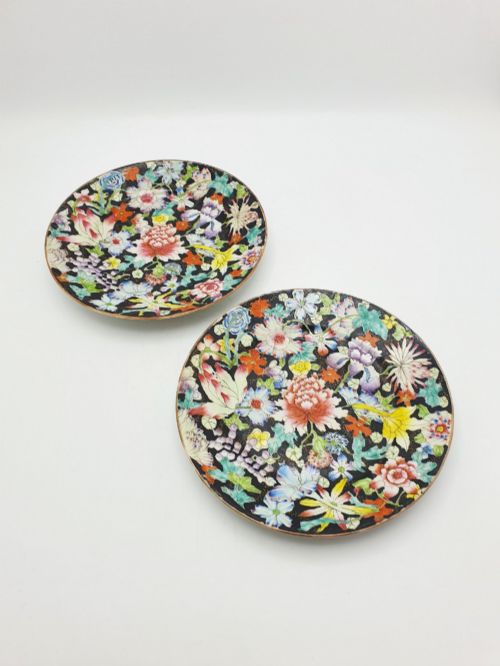
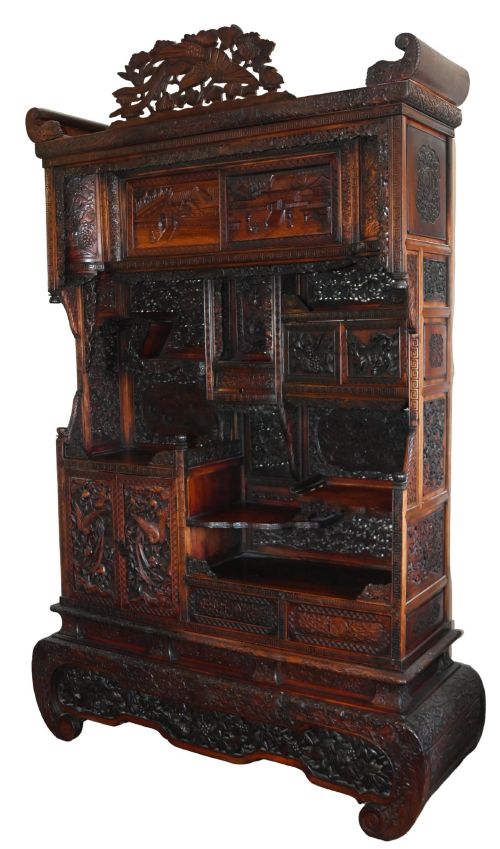
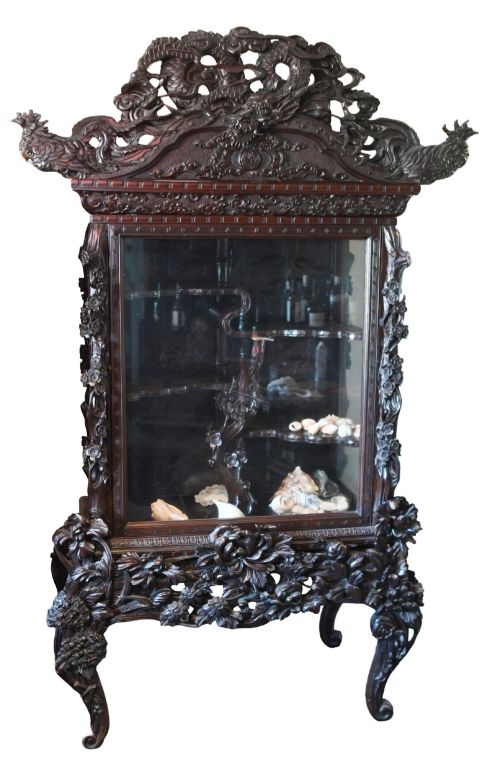
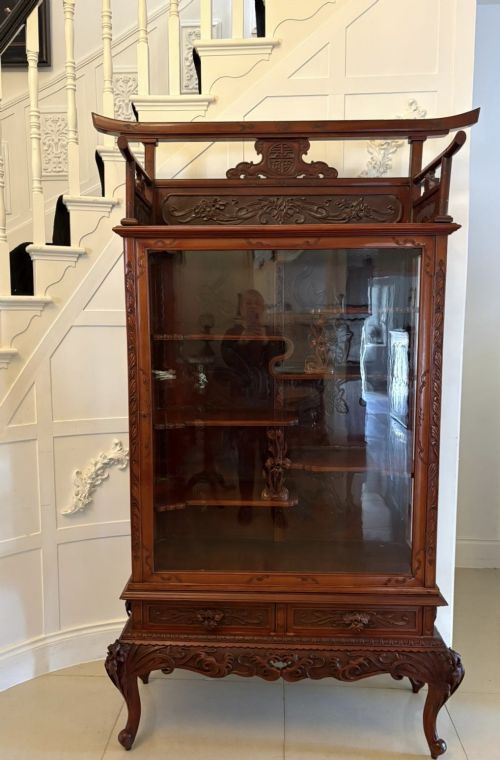
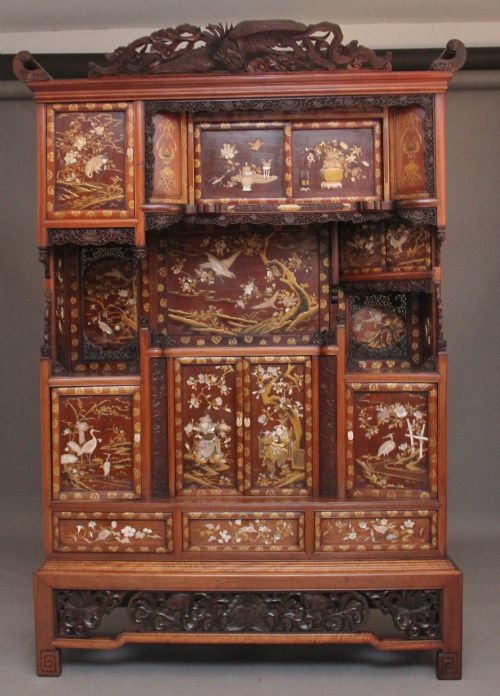
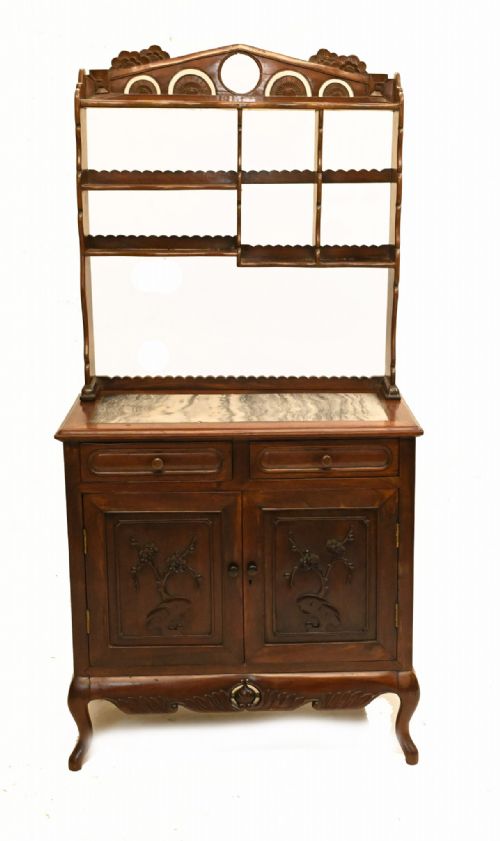
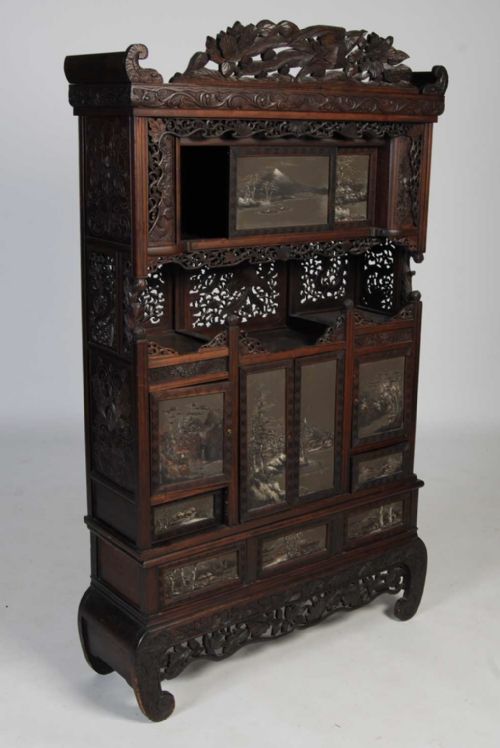
When searching for an asian export cabinet, collectors encounter a diverse range of furniture created for international markets, spanning the seventeenth century through the early twentieth century. These pieces include tabletop cabinets, floor-standing display cabinets, dressers, and specialised shodana cabinets on stands.
The inventory on this page draws heavily from Chinese export traditions and Japanese periods such as the Edo and Meiji eras. Buyers frequently meet pieces finished with lacquer work, mother of pearl inlay, or carved hardwood elements.
Forms vary from compact table cabinets to larger occasional furniture and bookcases, reflecting the diverse demands of historical trade. Each piece serves as a physical record of cultural exchange between Eastern workshops and Western interiors.
How they were made
Maker workshops utilised dense hardwoods and timber frames as the structural foundation for these cabinets. Surfaces were frequently built up with layers of lacquer to achieve a smooth, durable finish.
Decoration involved intricate techniques such as gold leaf application, carving, and the embedding of mother of pearl. Metal fittings in brass were integrated to secure doors, drawers, and structural corners.
Asian Export Cabinet Retail Price Guide 2026
Typical asking prices for asian export cabinet among the pieces listed under this phrase on Sellingantiques today, from the lower quarter to the upper quarter. They describe what is for sale here now, not the wider market.
Some nineteenth century cabinet doors open to reveal secret compartments designed for hiding love letters from prying eyes.
What varies in quality
The standard of an asian export cabinet is defined by the precision of its surface decoration and the integrity of its timber structure. Superior examples display deeply detailed carving, perfectly flush inlay work, and stable joinery that withstands environmental changes.
Materials also dictate the tier of a piece, with high-grade hardwoods and multi-layered lacquer finishes commanding greater attention than simpler wood constructions. The sophistication of the overall design and the harmony of brass mounts separate standard items from exceptional ones.
The Asian Export Cabinet Glossary
- Shodana
- A traditional Japanese display cabinet featuring asymmetrical shelving and small cupboards. These pieces were designed to exhibit art objects and precious ceramics.
- Lacquer
- A durable finish applied to wood using processed tree sap, often built up in multiple layers. It provides a glossy surface that resists moisture and wear.
- Edo Period
- A historical division of Japanese history lasting from sixteen hundred and three to eighteen hundred and sixty-eight. Furniture from this era often showcases refined craftsmanship and traditional aesthetic principles.
- Meiji Period
- A Japanese historical era spanning from eighteen hundred and sixty-eight to nineteen hundred and twelve. Cabinets from this time frequently demonstrate intricate decorative detailing geared toward international trade.
- Mother of pearl
- An iridescent inner layer of shells utilised for inlay work. Craftsmen cut thin pieces to form floral or geometric patterns across wood and lacquer surfaces.
Asian Export Cabinet: Frequently Asked Questions
What is an asian export cabinet?
An asian export cabinet is a piece of furniture made in East Asia specifically for trade and sale to Western markets. These items combine traditional Asian techniques like lacquer work and carving with forms suited to European and American homes.
They range from small tabletop chests to large display cabinets on stands, serving both decorative and practical storage functions.
How do I date an antique cabinet?
Dating involves examining the construction methods, types of wood, and decorative styles present on the piece. Evidence from historical periods, such as the Edo or Meiji eras, helps narrow down the timeframe of manufacture.
Hardware styles, tool marks on the timber, and the specific composition of the lacquer also provide reliable clues to the age of the cabinet.
How were these cabinets used historically?
Historically, these cabinets were utilised to store precious items, documents, textiles, or collections of ceramics. Many served as tabletop storage or display focal points within grand homes and parlours.
Their decorative surfaces made them statement pieces that demonstrated the owner's appreciation for global trade and exotic craftsmanship.
How do I care for a lacquered cabinet?
Maintaining a lacquered surface requires keeping the piece away from direct sunlight and maintaining stable humidity levels to prevent wood movement. Gentle dusting with a soft, dry cloth is sufficient for routine upkeep.
Harsh chemical cleaners and abrasive cloths must be avoided entirely to protect the delicate layers of lacquer, gold leaf, and inlay.