





Asian Display Shelving
Asian display shelving brings together intricate joinery and exotic timber to showcase treasured objects in the home.
Asian Display Shelving
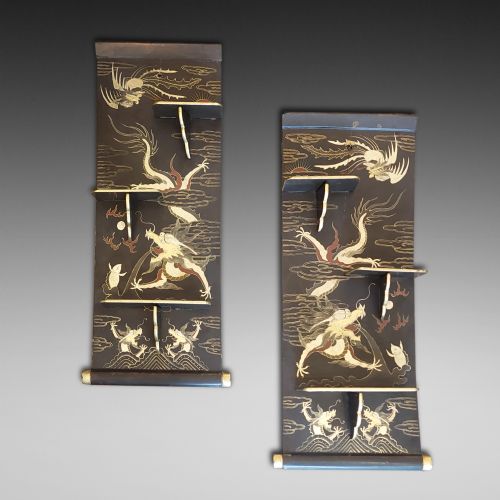
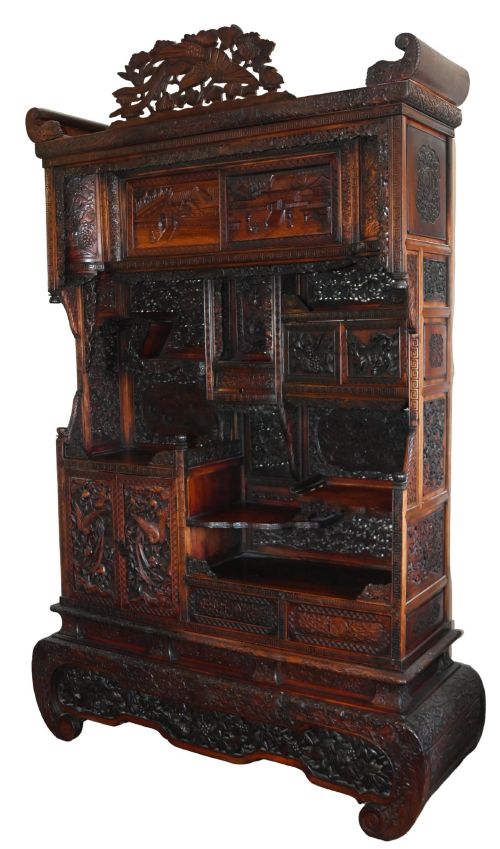
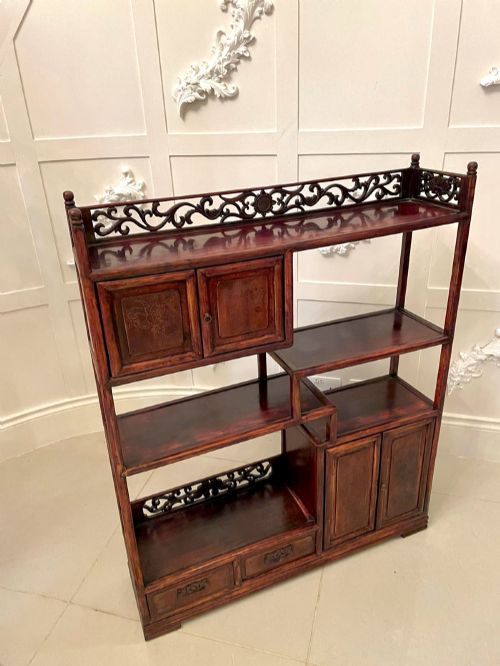
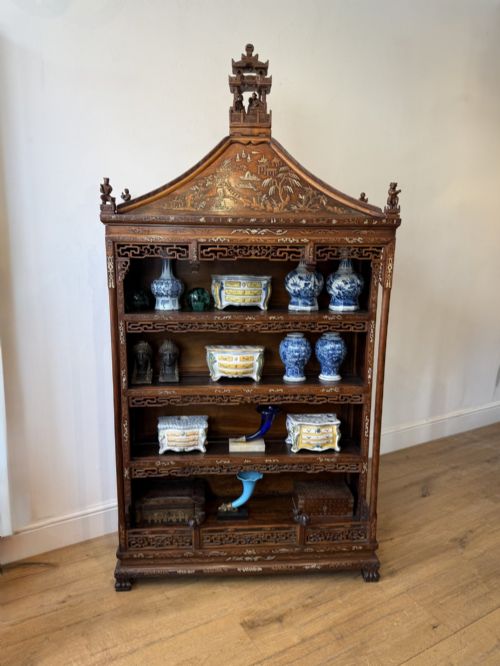
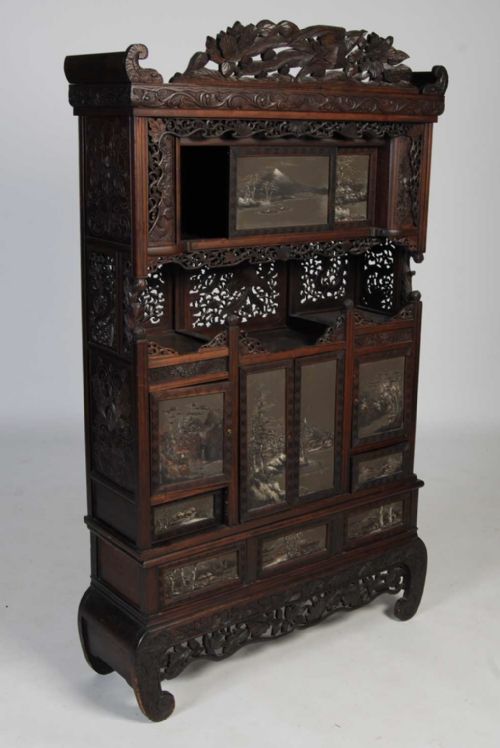
When you search for asian display shelving, you encounter a distinct group of furniture designed to exhibit ceramics, bronzes and curiosities. These pieces range from compact wall shelves to substantial cabinets originating from China and Japan.
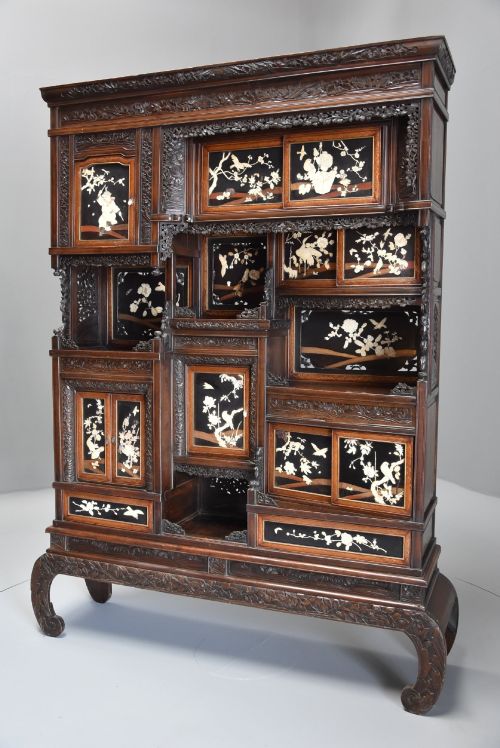
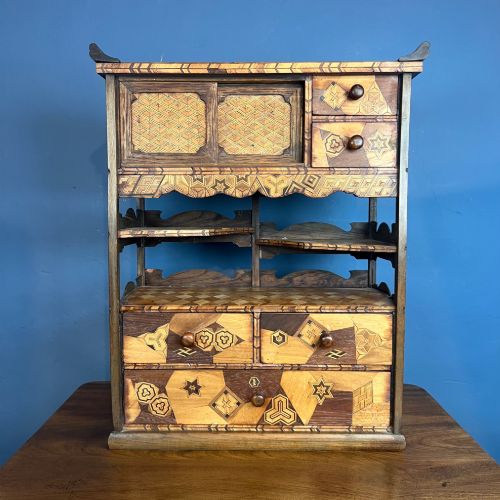
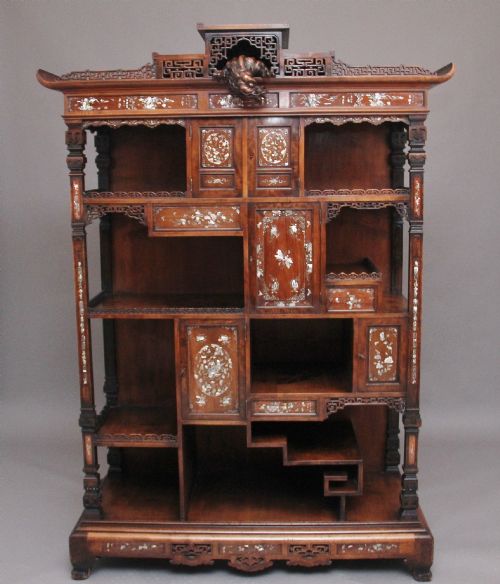
The most common examples on this page are Chinese hardwood cabinets and Japanese shodona cabinets dating from the late nineteenth and early twentieth centuries. Makers constructed these structures with asymmetrical compartments, tiered shelves and enclosed cupboards.
European adaptations also appear, merging Asian motifs with Western furniture forms under influences such as Chinoiserie and Japonisme. These hybrid pieces reflect a nineteenth-century enthusiasm for Eastern design applied to domestic interiors.
Materials and construction
Carpenters utilised dense tropical timbers including rosewood and various hardwoods to build rigid frameworks capable of supporting heavy ornaments. Artisans employed complex mortise and tenon joinery without relying on metal fasteners to secure the primary structure.
Surfaces frequently received layers of red or black lacquer, sometimes embellished with bone inlay, mother of pearl or brass hardware. Carvers worked directly into the timber to create pierced panels depicting foliage, landscapes and symbolic motifs.
Asian Display Shelving Retail Price Guide 2026
Typical asking prices for asian display shelving among the pieces listed under this phrase on Sellingantiques today, from the lower quarter to the upper quarter. They describe what is for sale here now, not the wider market.
Some nineteenth-century makers hid tiny secret drawers behind sliding panels, perfect for stashing miniature curiosities.
Assessing quality and execution
The distinction between standard commercial production and finer work lies in the depth and precision of the carving. Profusely carved hardwoods demonstrate superior handwork compared to simpler moulded surfaces.
Material selection dictates longevity and visual weight, with dense rosewood and well-applied lacquer achieving a finer finish. The crispness of inlaid bone and mother of pearl elements indicates the skill invested by the artisan.
The Asian Display Shelving Glossary
- Shodona
- A Japanese tabletop or freestanding display cabinet featuring staggered shelves and cupboards. These pieces typically originate from the Meiji period and served to display small ornaments.
- Chinoiserie
- A European artistic style reflecting Chinese aesthetic influences. Artisans in the West applied these decorative themes to furniture and lacquerwork during the eighteenth and nineteenth centuries.
- Japonisme
- The influence of Japanese art on Western culture, particularly prominent in the late nineteenth century. This movement inspired European makers to incorporate asymmetric arrangements and natural motifs into cabinets.
Asian Display Shelving: Frequently Asked Questions
What fits on these shelves?
These cabinets and wall shelves accommodate small collectibles, ceramics, jade carvings and small bronzes. The varied compartment sizes suit objects of different heights.
Larger cabinets provide enclosed lower storage alongside open display tiers for mixed utility.
How do I date a cabinet?
Dating relies on timber selection, construction methods and stylistic markers such as Meiji period carvings or Qing dynasty motifs. Nineteenth-century examples often exhibit hand-cut joinery and traditional lacquering.
Later pieces from the early twentieth century may show transitional manufacturing techniques while retaining traditional forms.
Where should I place them?
Freestanding shodona cabinets and dwarf side-cabinets function well against living room or hallway walls. Wall-mounted shelves require secure fixings into solid masonry or studs to support the weight of hardwood.
Keep pieces away from direct sunlight and strong heat sources to protect lacquer and timber surfaces.
Are these pieces fragile?
While built from sturdy hardwoods, intricate carved details and applied bone inlay require careful handling during moving. Regular dusting with a dry cloth maintains the finish without damaging delicate lacquer.
Avoid using liquid polishes that can seep into unsealed carved crevices or degrade traditional surfaces.