







Asian Carved Wood
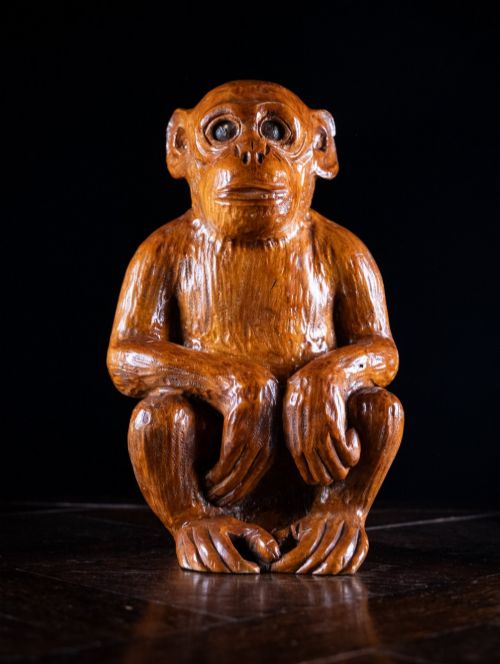
These pieces of asian carved wood span functional furniture and decorative figures from the eighteenth century to the twentieth.
Asian Carved Wood
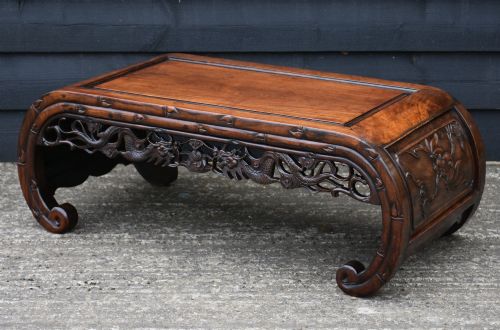
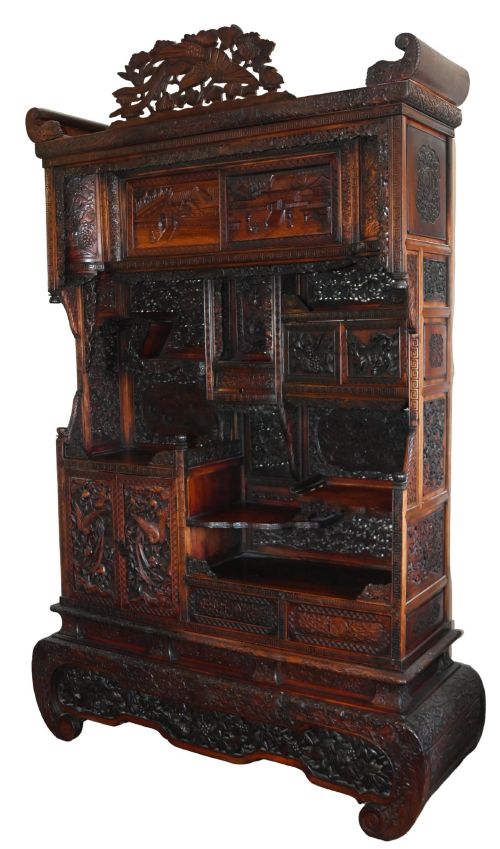
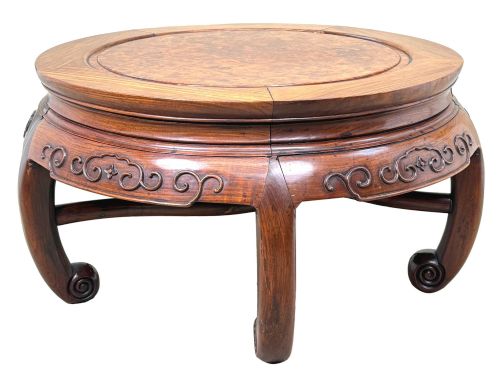
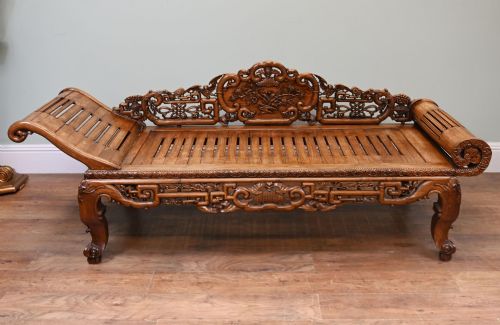
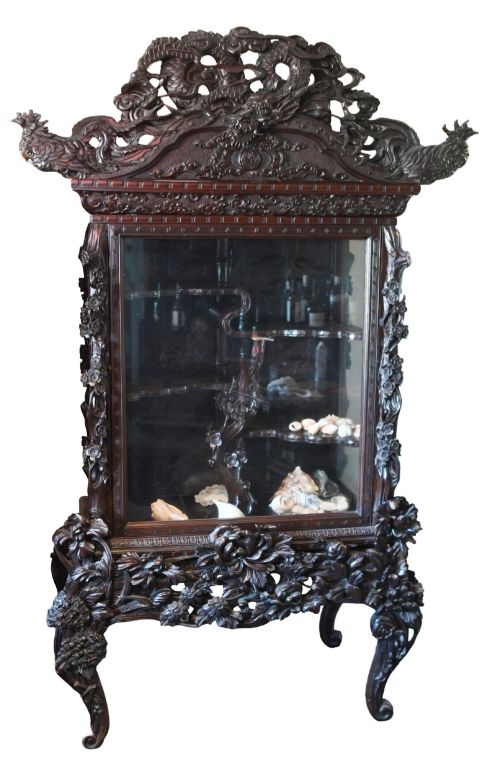
Asian carved wood encompasses substantial furniture such as coffee tables, armchairs, display cabinets, and side tables alongside sculptural figures and statues. These items emerge from periods spanning the eighteenth century through to the early twentieth century.
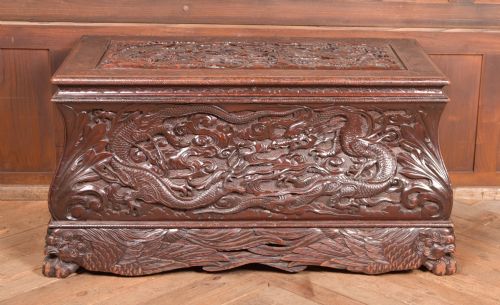
The regional origins divide principally between Chinese workshops, incorporating Qing Dynasty styles and export pieces, and Japanese Meiji period creations, alongside examples from Thailand and Burma. Buyers encounter low tables, altar tables, and storage boxes alongside Guardian figures and Buddha statues.
Materials and construction
Artisans built these items using dense timbers including hardwood, rosewood, elm, and camphor wood, often combined with brass fittings, lacquer, and inlaid mother of pearl or bone. Joinery techniques supported deep relief carving without relying on modern fasteners.
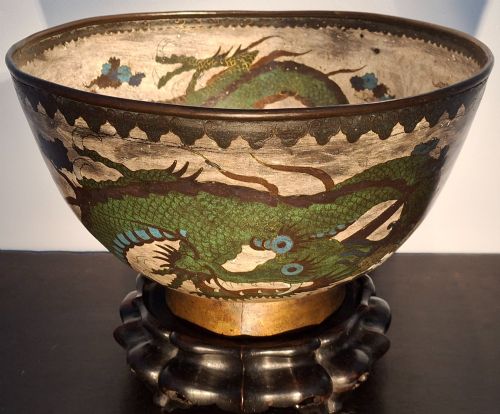
Surfaces received intricate motifs featuring dragons, figures, and foliage, sometimes enhanced with painted details or marble inserts set into table tops.
Asian Carved Wood Retail Price Guide 2026
Typical asking prices for asian carved wood among the pieces listed under this phrase on Sellingantiques today, from the lower quarter to the upper quarter. They describe what is for sale here now, not the wider market.
Listings feature items from the 18th century, 19th century, and early 20th century, utilising hardwood, rosewood, elm, and mother of pearl.
Distinctions in execution
Quality rests upon the depth and precision of the carving, where crisp linework on figures and floral panels separates accomplished work from simpler output. The choice of timber also dictates substance, with heavy hardwoods and figured rosewood showing greater stability and grain density than softer utility woods.
Preservation of original finishes, such as lacquer and polish, together with the integration of decorative elements like mother of pearl inlay, determines the integrity of each piece.
The Asian Carved Wood Glossary
- Hardwood
- Dense timber such as rosewood or padouk used for durable furniture and detailed carving. These woods support intricate relief work without splitting.
- Meiji Period
- The era in Japanese history lasting from 1868 to 1912, known for sophisticated craftsmanship in cabinets, screens, and carved objects. Items from this period often display meticulous attention to decorative detail.
- Qing Dynasty
- The final imperial dynasty of China, spanning from 1644 to 1912, which produced distinctive armchairs, altar tables, and scholarly objects. Pieces assigned to this era reflect traditional motifs and formal symmetry.
- Mother of Pearl
- The iridescent inner layer of mollusc shells used for inlay work on wooden surfaces. Artisans cut thin sections to form floral or figurative patterns against dark wood.
Asian Carved Wood: Frequently Asked Questions
How do I identify a Meiji period piece?
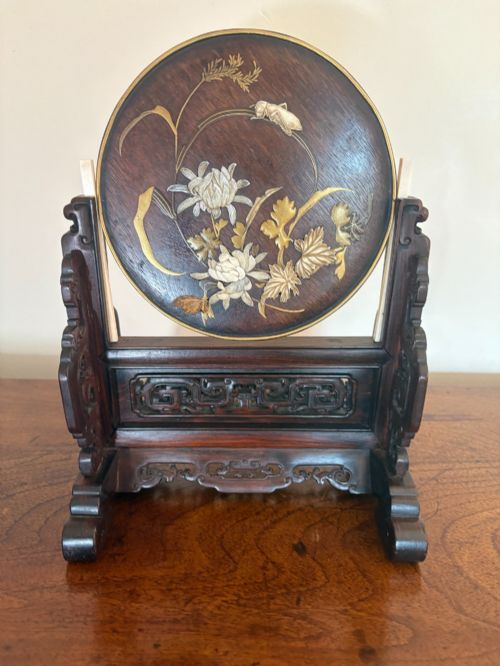
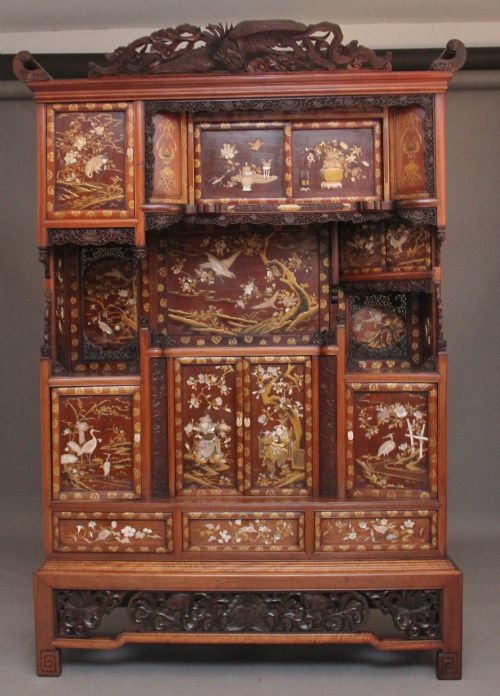
Meiji period items originate from Japan between 1868 and 1912, often identifiable through specific decorative forms like shodonas, display cabinets, and table screens.
These works frequently incorporate meticulous carving, Shibayama elements, or bone inlay depicting daily scenes and natural subjects.
What is an opium table?
Opium tables are low tables originating from China, designed for use while seated on cushions or platforms.
They typically feature compact proportions and carved wooden frames, sometimes incorporating recessed legs and subtle surface detailing.
Where were yokeback armchairs used?
Yokeback armchairs served as traditional seating within Chinese households, featuring a curved top rail resembling a yoke.
They appear in hardwoods and elm, often constructed with strict joinery and balanced proportions for formal rooms.
What materials decorate these wooden surfaces?
Surfaces frequently display inlaid mother of pearl, carved bone figures, and red or black lacquer applications.
Inns, scholars' studios, and homes utilised these contrasting materials to highlight narrative scenes and floral motifs.