
Asian Bronze Incense Burner
An asian bronze incense burner brings centuries of ritual history and exceptional metalwork into a room.
Asian Bronze Incense Burner
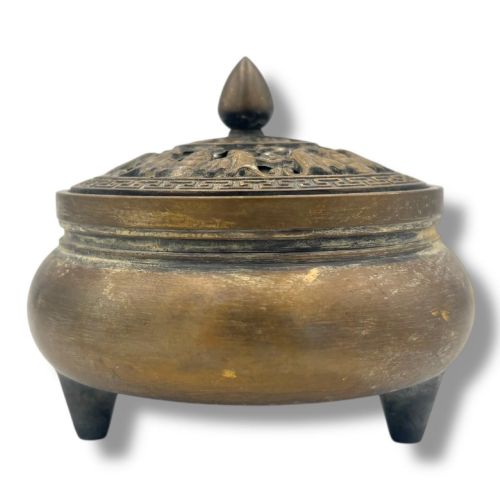
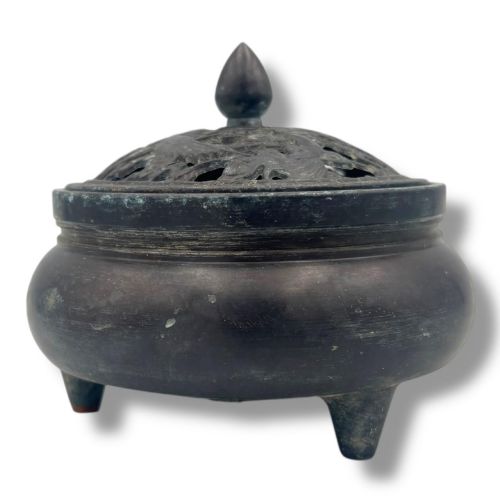
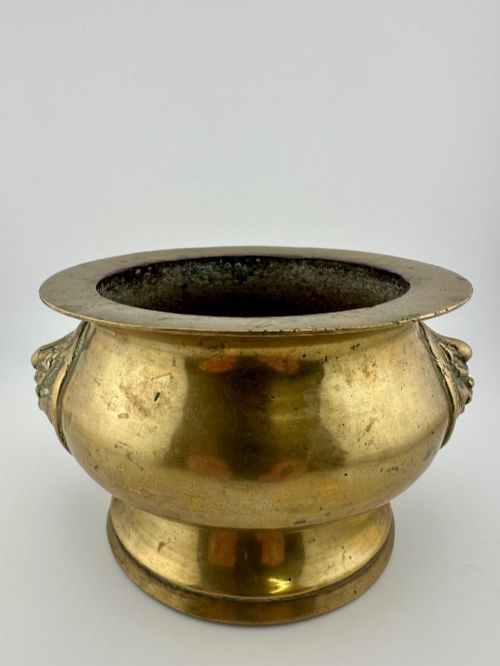
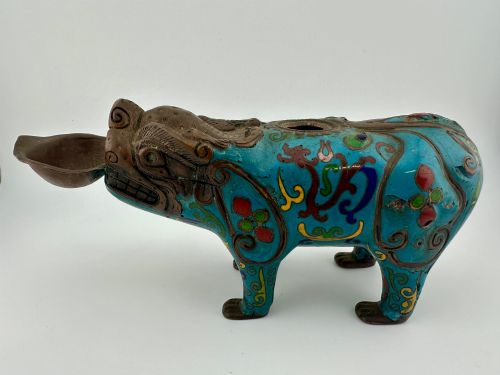
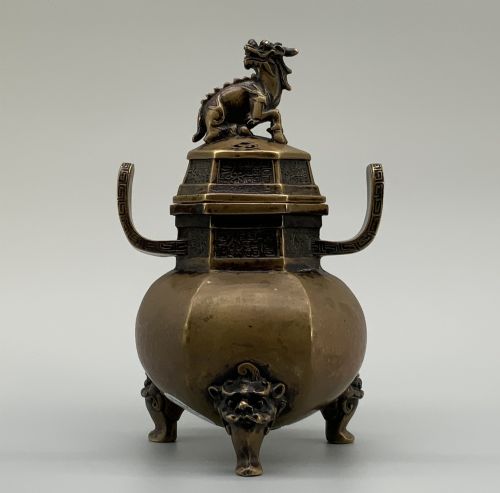
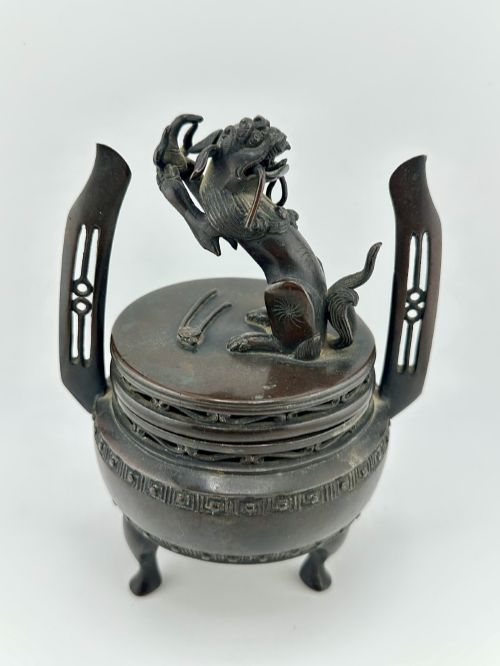
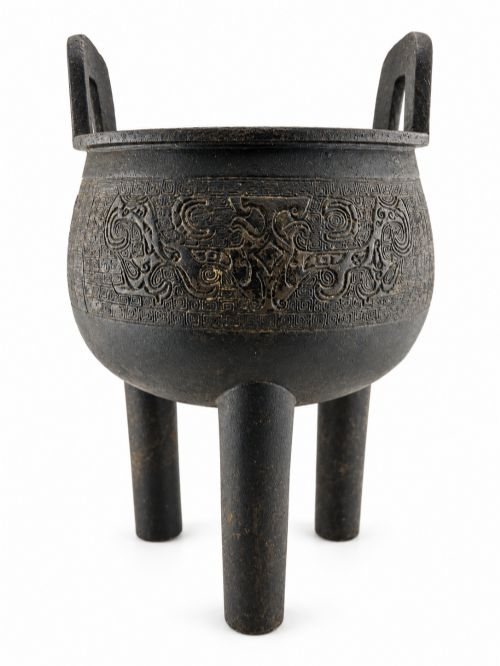
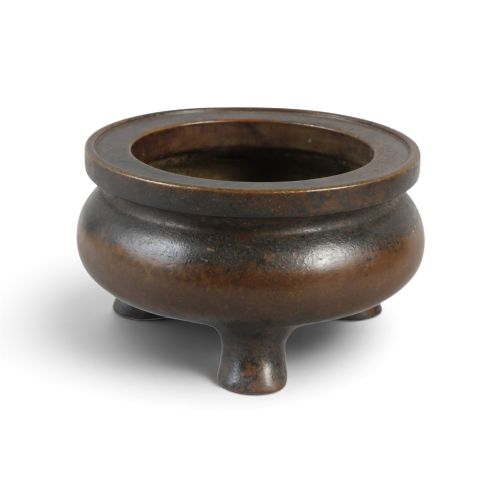
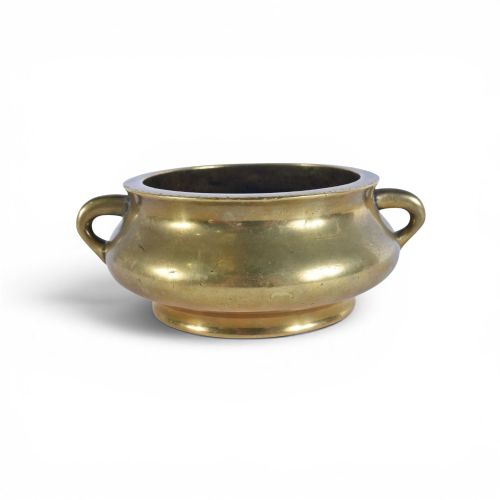
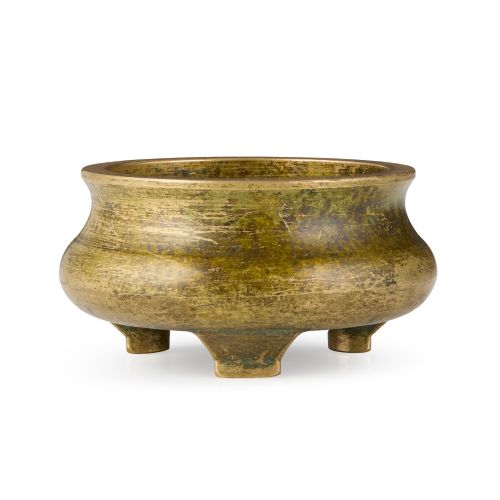
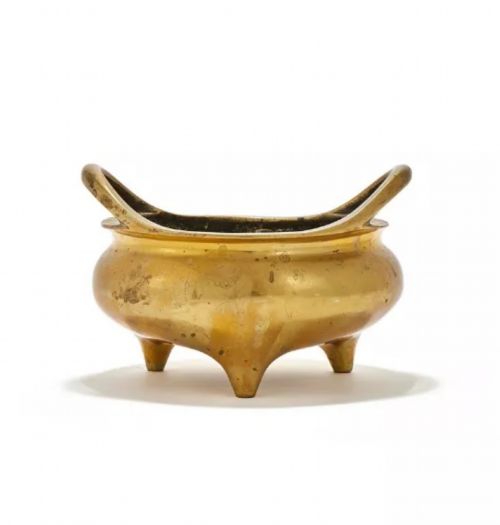
An asian bronze incense burner serves as a vessel designed to contain burning aromatic materials, historically used in temples, domestic interiors, and scholar's studios. These objects appear primarily in tripods, bowls, and lidded forms created in China and Japan across several centuries.
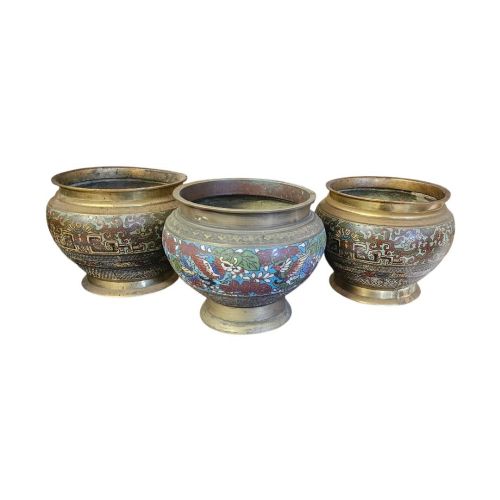
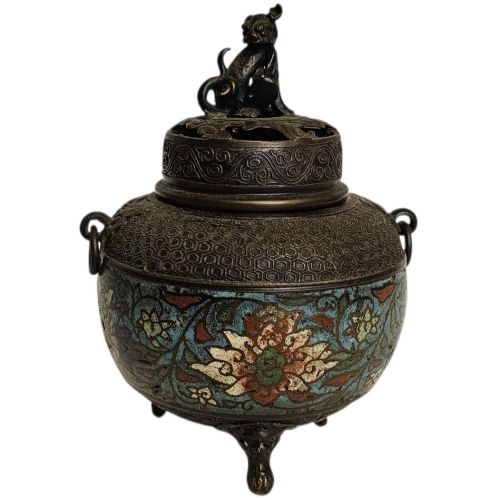
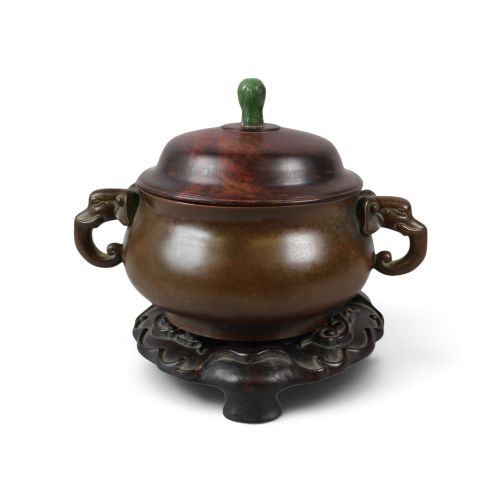
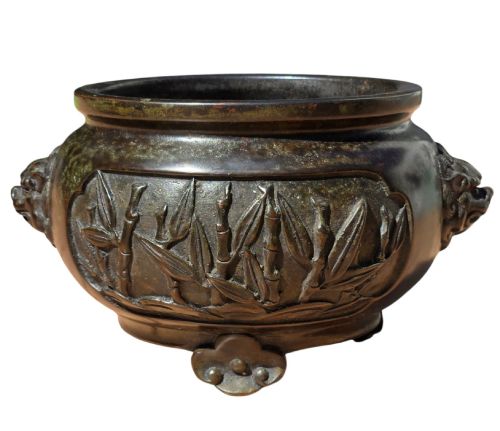
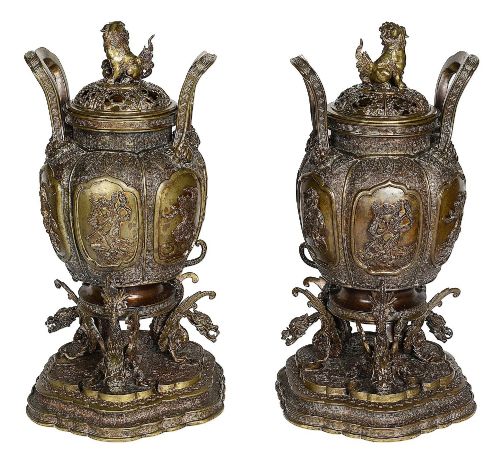
The pieces available on this page span from the Ming and Qing dynasties to the Meiji period, reflecting diverse cultural aesthetics. Buyers encounter both utilitarian scholar's vessels and ornate decorative censers featuring mythical beasts, floral reliefs, and ritual masks.
Materials and casting methods
Makers utilised bronze, brass, and patinated metal alloys, often combining the primary cast body with applied elements in gold leaf, silver, or cloisonné enamel. The lost-wax casting technique allowed artisans to achieve substantial weight, complex structural profiles, and detailed surface reliefs.
Surface decoration frequently involved intricate champlevé enamel work, engraved panels depicting the three friends of winter, and sculpted animal finials such as qilin or fu lions. Artisans also applied controlled patination to yield deep, uniform colour tones across the heavy metallic surfaces.
Several pieces feature mythical beasts and qilin peering intently from the lids, keeping a watchful eye over the fragrant smoke.
Judging the quality of cast metalwork
Quality rests primarily on the precision of the casting, the wall thickness of the vessel, and the crispness of the chased or relief-carved details. Heavier pieces with dense alloy compositions display superior bell-ring resonance and structural integrity compared to lighter, purely decorative items.
The integration of maker or studio marks, such as Xuande or Wu Bangzuo seals, distinguishes standard production from high-status workshop creations. Furthermore, the fidelity of sculptural elements like handles formed as elephant heads or taotie masks indicates the skill level of the original foundry.
The Asian Bronze Incense Burner Glossary
- Censer
- A vessel specifically constructed for burning incense. These items frequently feature pierced lids to allow smoke to escape.
- Tripod
- A vessel supported by three feet, commonly seen in archaic Chinese bronzes. This configuration provides stability on flat surfaces.
- Cloisonne
- An enamelling technique where metal wire is soldered to the metal base to create compartments filled with coloured paste. Firing fuses the glass paste into hard decorative cells.
Asian Bronze Incense Burner: Frequently Asked Questions
How are these incense burners used?
These vessels were historically utilised to burn solid incense resins, powders, or sticks during meditation, scholarly pursuits, and ceremonial gatherings. The pierced lids allowed fragrant smoke to disperse evenly into the room.
In modern interiors, collectors generally display them as sculptural metalwork objects rather than lighting active incense, preserving the interior patina and historic surfaces.
What is a scholar's censer?
A scholar's censer refers to understated, heavily cast bronze vessels created for the desk of a traditional East Asian literati. These pieces typically rely on simple geometric or archaic forms rather than excessive ornamentation.
They are prized for their tactile qualities, satisfying weight, and subtle patination developed over generations of handling in private studies.
How do I distinguish Chinese from Japanese censers?
Chinese pieces often draw on archaic dynastic styles, featuring taotie masks, ritual tripod legs, and Xuande or studio seal marks cast into the base. The forms tend to emphasise ritual solemnity and heavy, robust casting.
Japanese censers, particularly from the Meiji period, frequently exhibit naturalistic motifs, animal finials like goats or mythical beasts, and silver or enamel inlays. Their aesthetic focuses on meticulous surface detail and dynamic sculptural movement.
What do the marks on the bottom mean?
Marks found on the underside of these vessels typically denote the dynastic period, imperial reign, or specific workshop responsible for the casting. Names such as Xuande or Wu Bangzuo appear frequently on bronze pieces.
While some marks indicate direct period production, others serve as later archaistic tributes honouring earlier master metalworkers. Collectors evaluate these inscriptions alongside the overall alloy composition and casting style.